The industrial sector is flooded with claims about fully autonomous operations, but for manufacturing executives, separating marketing from operational reality is critical. Despite the billions projected for artificial intelligence this year, the factory floor remains a complex, physical environment that does not easily bend to software trends. Only 20% to 25% of manufacturers have reached what experts currently define as smart manufacturing, and to see a true return on investment, organizations must confront the limitations of their data infrastructure before adding more AI on top.
At IIoT World’s AI Manufacturing Day 2026, a panel featuring Andrew Scheuermann of Arch Systems, Gary Tillery of Skkynet, Dave Morse of Delta Electronics, and Pugal Janakiraman of Snowflake talked about what a smart factory actually looks like today, why AI deployments stall after initial success, and how agentic AI changes the equation by performing work autonomously rather than generating more dashboards.
What Is a Smart Factory Today?
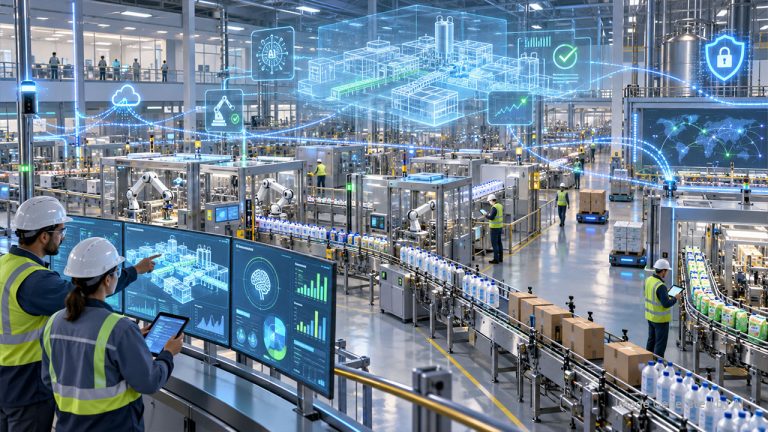
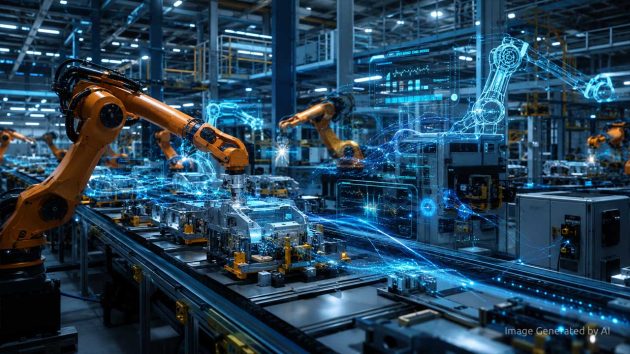
When executives envision the future, they often picture a fully AI-enabled, lights-out operation. The current reality is far more modest. A smart factory today typically incorporates 30% to 40% automation on the assembly line, uses industrial IoT sensors, and applies data analytics to operational decisions. These facilities are heavily focused on predictive maintenance and are beginning to adopt digital twins, which allow companies to simulate an entire assembly line in a flexible digital environment rather than relying on a discrete number of hardcoded recipes. Even the most advanced facilities are still years away from being fully AI-enabled.
Why Do Most Manufacturing AI Projects Fail?
AI models routinely prove successful in a lab but collapse when deployed on the shop floor. The pattern repeats across the sector because manufacturers skip foundational steps: protocol bridging, security architecture, and standardization.
AI models expect clean, normalized data formatted in modern protocols like JSON or MQTT. The real operational technology (OT) floor runs on 20- to 30-year-old equipment speaking entirely different languages: OPC DA, Modbus, and proprietary serial protocols. Many AI vendors sell platforms without addressing this protocol gap.
Moving OT data to an AI analytics layer often forces a choice between opening inbound firewall ports, creating a severe security attack vector for threat actors targeting industrial PLCs, or simply not getting the data at all.
Initial AI deployments are typically built in pristine, controlled environments with pre-cleaned data and vendor engineers on-site. When the vendor team leaves, the model faces the real world: shift changes, process variations, and legacy devices dropping offline. A successful deployment at one plant often cannot scale to another because the IT and OT footprints, labor costs, and supply chain strategies are completely different across enterprise locations.
What Is Agentic AI in Manufacturing?
Much of what is sold as AI today is better visualization with a generative user interface. It surfaces an insight on a dashboard and waits for a human to act. Agentic AI operates differently: it perceives, reasons, and acts in a closed loop. An agentic system independently executes on an insight to achieve specific goals with minimal human supervision. In a manufacturing context, the AI can autonomously close a valve, adjust a machine set point, or schedule a maintenance work order, writing back into the OT environment through authenticated and architecturally constrained pathways.
How Are Manufacturers Using AI Agents in Production?
AI agents are already performing complex cognitive labor in production environments through embedded workflows rather than isolated chatbots.
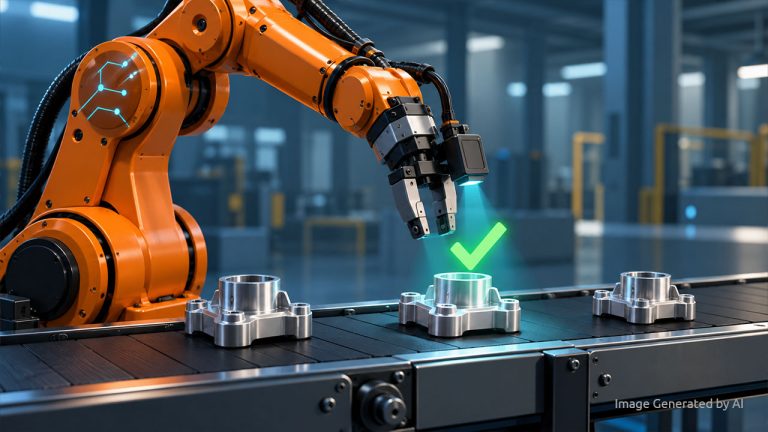
Agents automatically perform PLC tag mapping and connectivity work, drastically reducing the time required to integrate factory data. In quality control and maintenance, an agentic AI intercepts alerts, gathers all relevant data, and conducts root cause analysis automatically. By the time the operator opens the ticket, the AI has partially or completely identified the correct answer and provided the supporting data.
Agents also act as expert planners, combining ERP data with machine cycle times to dynamically update production schedules. In predictive maintenance, they go beyond predicting a failure: the agent automatically fills out work orders and reads machine manuals to tell the technician exactly how to fix the problem.
How Is AI Being Used in Manufacturing Operations?
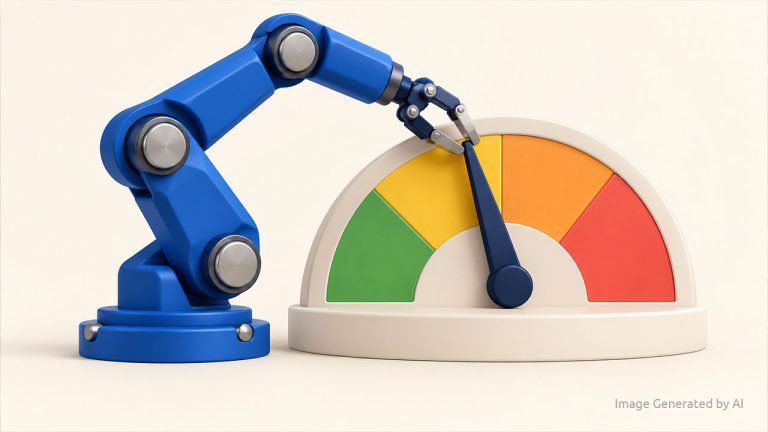
With many plants retaining only one or two highly skilled quality technicians, AI serves as what panelists called a “robotic arm for the mind.” It takes over routine, data-heavy tasks, allowing human experts to focus on the undocumented problems that require physical intervention and deep domain knowledge.
At the enterprise level, AI is moving root cause analysis from manual Excel spreadsheets into AI-based toolkits. When manufacturers combine this unglamorous data infrastructure work with agentic workflows, they build organizational confidence that produces measurable financial returns and permanently optimized operations.
FAQ
1. What is agentic AI in manufacturing?
Agentic AI in manufacturing refers to systems that perceive, reason, and act in a closed loop with minimal human supervision. Unlike dashboard-based analytics that surface insights and wait for human action, agentic AI autonomously executes responses: closing valves, adjusting machine set points, scheduling maintenance work orders, and writing back into OT environments through authenticated pathways. AI agents perform PLC tag mapping, conduct automated root cause analysis, dynamically update production schedules, and provide technicians with specific repair instructions from machine manuals.
2. Why do most manufacturing AI projects fail?
Most projects fail because they skip foundational data infrastructure steps. AI models expect clean, normalized data in formats like JSON or MQTT, but real OT floors run on 20- to 30-year-old equipment using legacy protocols like OPC DA and Modbus. Initial deployments are built with pre-cleaned data and vendor engineers on-site; when the vendor team leaves, the model faces shift changes, process variations, and devices dropping offline. Scaling across plants fails because each location has different IT/OT footprints, labor costs, and supply chain strategies.
3. What is a smart factory and how does it work?
A smart factory today typically incorporates 30% to 40% automation on the assembly line, uses industrial IoT sensors, and applies data analytics to operational decisions. These facilities focus heavily on predictive maintenance and are beginning to adopt digital twins for flexible production simulation. Currently, only about 20% to 25% of manufacturers have reached this level. Even the most advanced facilities are still years away from full AI enablement.
4. How are AI agents used in production today?
AI agents in production perform PLC tag mapping and connectivity work, intercept maintenance alerts and automatically conduct root cause analysis, combine ERP data with machine cycle times to dynamically update production schedules, and read machine manuals to provide technicians with specific repair instructions. These agents function as embedded workflows within existing production systems rather than as isolated chatbots. In manufacturing, AI serves as a “robotic arm for the mind,” handling routine data-heavy tasks so the few remaining skilled technicians can focus on complex physical problems.
This article is based on a panel session at AI Manufacturing Day 2026 with Andrew Scheuermann of Arch Systems, Gary Tillery of Skkynet, Dave Morse of Delta Electronics, and Pugal Janakiraman of Snowflake. Moderated by Hamish Mackenzie of IIoT World.
AI tools were used to help summarize and organize the content. Reviewed and edited by the IIoT World editorial team.
Editorially Independent. Sponsored by Arch Systems and Skkynet.