
Software-Defined Automation: From PLCs to AI
· Smart Manufacturing

Software-Defined Automation: From PLCs to AI

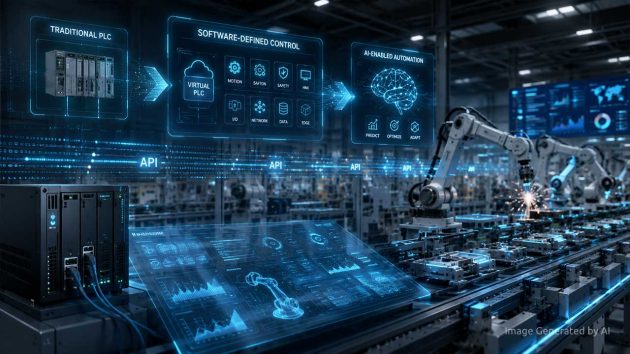
Software-defined automation moves control logic from dedicated PLCs onto industrial PCs and standard server hardware, while the physical equipment, inputs/outputs, drives, and motors, stays on the shop floor. Engineering changes too, from predefined toolchains with fixed workflows to an open system where teams connect Siemens, third-party, and OEM tools through APIs and a package management […]

Read more →
AI Agents in Manufacturing: Embedded in Real Workflows
· Industrial AI

AI Agents in Manufacturing: Embedded in Real Workflows

One Avanade client, a global snack food brand, used AI agents to cut inventory by 20%. Another, an electronics manufacturer, recovered $35 million in a year in lost fees. At Hannover Messe 2026, Avanade presented two demos in the Microsoft booth, co-branded with clients Nissha Metallizing Solutions and Kruger, showing how AI agents embedded in […]

Read more →
From Pilot to Profit: Operationalizing the “Atoms-Bits-Neurons” Framework
· Artificial Intelligence & ML

From Pilot to Profit: Operationalizing the “Atoms-Bits-Neurons” Framework

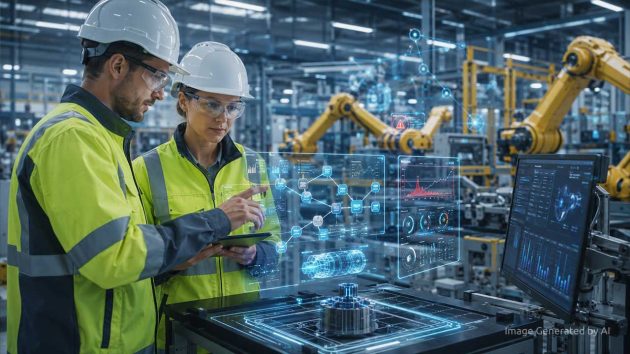
If the 2026 mandate for manufacturers is the synchronization of physical goods, digital data, and human intelligence, the immediate challenge is execution. While the vision of “Liquid Computing” sets the stage, the transition to a zero-defect floor requires a fundamental shift in how we architect our production lines.This blueprint outlines the three critical pillars of implementation, […]

Read more →
What Does a Fully AI-Driven Factory Look Like?
· Industrial IoT

What Does a Fully AI-Driven Factory Look Like?

A Gatorade bottling line at a FIFA World Cup stadium, producing on site instead of shipping from a central plant, with flavors adjusted by region and Doctor Pepper for the Texas crowd. In this IIoT World article based on a video interview recorded at Hannover Messe 2026, Ujjwal Kumar (CEO, Siemens Industrial Automation) explains how […]

Read more →
What “AI-Ready” Actually Means for Distributed Energy Systems
· Artificial Intelligence & ML

What “AI-Ready” Actually Means for Distributed Energy Systems

There certainly is no shortage of interest in applying AI to distributed energy operations. Battery storage operators want predictive analytics at the cell level. Renewable fleet managers want optimization recommendations across hundreds of sites. Grid operators want faster fault diagnostics closer to the asset. The ambition is real, and the use cases are sound.But ambition […]

Read more →
How Agentic AI Changes Factory Data Requirements
· Artificial Intelligence & ML

How Agentic AI Changes Factory Data Requirements

Most factory data architectures today serve between 10 and 50 consuming systems. Agentic AI will push that number into the thousands, a 100x increase in edge-based data consumers. The ISA-95 layer-by-layer model was not designed for this volume, and manufacturers need to rethink their data infrastructure before scaling AI agents. IDC reports that 56.6% of […]

Read more →
Why Your Factory’s AI Keeps Failing: The One Document You Forgot
· Artificial Intelligence & ML

Why Your Factory’s AI Keeps Failing: The One Document You Forgot

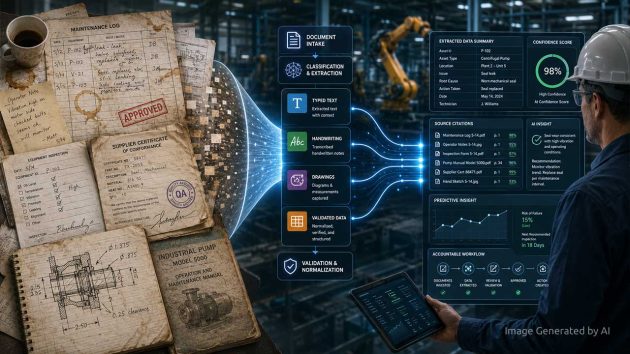
You installed the sensors. You bought the AI license. You hired the data scientist. Yet your million-dollar pilot is stuck, delivering quirky answers that no one on the floor dares to trust. The problem isn’t your algorithm. It’s the coffee-stained, handwritten maintenance log from 1998 that your new AI has no idea how to read.In […]

Read more →
Industrial Foundation Models Could Become Europe’s Strongest Manufacturing Advantage
· Artificial Intelligence & ML

Industrial Foundation Models Could Become Europe’s Strongest Manufacturing Advantage

Manufacturing knowledge is fragmented and mostly unusedEuropean manufacturers collectively hold decades of deep production knowledge: how materials behave, how machines are tuned, how quality issues emerge, how processes fail and recover. Yet this knowledge remains locked inside individual companies, plants, and teams. It is applied locally, rarely reused, and almost never scaled.At the same time, […]

Read more →
The Signal vs. Noise Ratio: Solving Alert Fatigue in the Modern Factory
· Artificial Intelligence & ML

The Signal vs. Noise Ratio: Solving Alert Fatigue in the Modern Factory

In 2026, the primary barrier to manufacturing efficiency is the abundance of data. Modern plants now monitor tens of thousands of assets and hundreds of thousands of individual points. However, this connectivity has created a new operational hazard: Alert Fatigue. When a plant manager receives thousands of notifications a day, the most critical “signal” is often […]

Read more →
Beyond the Alert: The Best Industrial AI Use Cases for Predictive Maintenance
· Artificial Intelligence & ML

Beyond the Alert: The Best Industrial AI Use Cases for Predictive Maintenance

The industrial manufacturing sector is operating in an era of persistent volatility. To maintain global competitiveness,organizations are increasingly turning to the Artificial Intelligence of Things (AIoT). According to recent research from IDC: “71% use AIoT for predictive maintenance. Predictive maintenance is the most widely adopted use case across industries.” The financial return is undeniable. Organizations that deeply employ AI in […]

Read more →
Atoms, Bits, and Neurons: The 2026 Mandate for Zero-Defect Manufacturing
· Artificial Intelligence

Atoms, Bits, and Neurons: The 2026 Mandate for Zero-Defect Manufacturing

The transition to Industry 4.0 has long been stalled by the “Data Silo” problem. In 2026, the conversation has shifted. Leading manufacturers are synchronizing Atoms (physical goods), Bits (digital data), and Neurons (human intelligence) through a paradigm known as Liquid Computing.This isn’t just incremental improvement; it is a structural rewiring of how quality is enforced on the factory floor.The “Wow” Factor: […]

Read more →
The First Step for AI in Energy Isn’t Digital
· Artificial Intelligence & ML

The First Step for AI in Energy Isn’t Digital

Before an energy company can use artificial intelligence to predict a pipeline fault or optimize a drilling schedule, it must solve a physical problem. The industry’s most valuable data isn’t in the cloud; it’s in filing cabinets, on shared drives, and in the handwritten logs of technicians nearing retirement. This legacy knowledge, decades of inspections, […]

Read more →