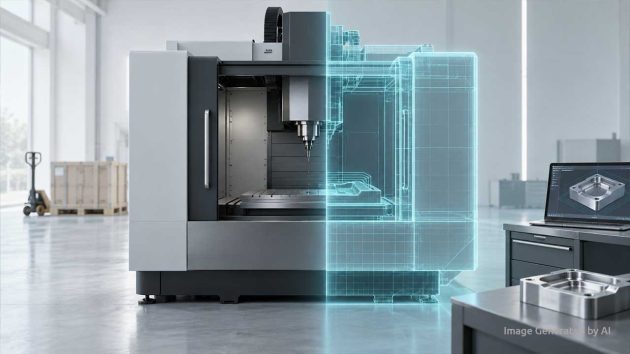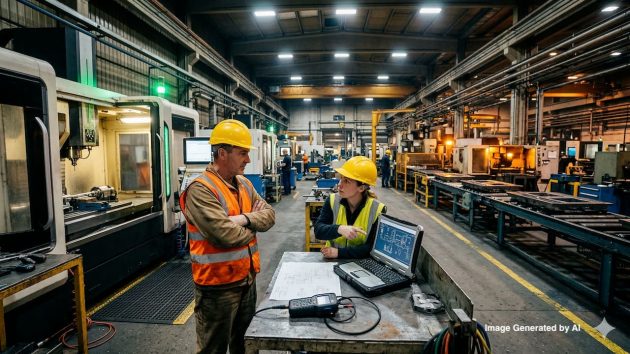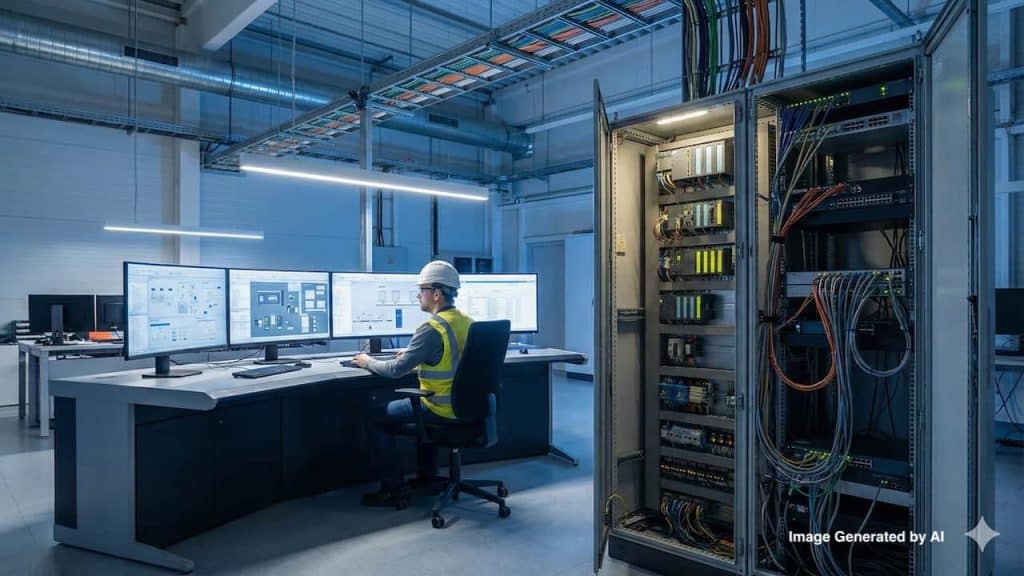
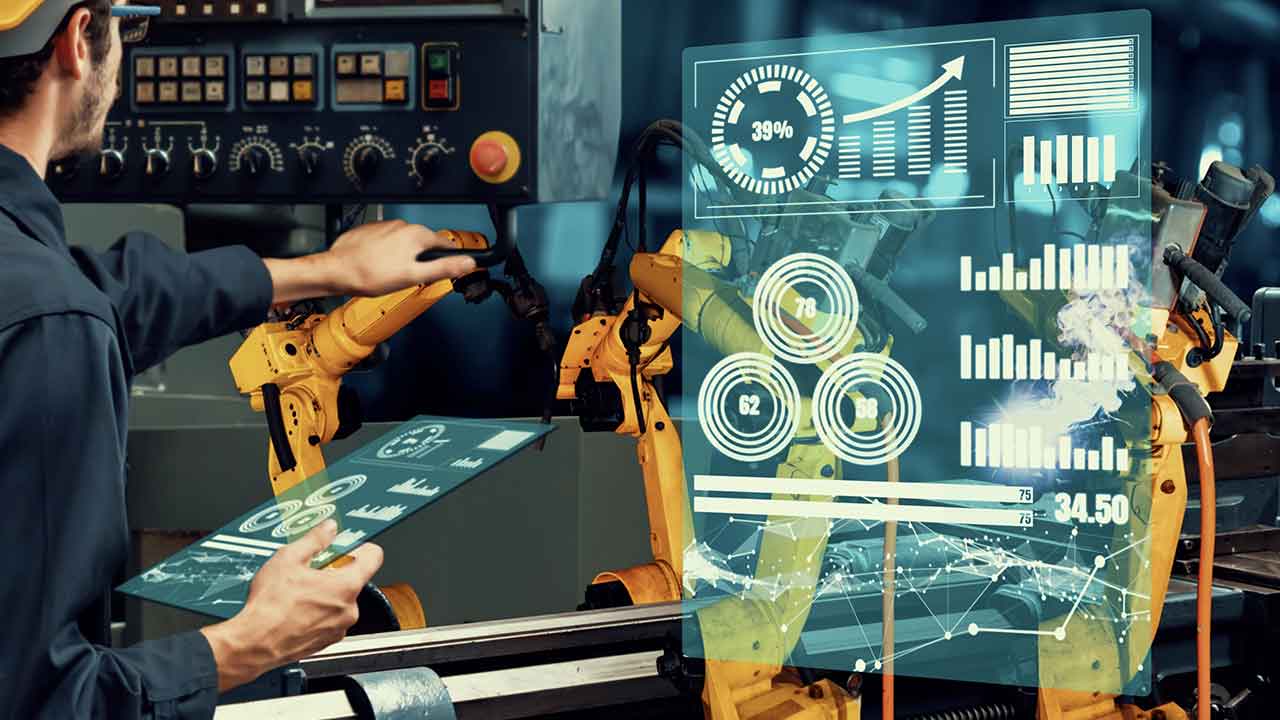
Running artificial intelligence models directly on edge devices inside factories, substations, and process plants is no longer experimental; it is becoming a competitive requirement. Embedded AI at the edge eliminates cloud roundtrip latency, keeps sensitive operational data on-premises, and enables real-time quality inspection, anomaly detection, and autonomous machine adjustments. In this article, IIoT World examines the architectures, hardware platforms, and deployment strategies that industrial organizations need to move AI inference from pilot to production at the edge. From selecting the right accelerator chipsets to managing model lifecycle updates across hundreds of devices, readers will find a practical framework for scaling embedded AI in demanding OT environments.
As industrial systems grow increasingly complex, the traditional reliance on cloud-based analytics is being fundamentally challenged. What’s emerging instead is a shift toward real-time, on-site intelligence, driven by embedded AI at the edge. This transformation is not just technical; it’s strategic, offering new ways to improve safety, efficiency, and scalability in environments where timing, precision, and reliability are critical.
At Hannover Messe 2025, two key voices from AICAS, Johannes Biermann and Dr. James J. Hunt, outlined how edge-native AI is changing the game for industrial operators. Their insights paint a clear picture of what’s next for manufacturing, energy, and other heavy industries.
From Centralized to Decentralized Intelligence
Historically, the cloud has been the go-to destination for industrial data. But in operations where milliseconds matter—like quality control on conveyor lines or predictive maintenance of high-value assets—the latency and bandwidth limitations of cloud-only approaches reveal serious gaps.
The edge offers an alternative: placing intelligence directly on the devices closest to the physical processes. AI deployed at the edge can act instantly on real-time signals, enabling localized decision-making without needing constant cloud connectivity. It also reduces data overload by processing information before it’s sent upstream—optimizing not only system responsiveness but network efficiency.
Moving Beyond Anomaly Detection
AI at the edge has matured well beyond spotting anomalies. It’s now actively shaping the processes it monitors. In modern industrial environments, embedded AI models are being used to improve throughput, minimize downtime, and continuously refine operations in the moment—not after the fact.
This means AI is no longer just a monitoring tool; it’s becoming an agent of process optimization, capable of learning from the data it collects and improving outcomes without human intervention. Across a fleet of devices or factories, this can translate into significant performance gains.
Working With What’s Already There
One of the key challenges for manufacturers is the diversity and age of their systems. Many industrial sites run on legacy infrastructure that wasn’t designed with AI in mind. But that doesn’t mean AI can’t be implemented.
With the right connectors and interfaces—such as OPC UA—real-time data from existing systems can be collected and acted upon. Even in older environments, edge AI solutions can tap into control loops and legacy machinery to uncover insights that were previously locked away.
Smart Scaling Through Hybrid Architectures
Scalability is often where edge strategies hit a wall. However, combining embedded intelligence with cloud-based orchestration offers a viable path forward. Cloud services can be used to manage fleets of edge devices, push updates, and run higher-order analytics, while critical decisions stay local at the edge.
This hybrid model enables even small manufacturers to scale sophisticated AI solutions across operations with minimal disruption. Edge devices can be quickly deployed, updated remotely, and customized for the needs of each site—all while keeping mission-critical processing on-site.
Sharpening Focus: The Right Data, Not All the Data
A recurring theme in effective industrial AI is precision. Rather than sending massive volumes of data to the cloud, modern systems focus on identifying and transmitting only what’s necessary. This means selecting the right data at the right time—reducing costs and improving efficiency.
Combined with continuous software updates and embedded AI models, this approach allows systems to adapt over time, learning which inputs matter most and responding accordingly. It’s a model that mirrors human decision-making—focused, context-aware, and increasingly autonomous.
Looking Ahead: Continuous Optimization at the Edge
As embedded AI becomes more capable, the edge will play an even more central role in industrial digitalization. The goal is not just faster systems, but smarter ones—systems that improve themselves over time, reduce resource waste, and help operators make better decisions faster.
For industrial leaders, the path forward isn’t about choosing between edge and cloud, old systems and new. It’s about building adaptive, scalable architectures that integrate both worlds. With embedded AI at the edge, real-time intelligence is no longer aspirational—it’s operational.
About the author
Lucian Fogoros is the Co-founder of IIoT World
Related articles:
- Real-Time Anomaly Detection at the Edge using EmbeddedAI and IoT
- The Leap from Incremental Innovations with Industrial AI
FAQ Section
1. What is embedded AI at the edge in industrial manufacturing?
Embedded AI at the edge refers to deploying trained machine learning or deep learning models directly onto hardware devices located on or near the factory floor, rather than sending data to a centralized cloud for processing. These devices range from industrial PCs and ruggedized GPU modules to microcontroller-based inference engines. The primary advantage is latency reduction: edge inference can deliver predictions in under 10 milliseconds, which is critical for applications like vision-based defect detection on high-speed production lines running at 200 or more parts per minute. Edge AI also reduces bandwidth costs by processing data locally, with only aggregated insights or anomaly alerts sent upstream.
2. What hardware platforms are commonly used for industrial edge AI?
The most widely deployed platforms include NVIDIA Jetson modules (Orin and AGX series), which provide GPU-accelerated inference in compact, fanless form factors rated for industrial temperature ranges. Intel Movidius and Hailo-8 AI accelerators offer lower power consumption for vision workloads, typically drawing under 15 watts. For lighter models such as vibration-based predictive maintenance, ARM Cortex-M microcontrollers running TensorFlow Lite Micro can perform inference at milliwatt-level power budgets. Selection depends on model complexity, thermal constraints, and whether the device must support multiple concurrent inference streams.
3. How do manufacturers manage AI model updates across distributed edge devices?
Managing model lifecycle across hundreds or thousands of edge devices requires an MLOps pipeline tailored for OT environments. This typically includes containerized model deployment using frameworks like Docker or Kubernetes at the edge (K3s), over-the-air (OTA) update mechanisms with rollback capabilities, and A/B testing workflows that validate new model versions against production baselines before full rollout. Version control, model registry integration, and automated performance monitoring ensure that accuracy drift is detected early. Organizations that lack this infrastructure often experience “model rot,” where edge AI accuracy degrades within 3 to 6 months due to changing process conditions.
Related from IIoT World: