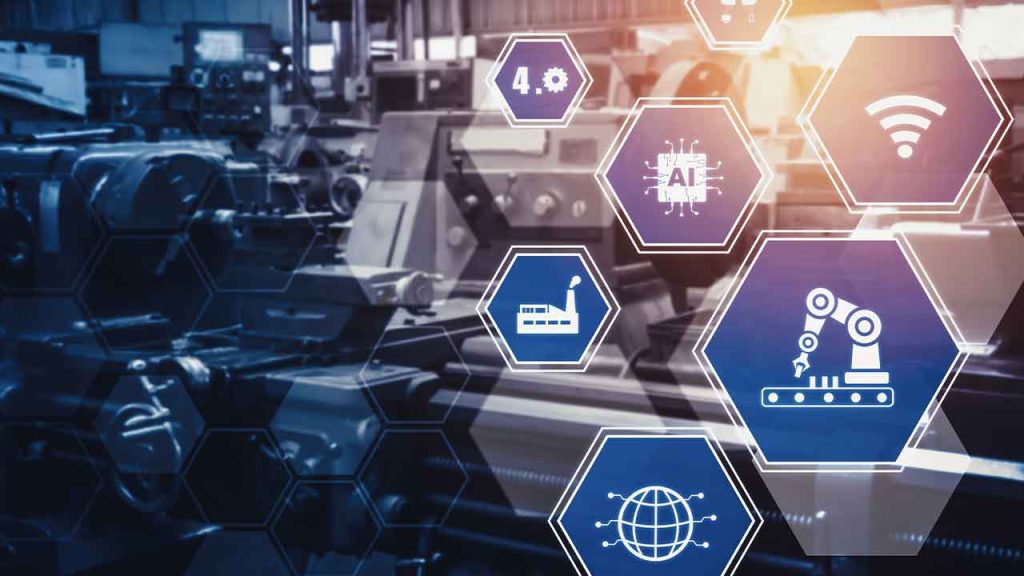
Circular manufacturing, the practice of designing products and production systems to eliminate waste, extend asset life, and recover materials at end of use, is moving from aspirational concept to operational imperative. Regulatory pressure, raw material volatility, and customer demand for sustainable products are forcing manufacturers to rethink linear take-make-dispose models. Yet achieving true circularity at industrial scale requires more than good intentions; it demands the convergence of artificial intelligence, advanced automation, and modular product design. In this article, IIoT World examines why these three pillars are essential for circular manufacturing, how leading organizations are deploying them today, and what practical steps operations and engineering leaders can take to build circular capabilities without sacrificing cost competitiveness or throughput. The goal is a clear, actionable framework for manufacturers at any stage of their sustainability journey.
At Hannover Messe 2025, Ali Haj Fraj, Senior Vice President of the Digital Factory at Schneider Electric, offers a compelling perspective on one of the most pressing industrial challenges: how to balance sustainability with global competitiveness. His answer? Don’t treat them as opposing forces. Instead, treat sustainability as a core driver of performance.
Rethinking the Sustainability–Competitiveness Trade-Off
Too often, sustainability is seen as an expensive luxury—something that must be balanced against productivity. Schneider Electric argues otherwise. In fact, circular manufacturing—centered on reducing energy consumption, minimizing waste, and reusing systems—is itself a source of competitiveness. It lowers operating costs, improves efficiency, and enhances adaptability.
This shift in mindset is crucial. Instead of a linear model of “take, make, dispose,” industrial leaders must move toward “reduce and reuse.” Doing so isn’t just good for the environment—it’s better business.
Automation as an Enabler of Circular Manufacturing
The key to making this shift operational is automation. Ali emphasizes the role of automation throughout the entire machine lifecycle, from initial design to engineering, commissioning, operation, and maintenance. At every stage, intelligent automation systems create opportunities for savings, efficiency, and material reuse.
Technologies like digital twins allow manufacturers to design more flexibly and modularly—so production lines don’t need to be rebuilt for every new product. Software-defined automation enables rapid changes at the software level without physical reconfiguration. That translates to fewer resources consumed, faster time-to-market, and less waste.
Equally important is the integration of energy and automation systems. By jointly optimizing power and process from the design stage, manufacturers can significantly reduce energy usage across the production lifecycle.
AI and Robotics Drive the Next Level of Flexibility
Schneider Electric is also investing in how AI, robotics, and advanced motion systems can make factories more agile. Consumer expectations are evolving fast—particularly in industries like food and beverage, where tastes, formats, and packaging change frequently. That demands production systems that can adapt quickly without sacrificing speed or quality.
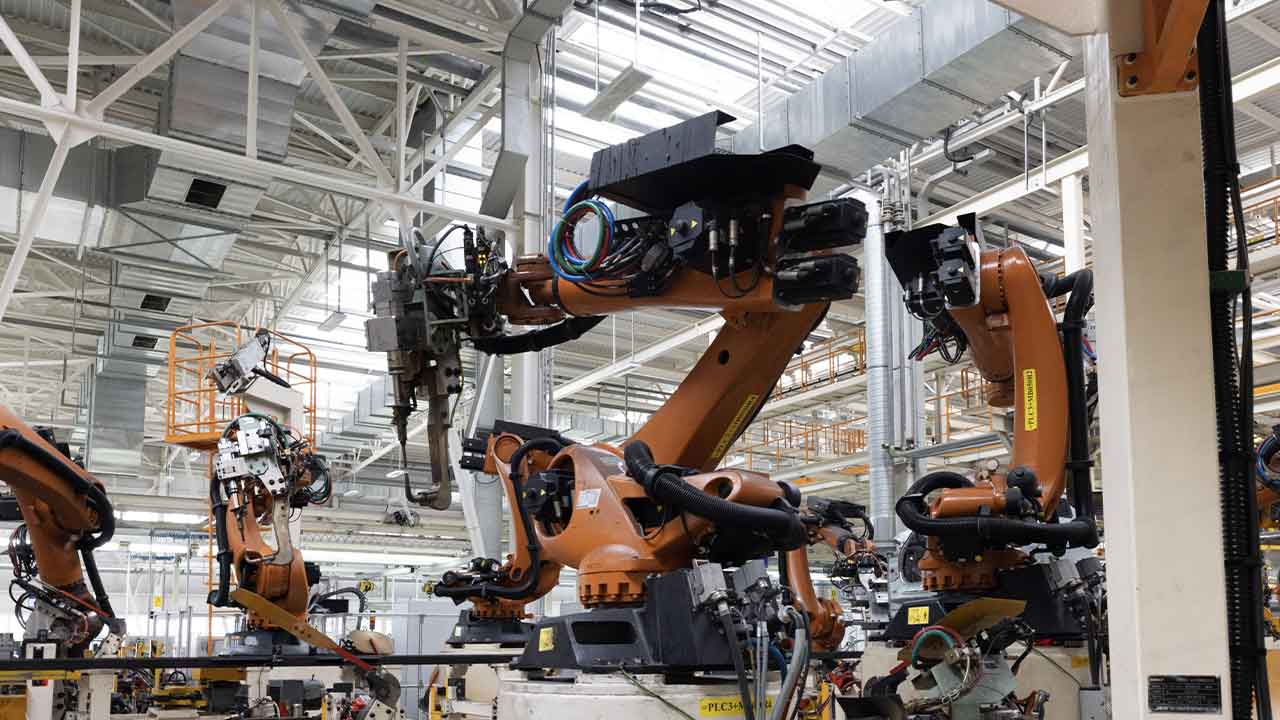
To support this, next-generation motion systems must be modular, software-defined, and AI-ready. Instead of static assembly lines, Schneider showcases machines equipped with integrated robotics, autonomous transport (AGVs), and flexible control platforms—all managed within a unified automation environment.
Introducing Schneider Electric’s Next-Gen Motion Platform
At the Schneider Electric booth in Hannover, the company unveiled its new Next-Gen Motion System, built on the Automation Expert platform. This solution marks a step forward in convergence—merging control and compute, enabling AI integration, and embedding cybersecurity and safety into the control architecture.
Sponsored by Schneider Electric.
About the author
Lucian Fogoros is the Co-founder of IIoT World.
FAQ Section
1. What is circular manufacturing and why is it important for industrial competitiveness?
Circular manufacturing is a production model designed to minimize resource extraction, maximize product and material reuse, and eliminate waste throughout the product lifecycle. Unlike traditional linear manufacturing, circular approaches incorporate design for disassembly, remanufacturing, and closed-loop material recovery into core operations. The Ellen MacArthur Foundation estimates that circular economy principles could generate $4.5 trillion in economic value by 2030, and manufacturers that adopt these practices gain advantages in regulatory compliance (especially under the EU’s Circular Economy Action Plan), supply chain resilience, and brand differentiation. For industrial companies, circularity also reduces exposure to raw material price volatility, which has increased by over 50% in key commodity categories since 2020.
2. How does artificial intelligence enable circular manufacturing processes?
AI plays multiple roles in circular manufacturing. In the design phase, generative design algorithms optimize products for disassembly and material recovery while maintaining performance requirements. During production, machine learning models analyze process data to minimize scrap rates, optimize energy consumption, and predict quality deviations before they result in waste. In the reverse logistics and remanufacturing phase, computer vision and natural language processing help sort, grade, and route returned products for the highest-value recovery path (reuse, refurbishment, or material recycling). AI-powered digital twins also enable manufacturers to simulate circular scenarios before committing capital, testing different material choices, product architectures, and end-of-life strategies in a virtual environment. The combined effect is a data-driven approach that makes circularity economically viable rather than purely idealistic.
3. What role does modular design play in making circular manufacturing scalable?
Modular design is the architectural foundation that makes circular manufacturing practical at scale. By breaking products into standardized, interchangeable modules, manufacturers enable targeted replacement of worn or outdated components without discarding the entire product. This extends product lifespans by 2x to 5x in categories such as industrial equipment, electronics, and automotive subsystems. Modular architectures also simplify automated disassembly, which is critical for cost-effective remanufacturing, because robots can be programmed to remove and replace known module types rather than handling infinitely variable product configurations. Additionally, modular design supports mass customization, allowing manufacturers to offer product variety while maintaining a manageable set of reusable core components, reducing SKU proliferation and the waste associated with obsolete inventory.
Related from IIoT World: