Virtual PLC vs Physical PLC in Manufacturing
· Smart Manufacturing

Virtual PLC vs Physical PLC in Manufacturing

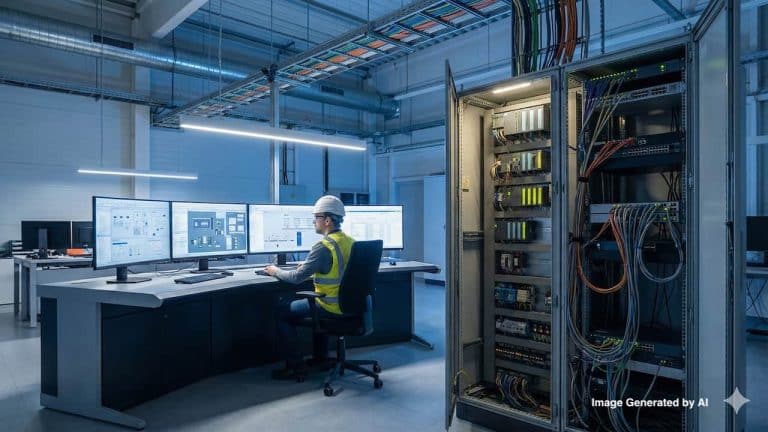
Most manufacturers looking at software-defined automation ask the wrong question first. The question is not “should we replace our hardware PLCs with virtual ones?” At Siemens, the S7-1500 virtual PLC and the hardware PLC share the same components and behave identically as a control layer. The real question is where a virtual PLC actually improves […]

Read more →
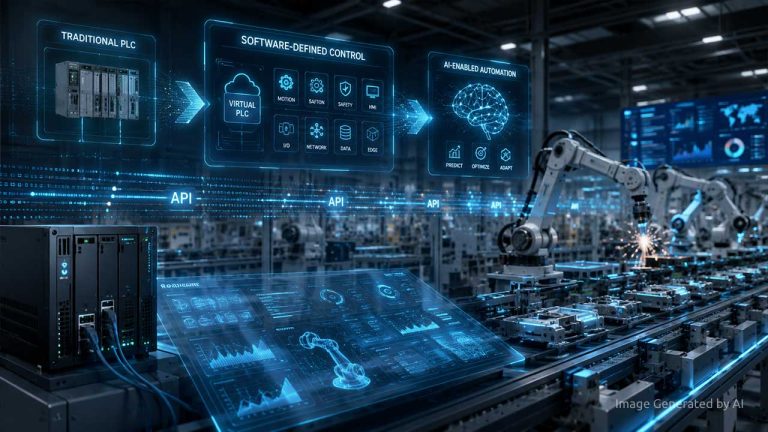
Software-Defined Automation: From PLCs to AI
· Smart Manufacturing

Software-Defined Automation: From PLCs to AI

Software-defined automation moves control logic from dedicated PLCs onto industrial PCs and standard server hardware, while the physical equipment, inputs/outputs, drives, and motors, stays on the shop floor. Engineering changes too, from predefined toolchains with fixed workflows to an open system where teams connect Siemens, third-party, and OEM tools through APIs and a package management […]

Read more →
Seeking Popular Smart Factory Technologies? The 2026 Innovation Stack
· Industrial IoT

Seeking Popular Smart Factory Technologies? The 2026 Innovation Stack

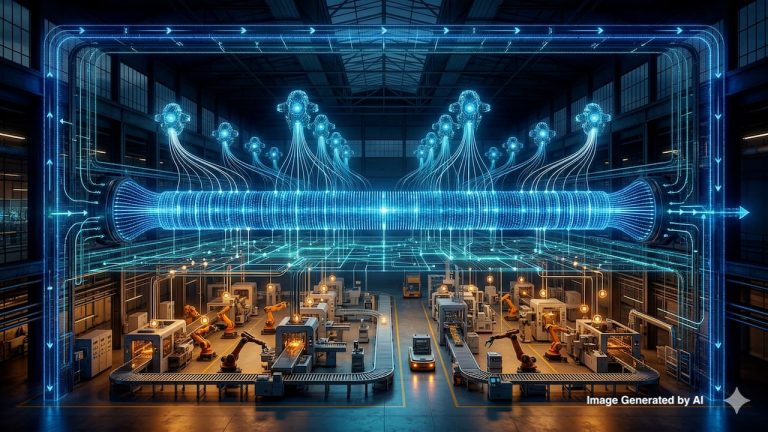
Manufacturing has shifted into a phase of scaled execution. Today, leaders build autonomous systems that contextualize, secure, and act on data in real time. Based on insights from industry leaders at previous editions of IIoT World Days or events/presentations we attended, the following technologies define the 2026 tech stack for industrial excellence.1. Agentic AI: Autonomous […]

Read more →
Smart Factory 2026: 5 Reasons Why 41% of Manufacturers Are Prioritizing AI Vision Systems
· Artificial Intelligence & ML

Smart Factory 2026: 5 Reasons Why 41% of Manufacturers Are Prioritizing AI Vision Systems

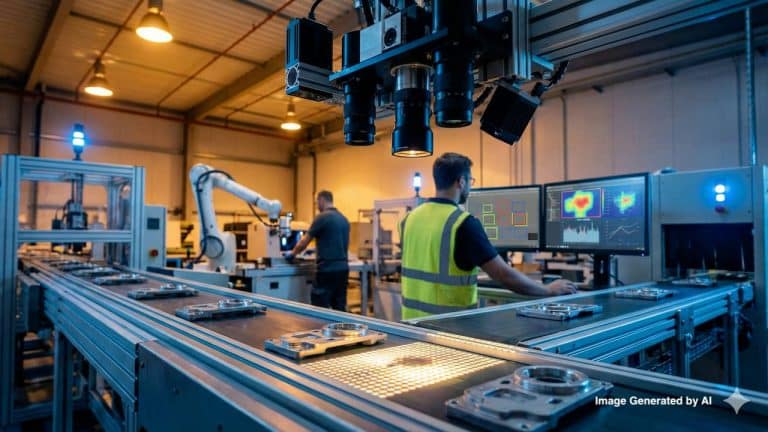
In 2026, the industrial sector has reached a critical turning point where “High Tech” meets “High Touch.” According to the latest member survey from the Association for Advancing Automation (A3), 41% of manufacturers are prioritizing AI Vision systems in their 2026 automation strategies. This makes vision technology the top emerging priority, outpacing both Large Language Models and humanoid robotics in […]

Read more →
The End of “Rip and Replace”? Why the Future of Manufacturing is Software-Defined
· Discrete Manufacturing

The End of “Rip and Replace”? Why the Future of Manufacturing is Software-Defined

In the fast-paced world of industrial automation, manufacturers face a brutal dilemma. On one hand, the market moves at breakneck speed, demanding agility and new digital capabilities. On the other hand, plants are filled with assets that have been operating for decades.For years, the industry solution was the dreaded “rip and replace”, tearing out expensive […]

Read more →
Why Software-Defined Automation Is the Key to Industrial Progress
· Discrete Manufacturing

Why Software-Defined Automation Is the Key to Industrial Progress

As the conversation shifts from Industry 4.0 to 5.0, one problem remains unsolved: most industrial environments are running on legacy infrastructure. Machines last decades. Control systems are often 30 years old. But the demands placed on manufacturing—greater flexibility, lower emissions, workforce shortages—are growing quickly.The question isn’t whether the technology exists. It’s how to implement change […]

Read more →
The Silent Barriers to Industrial Competitiveness
· Discrete Manufacturing

The Silent Barriers to Industrial Competitiveness

Many manufacturers invest heavily in new technology yet still struggle to close the competitiveness gap with industry leaders. The reasons are rarely obvious; they hide in organizational silos, legacy system architectures, workforce skill deficits, and fragmented data strategies that quietly undermine even the best-funded initiatives. In this article, IIoT World identifies the most common silent […]

Read more →
Why Circular Manufacturing Needs Automation, AI, and Modular Design to Compete
· Additive Manufacturing

Why Circular Manufacturing Needs Automation, AI, and Modular Design to Compete

Circular manufacturing, the practice of designing products and production systems to eliminate waste, extend asset life, and recover materials at end of use, is moving from aspirational concept to operational imperative. Regulatory pressure, raw material volatility, and customer demand for sustainable products are forcing manufacturers to rethink linear take-make-dispose models. Yet achieving true circularity at […]

Read more →
Schneider Electric’s Vision for Software-Defined, AI-Powered Automation at Hannover Messe 2025
· Process Manufacturing

Schneider Electric’s Vision for Software-Defined, AI-Powered Automation at Hannover Messe 2025

At HANNOVER MESSE 2025, Schneider Electric isn’t just showcasing products — it’s introducing a new mindset for how industries operate, adapt, and evolve. With a spotlight on open software-defined automation and industrial AI, Schneider Electric’s presence at Hall 11, Stand C52, reflects a bold rethinking of industrial control in an increasingly connected and complex world.As manufacturers face rising pressure to digitize, […]

Read more →
AI, Open Systems, and Automation: The Keys to Sustainable, Autonomous Manufacturing
· Artificial Intelligence

AI, Open Systems, and Automation: The Keys to Sustainable, Autonomous Manufacturing

The convergence of artificial intelligence, open automation platforms, and sustainability mandates is reshaping how manufacturers design, operate, and optimize production systems. In this guide, IIoT World explores the practical pathways connecting AI-driven decision-making to measurable environmental outcomes, from energy consumption reduction and predictive waste minimization to closed-loop quality control. Readers will learn how open system […]

Read more →