
Smart Manufacturing


Is a PoC the Right Path for Manufacturing AI?
PoCs get a bad rap in factories—they often feel like science projects that never leave the lab. They don’t have to. When a PoC is designed to prove scale, not just possibility, it becomes the fastest path…

Rethinking Operational Precision: Why Indoor Industries Need Their GPS Moment
Do you remember life before GPS? Many of us can, but only faintly — folding maps in the car, printing directions, or stopping at gas stations for help. It wasn’t long ago, yet it already feels…

Inside Tata Steel’s Reliability Mindset: What Really Drives Uptime
Tata Steel Thailand judges plant reliability by three visible signals: housekeeping discipline, visually tagged critical assets, and active daily management boards. According to Amit Khanna, VP of Business Excellence at Tata Steel Thailand, real-time gas monitoring…
The End of the Pixel Counter Era — How AI Is Quietly Transforming Semiconductor Manufacturing
AI is changing how semiconductor fabs inspect wafers and maintain equipment. AI vision systems now train on as few as five images to distinguish real defects from acceptable variation, cutting false alarms and costly reworks. Predictive…

Modernizing Without Disruption: A Practical Approach to Industrial Data Growth
Industrial operations depend on data historians to record what’s happening on the line or in the field. But as systems evolve toward Industry 4.0, many teams find that their historians weren’t built for what’s next —…
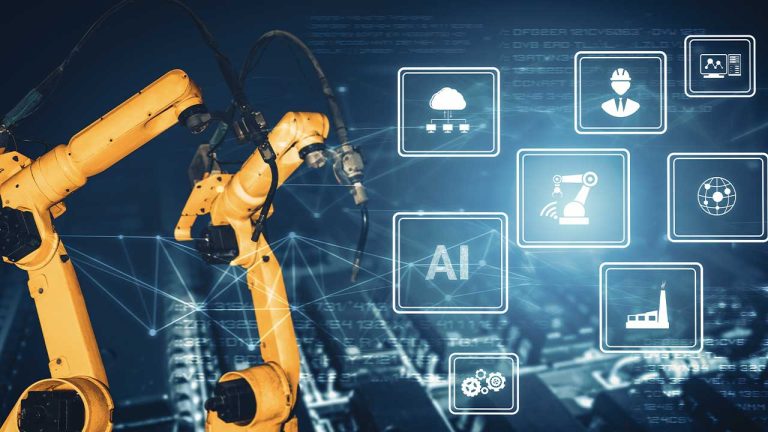
The Most Effective Strategies for Integrating Agentic AI Into Legacy Manufacturing Environments Without a Full Overhaul
Answering the audience’s questions Integrating agentic AI into legacy manufacturing does not require replacing existing infrastructure. Panelists from Litmus, ZF Group, CESMII, and Arch Systems at AI Frontiers 2025 outlined a practical six-part approach: free trapped…

How AI and the Digital Thread Improve Machine Tool Systems
Artificial intelligence and digital connectivity are transforming how machine tools operate — from the way parts are designed and programmed to how data flows across production. The combination of AI-driven automation and a digital thread enables…
Managing the Rise of Agentic AI in Manufacturing
Managing agentic AI in manufacturing requires governance built on three principles: centralized control, open standards, and traceable data infrastructure. Peter Sorowka, CEO of Cybus, outlines how manufacturers in regulated sectors like pharma and energy can address…

Embedding AI Agents Into Industrial Data Pipelines: What Manufacturers Should Watch
AI agents embedded directly inside industrial data pipelines, rather than layered on top as analytics, are now operationally viable for manufacturers. At Cognite's 2025 event, SVP Laxmi Akkaraju outlined how this approach delivers autonomous root cause…
Digital Twins in CNC: From Virtual Proof to Profit
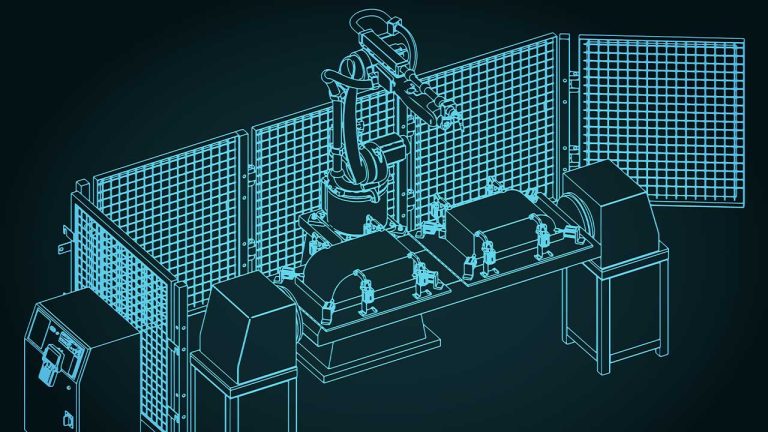
The race in CNC machining is no longer about who has the fastest spindle—it’s about who can validate reality before cutting metal. Across global manufacturing, digital twin technology is emerging as a quiet disruptor, letting engineers simulate…

When Machines Negotiate: A New Way to Run Manufacturing
AI agents in manufacturing can now negotiate trade-offs between energy use, uptime, and quality in real time, without human intervention. According to Technology Advisor Omid Givehchi of ATELIC, this approach, called intelligent autonomy, keeps humans in…
A Glimpse Inside Finland’s Innovation Engine
Finland consistently ranks among the world's top innovation economies, and its industrial sector offers a compelling blueprint for manufacturers seeking to combine productivity with sustainability. In this IIoT World deep dive, we explore the policies, technologies,…