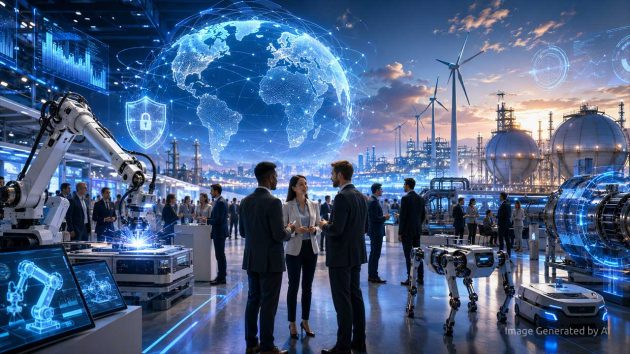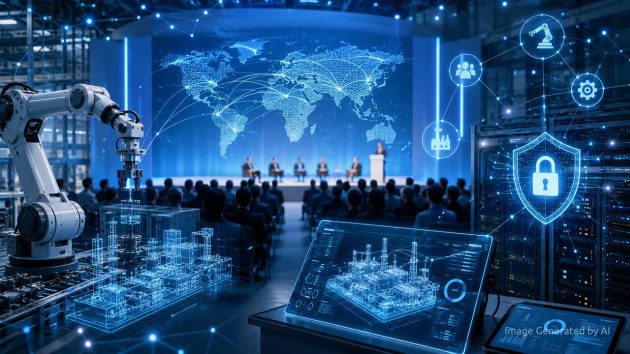
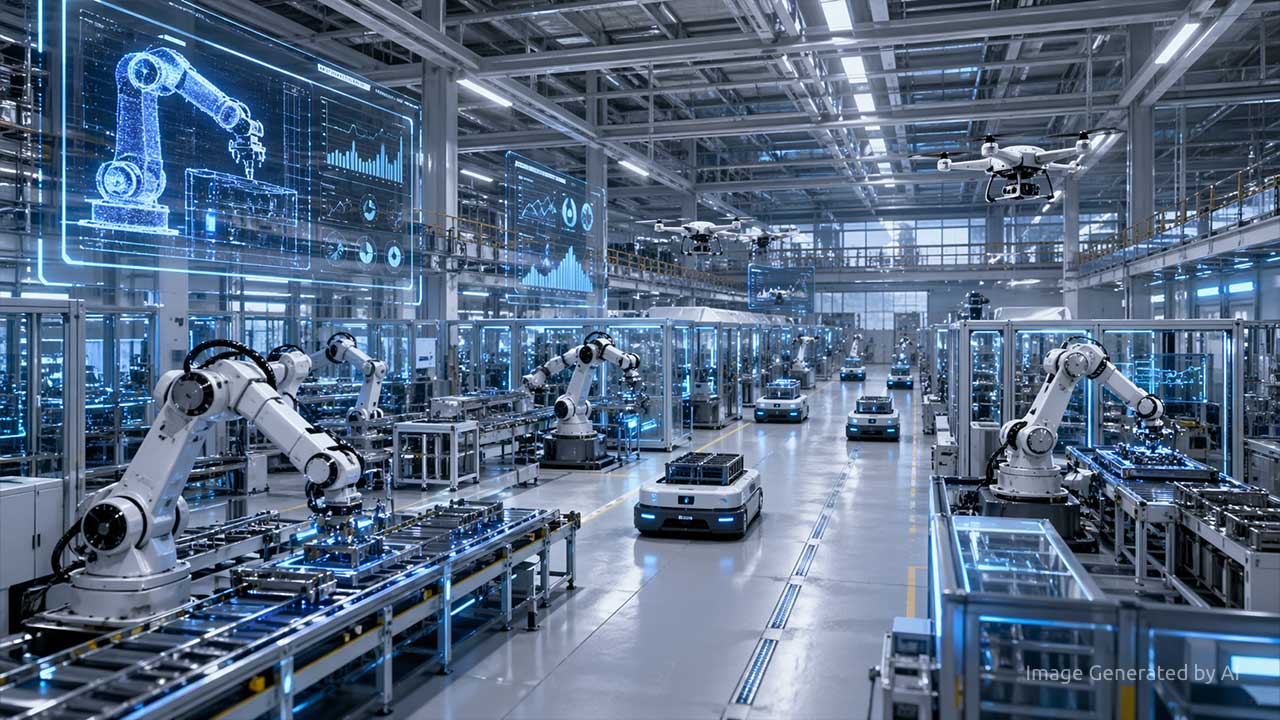
A Gatorade bottling line at a FIFA World Cup stadium, producing on site instead of shipping from a central plant, with flavors adjusted by region and Doctor Pepper for the Texas crowd. In this IIoT World article based on a video interview recorded at Hannover Messe 2026, Ujjwal Kumar (CEO, Siemens Industrial Automation) explains how AI-driven factories are moving from concept to production. At Hannover Messe 2026, Siemens demonstrated how AI makes this kind of pop-up manufacturing work, connecting design, simulation, PLCs, sensing technologies, and an AI agent that codes and troubleshoots directly on the factory layer into a single integrated flow. The company is also building the first fully AI-driven factory with NVIDIA in Erlangen, Germany, and announced the Eigen Engineering Agent, a tool that uses AI to write, deploy, and troubleshoot PLC and DCS automation for process plants.
Manufacturing Where the Demand Is
Pop-up manufacturing sets up production and intralogistics infrastructure close to the point of consumption rather than shipping finished goods from centralized facilities. The model gives manufacturers shorter lead times, lower transportation costs, and the flexibility to customize products by location.
The consumer packaged goods scenario Siemens showcased at Hannover Messe illustrates this. A beverage manufacturer preparing for a FIFA World Cup sets up a bottling line outside a specific stadium, producing Gatorade on site. Different stadiums produce different products based on regional preferences. In Texas, that might mean Doctor Pepper. The AI layer handles design, simulation, production optimization, and troubleshooting, connecting digital twins, PLCs, and sensing technologies in a single integrated flow.
This kind of regional, on-demand production was not available before AI entered the manufacturing stack. Setting up a production line close to demand previously required extensive manual programming, logistics coordination, and troubleshooting that made rapid deployment impractical. AI compresses that process into an integrated system where design, simulation, and factory-layer operations run together.
What Does a Fully AI-Driven Factory Look Like?
Siemens, NVIDIA, and other partners are building what they describe as the first fully AI-driven factory at the Siemens Electronics Factory in Erlangen, Germany. The project covers end-to-end AI optimization across an entire facility, with modules for digital twin simulation, predictive maintenance, and MES integration working as a unified system.
Manufacturers have applied AI to individual operations for years, a quality inspection module here, a predictive maintenance model there, but the Erlangen project is different in scope because all of these modules operate together, communicating and optimizing against each other across the full facility rather than running in isolated silos.
For the process industry, the same core operating system being developed in Erlangen supports plant operations with digital twin simulation, predictive maintenance scheduling, and direct MES integration for real-time operations visibility. Ujjwal Kumar, President of DI Automation Americas at Siemens, described this as the culmination of decades of progress in industrial automation: “I spent my career in automation. This is the utopian world we were waiting for.”
How Does the Eigen Engineering Agent Work?
The Eigen Engineering Agent, announced at Hannover Messe 2026, uses AI to design, deploy, and troubleshoot PLC and DCS automation projects. Siemens is rolling it out first in the process industry.
The problem it addresses is the automation programmer shortage, because every new manufacturing line, every reshoring project, and every new plant requires PLC and DCS programming that spans configuration, testing, ongoing maintenance, and reprogramming when process conditions change. The demand for automation programmers and developers exceeds the available workforce, and this shortage directly slows new plant construction and reshoring timelines in the United States.
The Eigen Engineering Agent applies AI to handle the design, deployment, and troubleshooting of automation projects. Once a project is set up, the agent can also adapt when process conditions change, reducing the dependency on manual reprogramming. For manufacturers pursuing reshoring in the U.S., this directly addresses one of the largest bottlenecks: finding enough skilled programmers to bring new facilities online.
Edge AI Moves from Discussion to Production
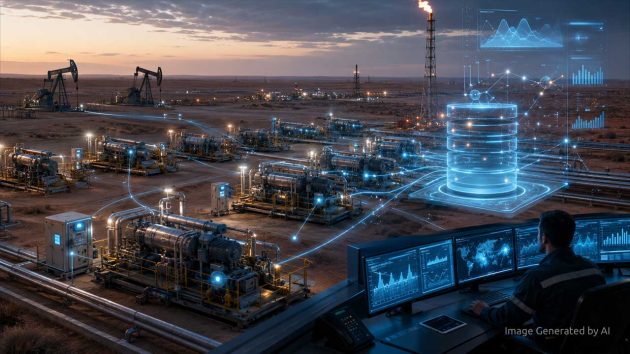
Edge AI compute is the capability that makes AI use cases discussed for the past two years production-ready in process plants. Moving AI inferencing to the edge means running predictive maintenance, quality monitoring, and optimization models directly on the plant floor.
Siemens reports that several customers are already deploying edge AI use cases in production environments, and that other automation vendors are seeing the same adoption pattern. The result is 2-5x faster deployment of process plant AI solutions compared to previous approaches.
The edge compute shift matters specifically for process industries where sending data to the cloud and waiting for results adds latency that production environments cannot tolerate. Running the AI compute on the edge, close to where the physical processes operate, removes that constraint and puts the capability where it is needed most. After two years of discussion, industrial AI is reaching the plant floor at production scale.
Sponsored by Siemens.
This article is based on a video interview with Ujjwal Kumar, President of DI Automation Americas at Siemens, and Lucian Fogoros of IIoT World, recorded at Hannover Messe 2026. AI tools were used to help summarize and organize the content. Reviewed and edited by the IIoT World editorial team.
Watch the full interview on YouTube.
Related coverage:
• Industrial AI Events in May 2026
• AI Manufacturing Day 2026 (May 12, Free Virtual)
• Hannover Messe 2026: IIoT World Show Floor Coverage
Frequently Asked Questions
1. What is pop-up manufacturing?
Pop-up manufacturing is a production model where manufacturing and intralogistics infrastructure deploy close to the point of consumption rather than in centralized facilities. AI handles the design, simulation, and optimization that make rapid setup possible. Siemens demonstrated this concept at Hannover Messe 2026 with a consumer packaged goods example involving on-site beverage bottling at event venues.
2. What is the Siemens Eigen Engineering Agent?
The Eigen Engineering Agent is an AI-powered tool announced by Siemens at Hannover Messe 2026 that designs, deploys, and troubleshoots PLC and DCS automation projects. It is rolling out first in the process industry and directly addresses the automation programmer shortage that slows reshoring and new plant construction.
3. How is AI being used in manufacturing operations?
AI in manufacturing now covers design, simulation, production optimization, and troubleshooting in a single integrated system. Specific applications include AI agents that write and deploy PLC code, digital twins for factory simulation and predictive maintenance, edge AI for real-time process monitoring on the plant floor, and pop-up manufacturing models that use AI to deploy production infrastructure close to demand rather than in centralized facilities.
4. How does edge AI speed up manufacturing deployment?
Edge AI places compute capability directly on the plant floor, running AI models where the physical processes operate. Siemens reports 2-5x faster deployment of process plant AI solutions with edge compute, and several customers are already running edge AI use cases in production.
About the author