
Agentic AI and Physical AI in Manufacturing
· Artificial Intelligence

Agentic AI and Physical AI in Manufacturing

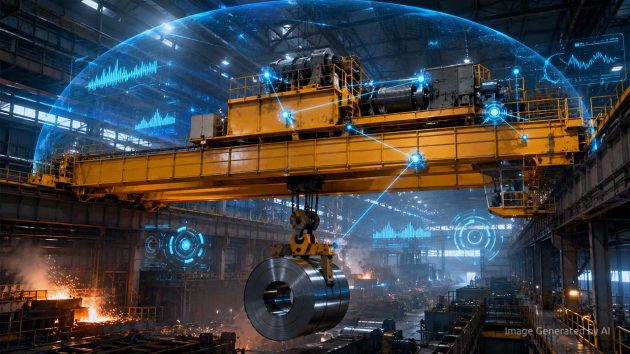
The ARC Advisory Group’s Industrial AI Pacesetter Report identifies a split in how manufacturers deploy artificial intelligence. Organizations classified as Pacesetters have moved beyond single-agent AI assistants and are deploying Collaborative Multi-Agent Systems where specialized AI agents communicate directly with one another. At the same time, ABB’s roadmap to autonomous operations defines six levels of […]

Read more →


How to Fund Industrial Cybersecurity Programs
· ICS Security

How to Fund Industrial Cybersecurity Programs

OT security teams present lists of critical vulnerabilities. Executives ask for Return on Investment. The conversation stalls because cybersecurity spending does not generate revenue; it prevents loss. At S4x26 in Miami, Hector R. Perez of Black & Veatch and Jacob Marzloff of Armexa presented a financial framework for OT security budgets that replaces ROI with […]

Read more →
AI Energy Management in Smart Manufacturing
· Energy

AI Energy Management in Smart Manufacturing

Manufacturers competing on ESG performance are replacing manual utility tracking with AI-driven systems that connect energy data to operations in real time. The results are measurable: one automotive manufacturer cut energy usage by over 20%, saving $35 million. A petrochemical producer reduced energy consumption by 8% across its furnaces. The Pearl Gas-to-Liquids plant in Qatar […]

Read more →
How Maintenance Debt Becomes a Cyber Risk
· ICS Security

How Maintenance Debt Becomes a Cyber Risk

Industrial facilities run on workarounds. Bypassed interlocks, offline sensors, and temporary fixes that have been in place for years are common realities of aging equipment and limited maintenance staff. OT cybersecurity assessments track patch backlogs, CVE remediation SLAs, and network vulnerabilities, but they routinely miss the physical conditions that already exist on the plant floor. […]

Read more →
Five Frontier Technologies Reshaping Manufacturing in 2026
· Artificial Intelligence & ML

Five Frontier Technologies Reshaping Manufacturing in 2026

The Stanford Emerging Technology Review (SETR) 2026, published by the Hoover Institution and Stanford School of Engineering, maps ten frontier technologies moving from research into real-world deployment. Five of them are hitting manufacturing operations directly: autonomous AI agents that promise to run multi-step production workflows but keep failing in practice, robotics platforms that still lack […]

Read more →
Virtual PLC vs Physical PLC in Manufacturing
· Smart Manufacturing

Virtual PLC vs Physical PLC in Manufacturing

Most manufacturers looking at software-defined automation ask the wrong question first. The question is not “should we replace our hardware PLCs with virtual ones?” At Siemens, the S7-1500 virtual PLC and the hardware PLC share the same components and behave identically as a control layer. The real question is where a virtual PLC actually improves […]

Read more →
Your Crane Doesn’t Fail on a Schedule. So Why Is It Monitored on One?
· Predictive Maintenance

Your Crane Doesn’t Fail on a Schedule. So Why Is It Monitored on One?

Standard predictive maintenance was built for steady-state machines. A duty-cycle crane behaves nothing like one, and that mismatch is exactly where the failures hide.The Short VersionA crane is the most consequential moving asset on your floor, and it’s often the one your monitoring system understands least. Battery-sampled predictive maintenance (PdM) sleeps through the moments that […]

Read more →
Industrial AI Is Waiting on Data Infrastructure
· Machine Learning

Industrial AI Is Waiting on Data Infrastructure

Industrial companies want AI systems that can predict failures, optimize production, reduce energy consumption, and improve operational visibility across facilities. Many already have sensors, connected equipment, cloud platforms, and years of historical operational data.Yet a growing number of manufacturers are discovering the same issue: AI initiatives are advancing faster than industrial data infrastructure.Hugo Vaz, CEO […]

Read more →
Why Predictive Maintenance Programs Stall After the First Win
· Predictive Maintenance

Why Predictive Maintenance Programs Stall After the First Win

Monitoring one pump with a vibration sensor and catching a failure two weeks early is straightforward. Doing the same thing across hundreds of assets in multiple plants, with different machine types, different maintenance histories, and different data systems, is where most predictive maintenance programs stall. During a panel at IIoT World’s AI Manufacturing Day 2026, […]

Read more →
What Makes Industrial AI Trustworthy?
· Smart Manufacturing

What Makes Industrial AI Trustworthy?

Manufacturing competition used to center on the mechanical speed of production lines and the efficiency of output. The advantage now belongs to organizations that react to data faster, catching a quality drift, a mechanical failure signal, or a process deviation before it becomes scrap, downtime, or a safety event. Reacting faster, though, requires trusting the […]

Read more →
One Database Swap Cut Equipment Monitoring Costs 60%
· Industrial IoT

One Database Swap Cut Equipment Monitoring Costs 60%

Manufacturing and energy companies collecting sensor data at scale are hitting the same wall: PostgreSQL, SQL Server, Oracle, and MongoDB were not designed for the volume, velocity, and retention demands of industrial time series. Mike Freedman, Co-founder and CTO at Tiger Data, spoke with Lucian Fogoros of IIoT World at Hannover Messe 2026 about what […]

Read more →
AI Governance vs Data Governance: Why They Need Opposite Approaches
· Artificial Intelligence

AI Governance vs Data Governance: Why They Need Opposite Approaches

Only 55% of data and analytics teams rate themselves effective at managing governance policies, the lowest score across 14 capabilities measured in the 2025 Gartner CDAO Agenda Survey. Building analytics solutions scored 85%. The gap shows that governance remains the weakest link in data and artificial intelligence programs, and most organizations respond with approaches that […]

Read more →