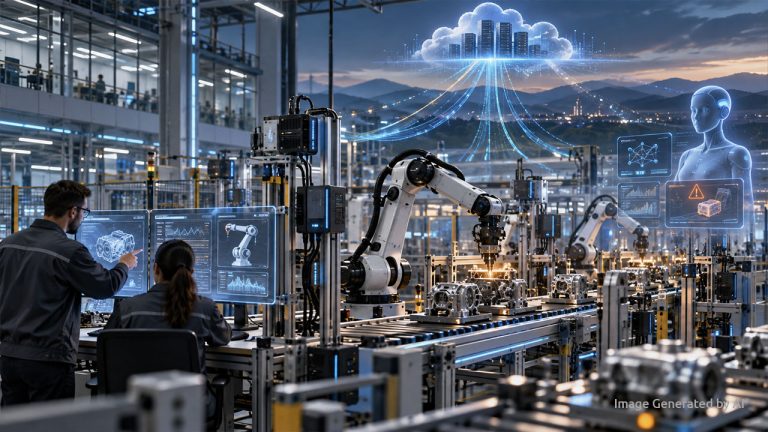
Humans still performed 75 to 80% of tasks in even the most advanced factories, Zeeshan Zia, CEO and Co-Founder of Retrocausal, told a Sustainability Day 2024 panel with Eve Psalti, Senior Director at Microsoft, and Michael Kuehne-Schlinkert, Co-Founder and CEO of Katulu. The panel covered where AI creates value beyond robotics and how to scale it across sites.
What Factory Tasks Fall Outside Robotic Automation?
Robots handle welding, painting, and pick-and-place, but the remaining 75 to 80% of factory tasks still depend on people. The U.S. Bureau of Labor Statistics identifies industrial engineering as one of the toughest fields to recruit for.
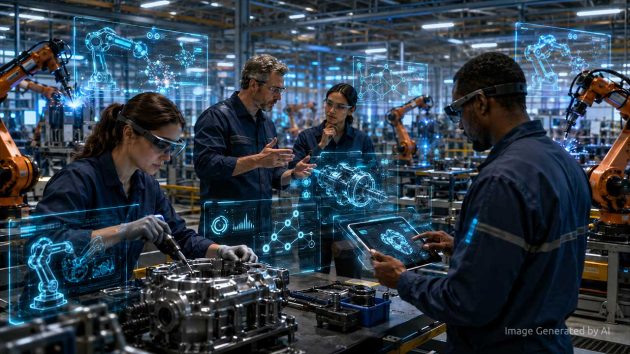
AI fills this gap by making workers more productive through just-in-time training, augmented reality guidance, and process optimization that recommends assembly layout adjustments or automates robot programming.
“AI should address human work, providing tools that improve cycle times, reduce errors, and adapt to labor shortages,” Zia said.
AI models also anticipate failures in predictive maintenance and support as-a-service business models. Computer vision catches defects earlier in quality control, saving resources and improving efficiency.
How Should Manufacturers Choose the Right AI Model?
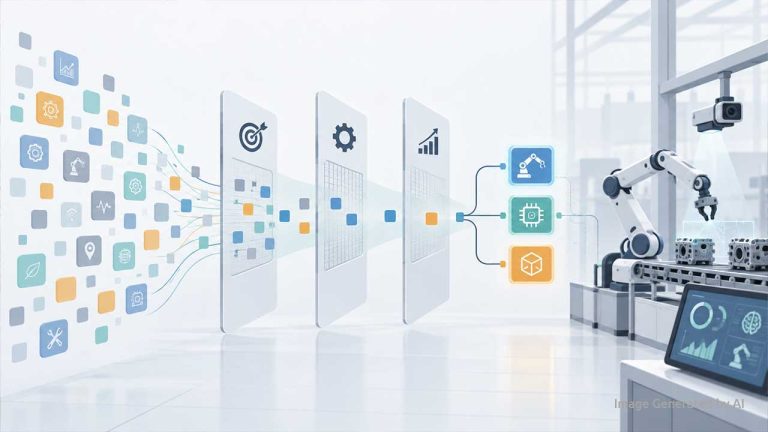
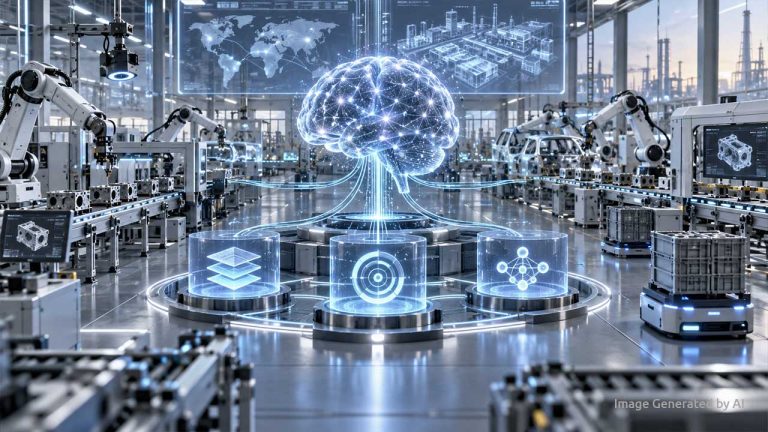
The AI ecosystem offers three categories of models. Traditional AI services include computer vision, text analytics, and speech recognition for tasks like defect detection and customer service. Generative AI models handle complex, multi-step tasks simultaneously, such as transcribing calls, analyzing sentiment, and summarizing conversations. Multimodal AI models process text, images, video, and audio inputs for richer and more versatile applications.
The right choice depends on the problem: smaller, specialized models drive faster return on investment for targeted use cases, while generative AI fits complex, multi-step tasks.
What Does Manufacturing AI Integration Require?
Successful AI deployment starts with identifying specific pain points and focusing on high-priority inefficiencies. Clean, labeled, and relevant data is critical, since training AI models depends on data quality. A center of excellence helps share best practices across departments and accelerate adoption, and employees need training to use AI tools effectively and foster a culture of improvement. Manufacturers should also address bias, transparency, and traceability to ensure ethical implementation.
Proof-of-concept projects often fail because of misalignment between ground-level operations and leadership goals. Champions of new technology need to understand internal buying processes, align expectations, and define clear ROI metrics before deployment begins. Many POCs are also designed for specific configurations and do not generalize well across different processes or factories.
FAQ
1. How does AI augment human workers in manufacturing?
AI augments factory workers through tools that improve cycle times, reduce errors, and adapt to labor shortages. According to Retrocausal, applications include just-in-time training, augmented reality guidance, and process optimization that recommends assembly layout adjustments or automates robot programming. These tools target the 75 to 80% of factory tasks that humans still perform in even the most advanced factories.
2. What are the three categories of manufacturing AI models?
Manufacturing AI models fall into three categories according to Microsoft. Traditional AI services include computer vision, text analytics, and speech recognition for tasks like defect detection and customer service. Generative AI models handle complex, multi-step tasks such as transcription, sentiment analysis, and summarization simultaneously. Multimodal models process text, images, video, and audio inputs for richer and more versatile applications.
3. What steps should manufacturers take before deploying AI?
Manufacturers should start by identifying specific pain points and focusing on high-priority inefficiencies, according to a Microsoft senior director at the panel. Data readiness is the second priority: training data must be clean, labeled, and relevant. Establishing a center of excellence helps share best practices across departments and accelerate adoption. Employee training and responsible AI practices, including bias, transparency, and traceability, complete the preparation.
4. Why do AI proof-of-concept projects fail in manufacturing?
AI proof-of-concept projects in manufacturing commonly fail because of misalignment between ground-level operations and leadership goals, according to Retrocausal and Katulu panelists. Champions of new technology need to understand internal buying processes, align expectations, and define clear ROI metrics before deployment. Many POCs are also designed for specific configurations that do not generalize well across different processes or factories.
Related from IIoT World
- The Untapped Potential of AI: Moving Beyond Automation to Empower Humans in Manufacturing
- Small Language Models: Factory AI Infrastructure
Sources:
1. Sustainability Day 2024 panel: “AI-Driven Process Optimization: Achieving Faster Turnarounds and Higher Margins,” sponsored by Retrocausal
This article is based on a panel discussion with Zeeshan Zia, CEO and Co-Founder of Retrocausal, Eve Psalti, Senior Director at Microsoft, and Michael Kuehne-Schlinkert, Co-Founder and CEO of Katulu, moderated by Hamish Mackenzie at Sustainability Day 2024. AI tools were used to help summarize and organize the content. Reviewed and edited by the IIoT World editorial team.