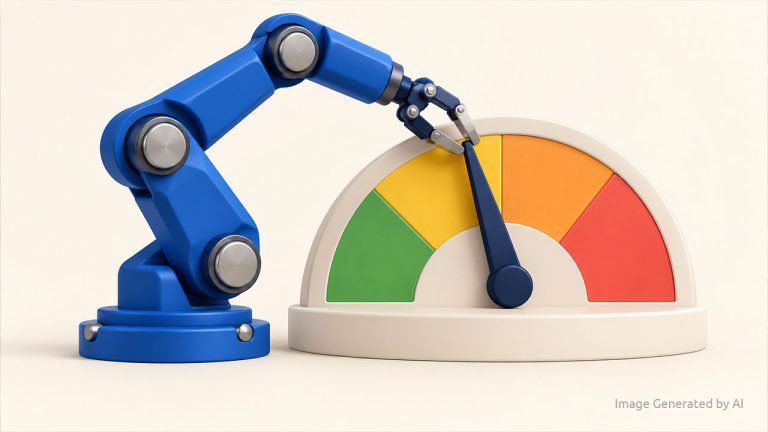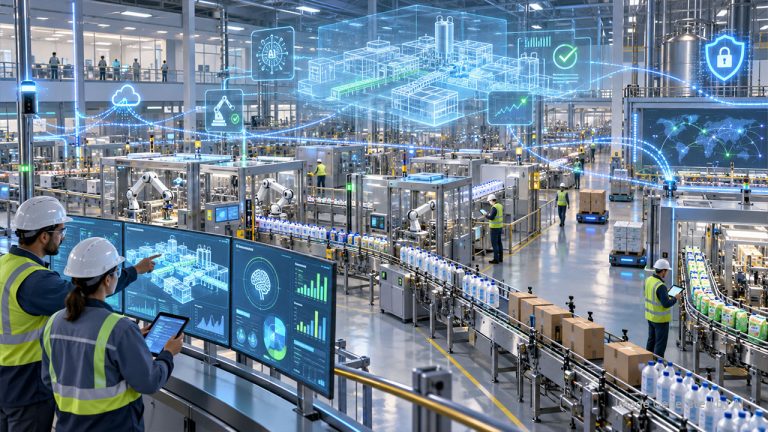
In 2026, the primary barrier to manufacturing efficiency is the abundance of data. Modern plants now monitor tens of thousands of assets and hundreds of thousands of individual points. However, this connectivity has created a new operational hazard: Alert Fatigue. When a plant manager receives thousands of notifications a day, the most critical “signal” is often lost in a sea of digital “noise.”
The 100,000-Alert Filter
To understand the scale of the problem, consider the metrics of a high-performance industrial environment. A typical setup monitoring 25,000 assets can generate over 100,000 alerts every day. For a human maintenance team, this volume is impossible to manage, leading to “dashboard syndrome”, where critical warnings are ignored because they are indistinguishable from routine notifications.
The solution lies in a layered intelligence stack that filters this data through three specific lenses:
- Anomaly Detection: Machine learning identifies the 800-1,000 points that deviate from the physics-based norm.
- Prescriptive Refinement: LLM-enabled AI narrows these down to the 35–40 actions that truly impact production.
- Expert Validation: Final verification by a center of excellence ensures the recommendation is actionable.
The High Cost of the “Missed Signal”
In heavy process industries, such as steel, cement, tire manufacturing, and mining, the financial stakes of a missed signal are immense. When a critical asset fails unexpectedly, the cost of downtime is estimated between $30,000 and $50,000 per hour.
By moving from a “visibility-first” model (dashboards) to a “velocity-first” model (prescriptions), manufacturers are achieving a 96% acknowledgement rate on AI recommendations. This high level of trust is built because the system doesn’t just provide an alert; it provides a commercially driven decision that protects the bottom line.
Beyond Visibility: The Move Toward Velocity
True competitiveness in 2026 is measured by how fast a manufacturer can move from “knowing” to “doing.” A dashboard that merely shows a machine is running hot is a lagging indicator. A prescriptive system that recommends a specific bearing replacement during a scheduled 2-hour window next Tuesday is a velocity indicator.
As industrial systems move toward semi-autonomous operations, the role of the plant leader is shifting. They are no longer “troubleshooters” digging through data; they are “decision-executors” who rely on AI to sharpen the strategic signal that actually matters.
Key Operational Benchmarks:
- Current Noise: 100,000+ alerts per day in large-scale operations.
- Target Signal: 35–40 high-accuracy recommendations per day.
- Downtime Stakes: $50,000 per hour in process industries.
- Accuracy Goal: 99.9% precision to maintain shop-floor trust.
This article was developed from the technical and operational insights shared by our panel of experts during IIoT World Manufacturing Day:
- Karthikeyan Natarajan, Co-CEO, Infinite Uptime Inc.
- Jeff Winter, Vice President of Business Strategy, Critical Manufacturing.
- Carl March, Manufacturing Transformation Leader, Ernst & Young.
- Michael O’Donnell, Chief Operating Officer, MAGNET.
Sponsored by Infinite Uptime Inc.
Frequently Asked Questions
1. What is alert fatigue in modern manufacturing?
Alert fatigue occurs when plant managers and maintenance teams receive tens of thousands of daily notifications from connected assets. This massive volume of data creates “dashboard syndrome,” making it nearly impossible for humans to distinguish critical machine failure signals from routine digital noise.
2. How does AI solve industrial alert fatigue?
AI solves alert fatigue using a layered intelligence stack. First, machine learning algorithms identify physical anomalies. Next, LLM-enabled AI refines these deviations into a shortlist of 35 to 40 highly prescriptive, actionable recommendations, which are then validated by human experts.
3. What is the average cost of unplanned downtime in process industries?
In heavy process industries, such as steel, cement, tire manufacturing, and mining, the financial cost of a “missed signal” that leads to an unexpected asset failure is estimated to be between $30,000 and $50,000 per hour.
4. What is the difference between a visibility and a velocity operational model?
A visibility model relies on lagging indicators, like dashboards showing that a machine is running hot. A velocity model relies on AI-driven prescriptions that tell operators exactly what to do and when, such as recommending a specific bearing replacement during a scheduled maintenance window, allowing the team to act immediately.