Industrial environments have been built one use case at a time, leaving most large manufacturers with fragmented IT and OT infrastructure. A manufacturer with 10 sites might run four different home-grown MES platforms, three different ERPs, and entirely custom data connections between them. As organizations deploy artificial intelligence, that absence of standardized data architecture has become the primary bottleneck. AI hits a wall when data is uncontextualized.
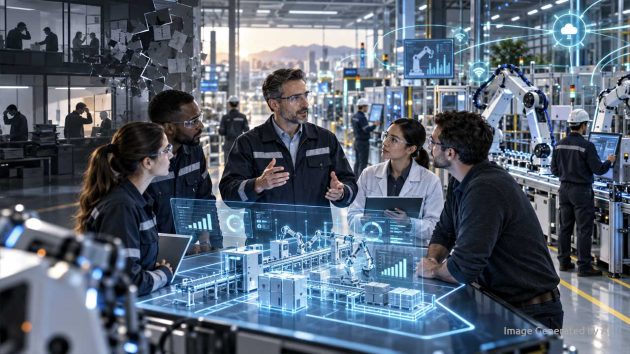
At IIoT World’s AI Manufacturing Day 2026, a panel featuring Aron Semle, CTO of HighByte, Olivia Morales, Senior Solutions Architect at CESMII, and Matthew Parris, Director of Quality Test Systems at GE Appliances, examined how the Unified Namespace and the emerging i3X open standard work together to give factory data a common API.
What Is a Unified Namespace in Manufacturing?
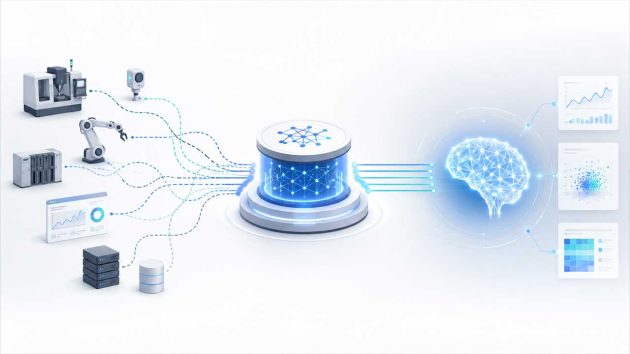
A Unified Namespace (UNS) is a centralized software architecture that acts as the single source of truth for all data and events within a business. Instead of point-to-point connections where an ERP talks to an MES, or a SCADA system talks to a predictive maintenance tool, all systems publish their data to the UNS and any authorized system can consume it.
Moving data into a central broker, however, does not automatically make it usable. If data arrives in different formats, different units (Celsius vs. Fahrenheit), and different structures, AI applications still cannot interpret it without heavy manual mapping. A UNS solves the connectivity problem. The data contextualization problem remains.
Why MQTT and OPC UA Alone Cannot Deliver Interoperability
Many manufacturers believe that adopting standard communication protocols is the definitive fix for interoperability. The session challenged that assumption by examining the five layers of data access that sit above simple transport.
MQTT only defines the transport layer. Everything above it, including data encoding and type definitions, is completely open-ended. OPC UA provides definitions across all five layers but offers so many implementation options that vendors build it in entirely different ways. When an AI system or enterprise application tries to read data from different machines, integration still requires massive amounts of custom engineering and brittle shims, particularly because IT systems like SAP and ERP platforms do not speak MQTT or OPC UA natively.
In practice, most factories have accumulated their data infrastructure one system at a time over decades, without an overarching strategy for how operational data would be consumed by analytics or AI applications.
What Is i3X and How Does It Work?
To address this interoperability gap, CESMII (The Smart Manufacturing Institute) brought together manufacturers and vendors to define i3X: a common, open API for factory data.
i3X does not replace existing protocols. It sits on top of them. As Olivia Morales of CESMII explained, HTTP did not replace TCP/IP but enabled web browsers to access the internet. i3X works the same way: it augments protocols like MQTT and OPC UA with standard methods to read, subscribe to, and explore factory data using common web technologies (HTTP and JSON). The API provides both type definitions (namespaces) and instantiated data (address space), which then allows value creation through AI, visualization, and other applications.
With a standard API in place, business users and AI algorithms can query the system to return all instances of a specific asset type, discover assets automatically, read current values, and pull historical data, without requiring a controls engineer to manually wire up tags for each new application. The i3X beta was announced at Hannover Messe 2026, with vendors including Ignition, Flow Software, AWS, and Microsoft Azure already implementing the specification.
How Does Standardized Data Support Factory Digital Twins?
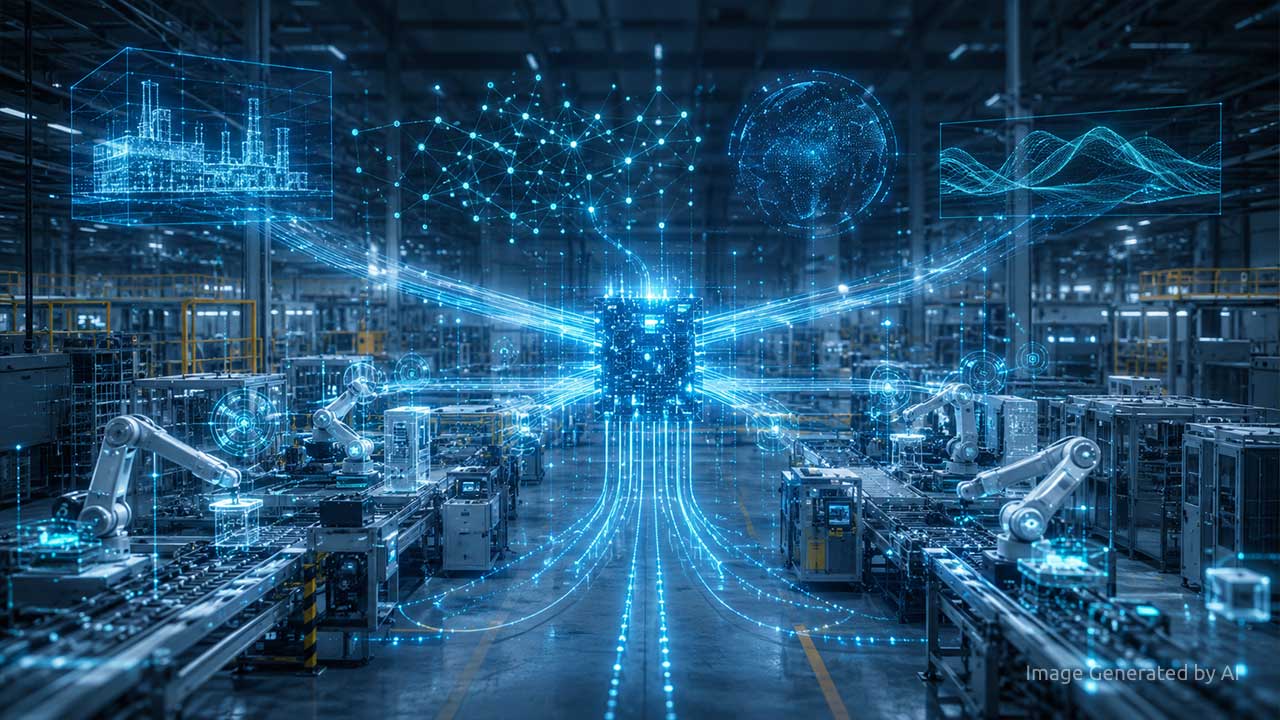
A digital twin requires context: it needs to know what an asset is, where it sits in the plant hierarchy, and what its operational parameters are. i3X provides that contextualization by organizing data semantically. A digital twin or AI agent does not see a raw tag like “PLC_1.AI.0145X”; it sees a clearly defined “reactor” with standard attributes.
This allows organizations to build a digital replica of a production site that updates in real time, grounded in standardized, machine-readable data rather than custom-mapped tag lists.
The session pointed toward a “manufacturing app store” model as the end goal. Without a common API, every new application requires months of custom integration. A standardized API layer would allow applications to be pointed at an endpoint and start delivering value immediately.
FAQ
1. What is i3X and how does it relate to Unified Namespace?
i3X is a common, open API standard for factory data developed by CESMII (The Smart Manufacturing Institute). It sits on top of existing protocols like MQTT and OPC UA, providing standard methods to read, subscribe to, and explore factory data using HTTP and JSON. A Unified Namespace provides the centralized data bus; i3X adds the semantic layer that makes UNS data machine-readable for AI agents and enterprise applications without custom integration.
2. Why can MQTT and OPC UA not deliver true plug-and-play interoperability?
MQTT only defines the transport layer, leaving data encoding and type definitions open-ended. OPC UA provides definitions across all layers but offers so many implementation options that vendors build it differently. AI systems and enterprise applications still require custom engineering to read data from different machines, even when both use the same protocol.
3. How does i3X help build a factory digital twin?
i3X organizes factory data semantically, providing the context that digital twins require: what an asset is, where it sits in the plant hierarchy, and what its operational parameters are. Instead of raw PLC tags, i3X presents clearly defined assets with standard attributes, allowing digital replicas to update in real time based on standardized, machine-readable data.
This article is based on a panel session at AI Manufacturing Day 2026 with Aron Semle, CTO of HighByte; Olivia Morales, Senior Solutions Architect at CESMII; and Matthew Parris, Director of Quality Test Systems at GE Appliances. Moderated by Adam Napolitano of Triple Circle Partners.
AI tools were used to help summarize and organize the content. Reviewed and edited by the IIoT World editorial team.
Editorially Independent. Sponsored by HighByte.