
Smart Manufacturing

Top Smart Factory Technologies 2026: The Agentic AI and UNS Revolution
The manufacturing industry has reached a critical inflection point. The era of "pilot purgatory" is over. Based on the insights from IIoT World Days 2025, the next phase of industrial transformation is defined by three core…
The End of “Rip and Replace”? Why the Future of Manufacturing is Software-Defined
In the fast-paced world of industrial automation, manufacturers face a brutal dilemma. On one hand, the market moves at breakneck speed, demanding agility and new digital capabilities. On the other hand, plants are filled with assets…
2026 Smart Manufacturing Ecosystem: 27 Platforms for Industrial AI
The manufacturing sector is currently navigating a massive transition from static dashboards to Agentic AI, systems that can perceive, reason, and act autonomously. However, as highlighted by industry leaders during the sessions and discussions at IIoT…
2026 Smart Factory Outlook: AI, Robotics, and the New Economic Resilience
The industrial landscape of 2026 has evolved beyond "growth at all costs" to a focus on technological survival. As we navigate a sluggish business cycle, rising power costs, and a staggering labor gap of 425,000 workers, automation…

2026 Industrial AI Trends: Driving Global Manufacturing with Agentic Systems
IIoT World analyzed the defining industrial AI trends shaping manufacturing in 2026, based on conference sessions, expert interviews, and deployment data from companies including Suzano, Danfoss, and C3 AI. Agentic AI in 2026 refers to systems…

15 Real-World AI in Manufacturing Use Cases: From Predictive Maintenance to Agentic AI
The industrial sector is accelerating the adoption of practical, high-impact AI applications. Based on insights from IIoT World Days 2025, industry leaders focus on scaling these technologies across global operations. From Agentic AI that autonomously manages supply chains to Computer…
The Future of Industrial AI: How Orchestration Solves the “Process Drift” Challenge
In this IIoT World interview, industry experts examine how AI orchestration solves the process drift challenge that stalls most industrial AI deployments, moving beyond data drift to address the real-world complexity of chemical plants, refineries, and…

The Shift Toward Autonomous Production in Process Industries
The definition of autonomy in manufacturing is shifting from a conceptual goal to a practical requirement. According to Axel Lorenz, CEO of Process Automation at Siemens AG, autonomous production allows facilities to maintain consistent output despite…

The Small and Medium Manufacturer (SMM) Data Reality Check: An AI Readiness Checklist
How do you determine if your plant is ready for Prescriptive AI? Before investing in a prescriptive AI platform, Small and Medium Manufacturers (SMMs) must verify that their data environment is a "clean engine" ready for high-performance…

The Evolution of Reliability: How Agentic AI Closes the ‘Detect-to-Do’ Gap
Agentic AI moves industrial maintenance beyond simple alerts into autonomous execution. While standard predictive maintenance forecasts failures, Agentic AI coordinates the entire resolution process, querying inventory (CMMS), scheduling downtime (MES), and drafting work orders without manual…
The Digital Backbone: Bridging the Manufacturing Expertise Gap with Prescriptive AI
The manufacturing sector is currently facing an existential challenge: the "brain drain." With approximately 30% of the workforce nearing retirement, the industry is losing decades of unwritten "tribal knowledge." In an environment of tightening margins and increasing complexity,…
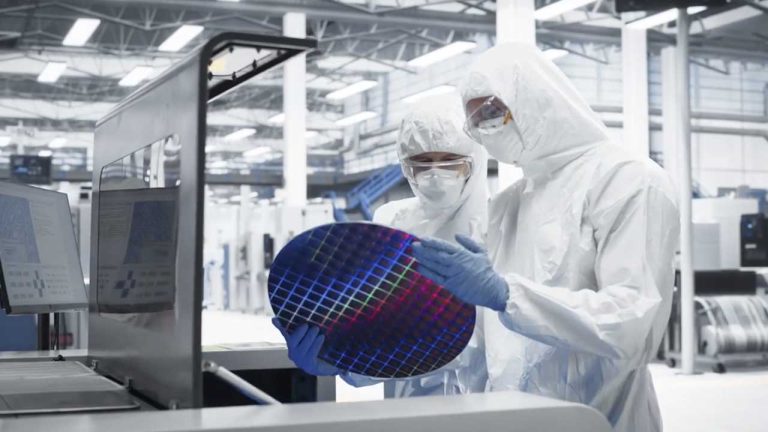
The New Skills Gap: What’s at Stake in the Global Chip Race
Employer-educator partnerships are key to overcoming the semiconductor talent shortage, accelerating innovation, and maintaining economic competitiveness. Fabrication labs, known as “fabs,” are the linchpin of the semiconductor industry. Fabs are where microchips are manufactured — the…