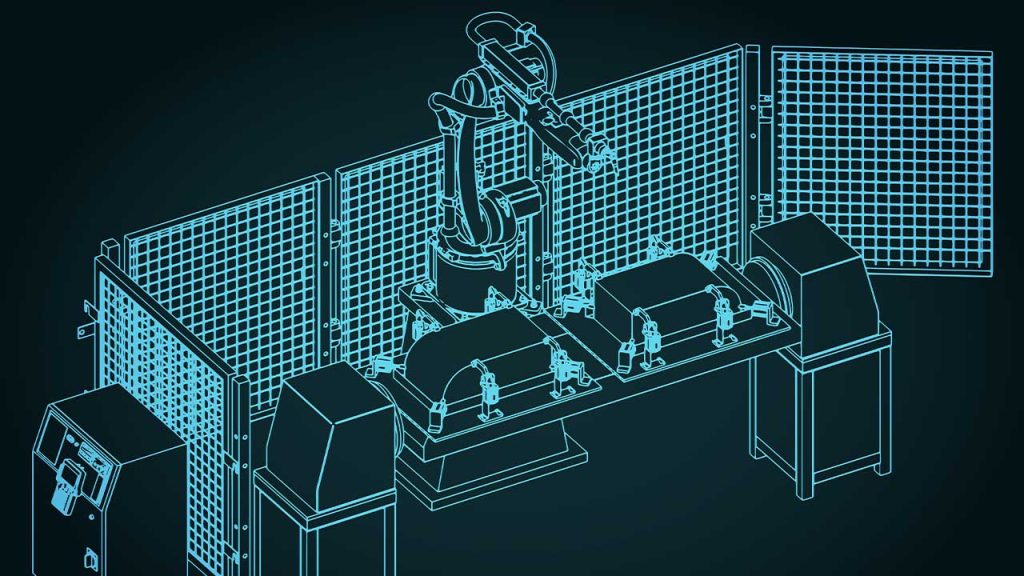

Is a PoC the Right Path for Manufacturing AI?
· Hybrid Manufacturing

Is a PoC the Right Path for Manufacturing AI?

PoCs get a bad rap in factories—they often feel like science projects that never leave the lab. They don’t have to. When a PoC is designed to prove scale, not just possibility, it becomes the fastest path to real plant results. This piece distills a candid question from AI Frontiers 2025 into a practical, no-fluff playbook drawn from […]

Read more →


AI in Energy: Why Progress Depends on People and Structure
· Energy

AI in Energy: Why Progress Depends on People and Structure

AI adoption in energy operations has moved past debate. The real challenge, as Natalia Klafke, Executive Vice President of Energy and Sustainability at Radix, observed at Impact 2025, is execution: many companies have pilots and dashboards, but few have built the data infrastructure, organizational alignment, and change management practices needed for sustained results.Natalia Klafke, Executive […]

Read more →
Modernizing Without Disruption: A Practical Approach to Industrial Data Growth
· Digital Disruption

Modernizing Without Disruption: A Practical Approach to Industrial Data Growth

Industrial operations depend on data historians to record what’s happening on the line or in the field. But as systems evolve toward Industry 4.0, many teams find that their historians weren’t built for what’s next — the volume, velocity, and variety of time series data now generated by sensors, PLCs, and edge devices.Replacing these systems […]

Read more →
The Most Effective Strategies for Integrating Agentic AI Into Legacy Manufacturing Environments Without a Full Overhaul
· Hybrid Manufacturing

The Most Effective Strategies for Integrating Agentic AI Into Legacy Manufacturing Environments Without a Full Overhaul

Answering the audience’s questionsIntegrating agentic AI into legacy manufacturing does not require replacing existing infrastructure. Panelists from Litmus, ZF Group, CESMII, and Arch Systems at AI Frontiers 2025 outlined a practical six-part approach: free trapped data, add semantic context through ontologies, respect brownfield reality using interface classes, target repetitive tasks nobody wants to do, start […]

Read more →
How AI and the Digital Thread Improve Machine Tool Systems
· Discrete Manufacturing

How AI and the Digital Thread Improve Machine Tool Systems

Artificial intelligence and digital connectivity are transforming how machine tools operate — from the way parts are designed and programmed to how data flows across production. The combination of AI-driven automation and a digital thread enables faster programming, more accurate simulations, safer workflows, and consistent quality on the shop floor. These developments were explained by […]

Read more →
Managing the Rise of Agentic AI in Manufacturing
· Hybrid Manufacturing

Managing the Rise of Agentic AI in Manufacturing

Managing agentic AI in manufacturing requires governance built on three principles: centralized control, open standards, and traceable data infrastructure. Peter Sorowka, CEO of Cybus, outlines how manufacturers in regulated sectors like pharma and energy can address interoperability, prevent agent sprawl, and track success beyond ROI.How Can Regulations Keep Up With Agentic AI?Risk-based regulatory frameworks are […]

Read more →
Embedding AI Agents Into Industrial Data Pipelines: What Manufacturers Should Watch
· Artificial Intelligence

Embedding AI Agents Into Industrial Data Pipelines: What Manufacturers Should Watch

AI agents embedded directly inside industrial data pipelines, rather than layered on top as analytics, are now operationally viable for manufacturers. At Cognite’s 2025 event, SVP Laxmi Akkaraju outlined how this approach delivers autonomous root cause analysis, transparent reasoning, and drift-aware model governance across OT and IT systems.Here are the key takeaways and what they […]

Read more →
Digital Twins in CNC: From Virtual Proof to Profit
· Discrete Manufacturing

Digital Twins in CNC: From Virtual Proof to Profit

The race in CNC machining is no longer about who has the fastest spindle—it’s about who can validate reality before cutting metal. Across global manufacturing, digital twin technology is emerging as a quiet disruptor, letting engineers simulate machines, verify programs, and train workers in a zero-risk environment.As Siemens’ Dave Morley explained during CXO Insights, digital twins are […]

Read more →
When Machines Negotiate: A New Way to Run Manufacturing
· Hybrid Manufacturing

When Machines Negotiate: A New Way to Run Manufacturing

AI agents in manufacturing can now negotiate trade-offs between energy use, uptime, and quality in real time, without human intervention. According to Technology Advisor Omid Givehchi of ATELIC, this approach, called intelligent autonomy, keeps humans in command while AI handles continuous KPI balancing at the edge, where production data is generated.That’s starting to change.A new […]

Read more →
Why Time-Series Data Is Manufacturing’s Most Underused Asset
· Industrial IoT

Why Time-Series Data Is Manufacturing’s Most Underused Asset

Time-series data is manufacturing’s most underused asset. Every machine produces continuous signals: vibration signatures, torque readings, and temperature curves. These signals can reveal what will happen, including what happened. Yet most plants aggregate this data into averages, store it in silos, or discard it entirely, losing the granularity that predictive models depend on.Yet most plants […]

Read more →
AI in Energy Is Growing Up: From Analytics to Real Operations
· Artificial Intelligence

AI in Energy Is Growing Up: From Analytics to Real Operations

AI in energy has moved past dashboards and reports. According to Simon Williams, Chief AI Officer at ATELIC, industrial AI now detects equipment fatigue hours before failure, adjusts production flows automatically, and predicts energy demand shifts before grid instability hits. The shift is from describing what happened to deciding what to do next.This shift is […]

Read more →
Building the Data Foundations for Agentic AI in Manufacturing
· Artificial Intelligence

Building the Data Foundations for Agentic AI in Manufacturing

Agentic AI in manufacturing requires unified, low-latency data access across ERP, MES, and historian systems. According to Peter Sorowka of Cybus GmbH and Sebastian Trolli of Frost & Sullivan, data silos, missing metadata, and inconsistent architectures are the primary barriers stopping autonomous AI agents from acting reliably on the factory floor.Should Agentic AI Use a […]

Read more →