Augmented reality (AR) is transforming how industrial organizations perform remote maintenance on critical equipment. By overlaying digital instructions, real-time sensor data, and expert guidance onto a technician’s field of view, AR remote maintenance reduces mean time to repair (MTTR), eliminates unnecessary travel, and enables less experienced workers to resolve complex issues with remote expert support. IIoT World covers augmented reality as a key enabling technology for smart manufacturing, predictive maintenance, and connected worker strategies across process and discrete industries.
As industries increasingly adopt the Industrial Internet of Things (IIoT), the need for real-time, efficient, and cost-effective maintenance solutions has never been greater. One of the most promising technologies for improving maintenance processes is Augmented Reality (AR) and Virtual Reality (VR). These immersive technologies offer unique capabilities that can transform how workers interact with machinery, troubleshoot issues, and receive training, especially in remote or challenging environments like offshore operations or large manufacturing facilities. By integrating AR/VR with IoT platforms, companies can enhance remote maintenance, streamline operations, and improve safety across their industrial operations.
Enhancing Remote Maintenance with AR/VR
Remote maintenance is critical in industries such as offshore energy production, where personnel may be isolated on platforms or vessels far from land-based experts. Traditionally, resolving issues in these environments required experts to travel long distances, a process that was costly, time-consuming, and often disruptive to operations. However, with the use of AR/VR technologies, remote maintenance has become significantly more feasible.
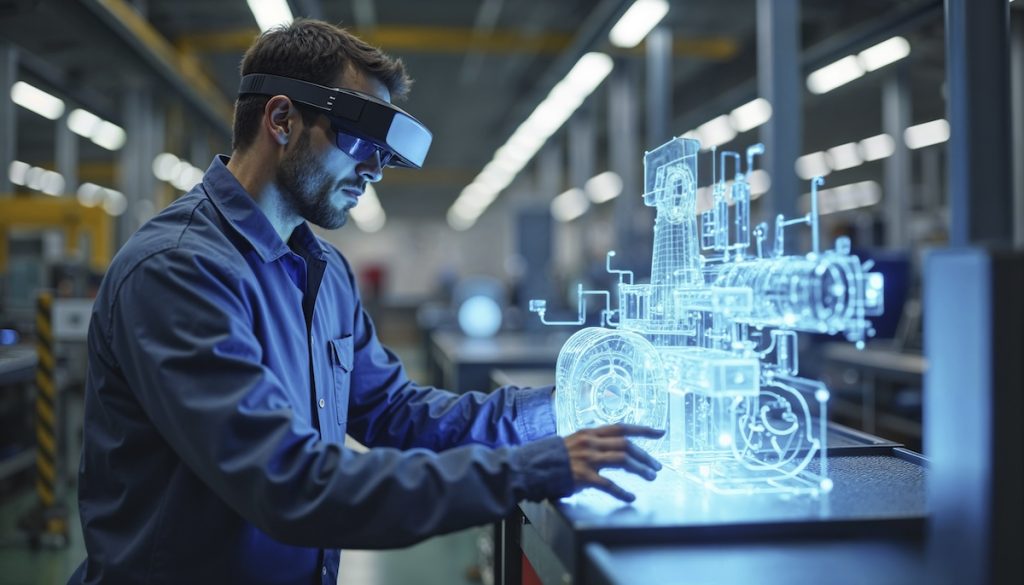
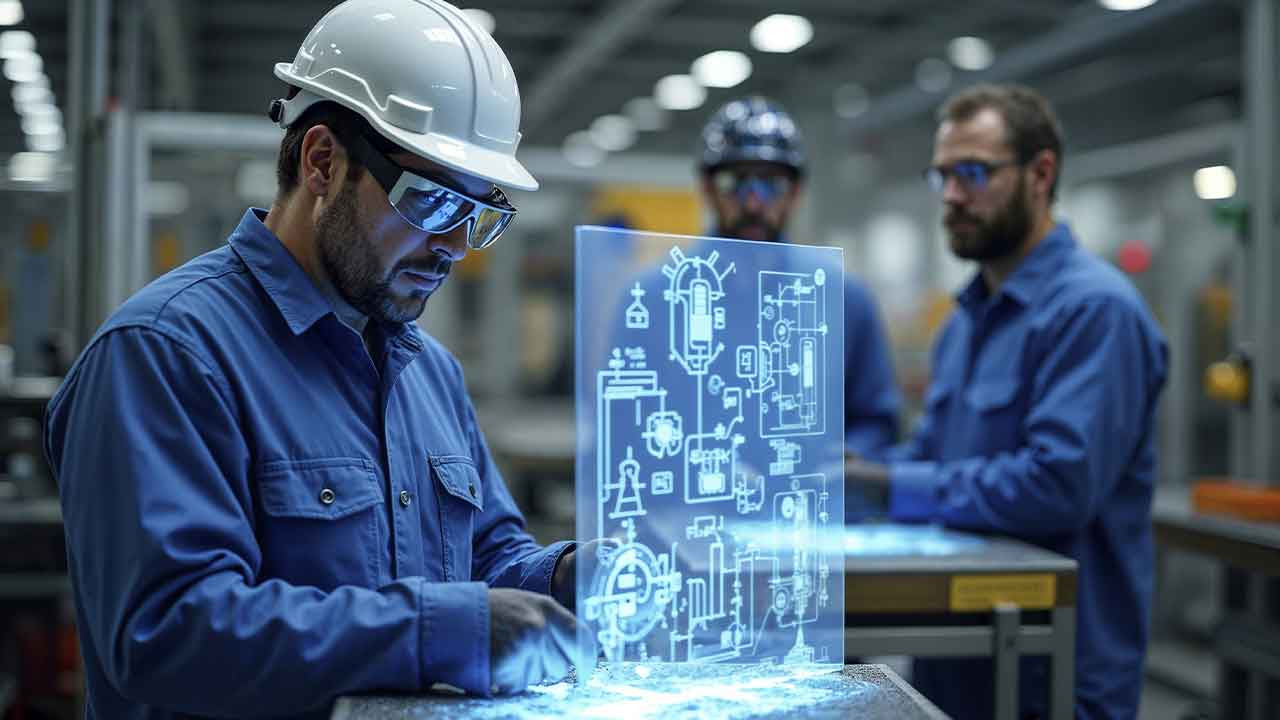
AR tools like Microsoft’s HoloLens 2 are enabling workers on-site to receive real-time guidance from experts located anywhere in the world. Using AR glasses or headsets, on-site personnel can share their view with remote technicians, who can then overlay instructions, schematics, or step-by-step troubleshooting guidance directly onto the worker’s field of vision. This allows maintenance teams to resolve issues faster and more accurately, without the need for travel, reducing downtime and operational costs.
Virtual Reality for Training and Upskilling
In addition to remote assistance, AR and VR are increasingly being used for training and upskilling workers. For industries with high-risk environments or complex machinery, VR provides a safe and controlled environment for workers to practice operations and maintenance tasks before applying their skills on the job.
By using VR simulations, workers can familiarize themselves with equipment, troubleshoot issues, and practice responses to emergencies, all in a virtual setting. This hands-on experience builds confidence and competence, ultimately improving safety and efficiency when dealing with real equipment. As IIoT systems become more sophisticated, VR training can play a key role in ensuring that the workforce is well-prepared to handle advanced technologies without risking costly mistakes or accidents.
Overcoming Connectivity and Hardware Challenges
While the benefits of AR and VR in remote maintenance are clear, there are still several challenges to overcome in their implementation. One of the main hurdles is connectivity, especially in offshore or remote environments where internet and Wi-Fi signals may be unreliable. AR and VR applications rely on stable, high-bandwidth connections to transmit real-time data and visuals effectively. For remote locations with limited connectivity, this can present difficulties.
However, advancements in edge computing and private 5G networks are helping to address these issues. By processing data locally on-site, edge computing reduces the dependency on cloud-based solutions, ensuring that critical maintenance information can still be accessed even when internet connectivity is spotty. Additionally, private 5G networks can provide the high-speed, low-latency connections needed to support AR/VR applications in remote areas, offering a more reliable and scalable solution than traditional satellite connections.
Another challenge is the hardware itself. AR and VR technologies, particularly headsets and glasses, need to be durable, comfortable, and user-friendly for workers in demanding environments. This requires hardware that is not only robust enough to withstand industrial conditions but also lightweight and intuitive enough to allow workers to perform tasks without hindrance. As AR and VR technology continues to evolve, companies are making strides in improving the usability and functionality of these devices for industrial applications.
The Future of AR/VR in Industrial Maintenance
As industries continue to explore the possibilities of AR and VR, the potential for these technologies to transform remote maintenance is vast. In the future, we can expect even more seamless integration between AR/VR systems and IIoT platforms, where real-time data from sensors and machines is directly fed into the AR/VR environment, providing a comprehensive view of machine health, performance and issues. This integration will allow for predictive maintenance, where technicians can detect potential problems before they occur, reducing downtime and avoiding costly repairs.
Moreover, the expansion of 5G networks, along with advances in AI and machine learning, will enhance the capabilities of AR/VR systems, enabling faster, more accurate diagnostics and improved decision-making. These innovations will further support industries in optimizing their maintenance processes, improving safety, and increasing operational efficiency.
Integrating AR and VR technologies with IIoT platforms represents a major leap forward in how industrial maintenance is performed. By enabling remote maintenance assistance and providing immersive training experiences, these technologies reduce operational costs, improve safety, and enhance the overall efficiency of industrial operations. As connectivity improves and hardware becomes more refined, AR and VR will continue to play a critical role in transforming maintenance practices, particularly in remote and high-risk environments. For industries looking to stay ahead in the digital transformation era, embracing these immersive technologies is no longer just an option—it’s a necessity.
For more insights, watch the “Include industrial metaverse features in your existing IoT platform”session on demand.
Frequently Asked Questions
1. How does augmented reality improve remote maintenance efficiency?
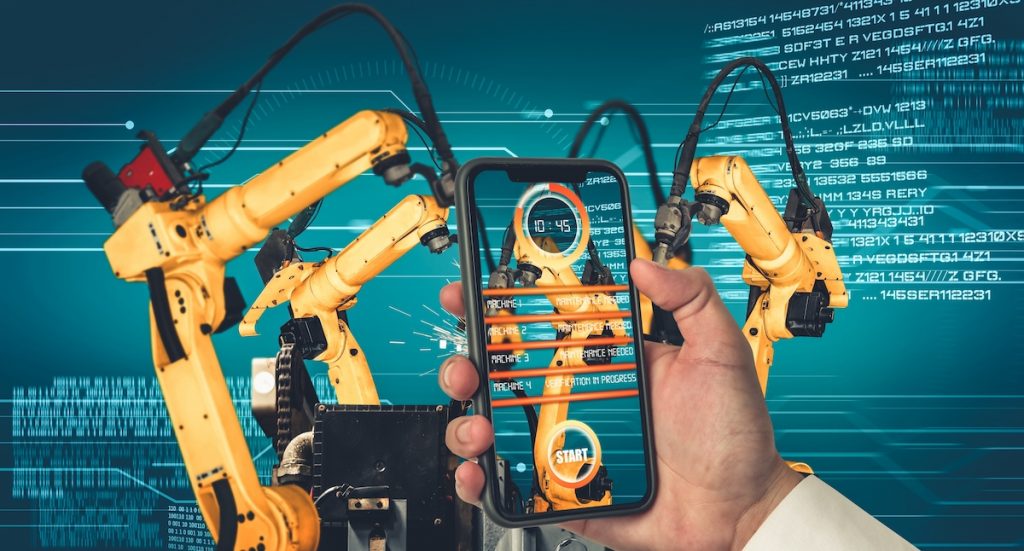
AR remote maintenance allows on-site technicians to share their live field of view with off-site experts who can annotate the display with arrows, diagrams, and step-by-step instructions. This eliminates travel delays, reduces MTTR by 20 to 50 percent in many deployments, and enables first-time fix rates above 80 percent. Technicians can also access digital work instructions, equipment manuals, and IoT sensor overlays hands-free through AR headsets or mobile devices.
2. What industries benefit most from AR-assisted remote maintenance?
Industries with geographically distributed assets and expensive downtime benefit the most, including oil and gas, power generation, water utilities, mining, and discrete manufacturing. Any operation where specialized expertise is scarce or travel to remote sites is costly can achieve significant ROI from AR remote maintenance platforms. Food and beverage, pharmaceutical, and semiconductor facilities also use AR to maintain compliance during maintenance procedures.
3. What equipment is needed to implement AR remote maintenance?
A basic AR remote maintenance setup requires a mobile device (tablet or smartphone) or AR-enabled smart glasses, a reliable network connection (Wi-Fi, 4G/5G, or private LTE), and an AR collaboration platform. More advanced deployments integrate with CMMS, ERP, and IoT platforms to pull real-time asset data into the AR view. Edge computing can support low-latency AR rendering in environments with limited cloud connectivity.