
Figure AI’s humanoid robots completed an 11-month deployment at BMW’s Spartanburg plant, loading 90,000+ sheet metal parts across 1,250 operational hours and contributing to the production of more than 30,000 BMW X3 vehicles. This article examines the deployment economics behind physical AI in manufacturing, drawing on data from BMW, Mercedes-Benz, Figure AI, Tesla, and the $8.5 billion in total robotics startup funding recorded in 2025. For plant managers weighing the business case for humanoid automation, these numbers represent the first real production-validated data points the industry has produced.
Key Takeaways
- Figure 02 robots at BMW Spartanburg achieved >99% placement accuracy per shift, met 84-second cycle time targets, and loaded 90,000+ parts across 1,250 operational hours (Figure AI)
- Total robotics startup funding exceeded $8.5 billion in 2025, the highest since 2021; humanoid-specific funding hit $4.3 billion, a six-fold increase from 2018 (Crunchbase; Bank of America via Fortune)
- Manufacturing costs for humanoid robots dropped 40% between 2023 and 2024 (Goldman Sachs via Deloitte), with Bank of America projecting unit costs below $17,000 by 2030 (Fortune)
- BMW established a Center of Competence for Physical AI in Production and is expanding humanoid deployments to Plant Leipzig in Germany starting summer 2026
What BMW’s Spartanburg Data Actually Shows
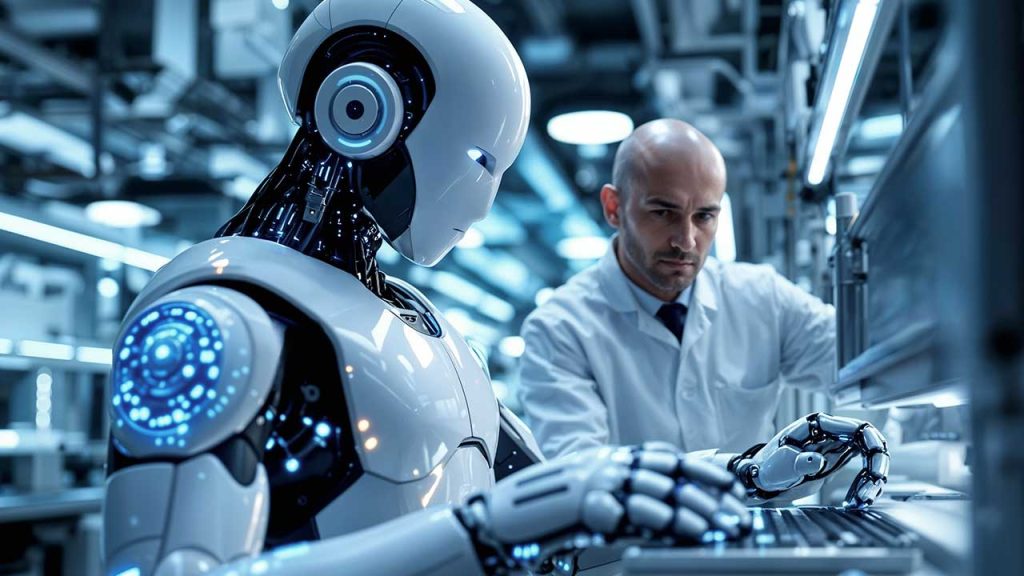
Physical AI deployment ROI has been theoretical until now. BMW’s 11-month pilot with Figure 02 at its Spartanburg, South Carolina plant is the first publicly documented, production-scale deployment of humanoid robots in automotive manufacturing.
The robots worked 10-hour shifts, Monday through Friday, on an active assembly line. Their task: picking sheet metal parts from racks and bins and placing them on welding fixtures with 5-millimeter tolerance in under 2 seconds. Six-axis industrial robots then welded the parts and fed them into the main production line.
According to Figure AI’s published results, the Figure 02 units recorded 1.2 million steps and traveled more than 200 miles during the deployment. Placement accuracy exceeded 99% per shift. The target cycle time of 84 seconds total, with 37 seconds of load time, was met consistently.
The data also revealed hardware limits. Figure AI identified the robot’s forearm as its top failure point at BMW, challenged by tight packaging, three degrees of freedom in the wrist, and thermal management constraints. These findings directly informed the design of Figure 03, which features re-architected wrist electronics that eliminate the distribution board and dynamic cabling. Each wrist motor controller now communicates directly with the main computer.
How Much Does Physical AI Cost in Manufacturing?
A humanoid robot in a Western factory pilot currently costs between $90,000 and $100,000 per unit, according to Bank of America’s 2026 analysis. Chinese-manufactured units carry a bill-of-materials cost closer to $35,000. Manufacturing costs across the sector have declined 40% between 2023 and 2024, according to Goldman Sachs data cited in Deloitte’s 2026 Tech Trends report. Bank of America projects that unit costs will fall below $17,000 by 2030.
At current pricing, industry analysts estimate ROI timelines of 18 to 24 months for warehouse and manufacturing deployments. As unit costs fall toward $30,000, payback periods compress to under 14 months.
The capital flowing into this sector reflects that math. Crunchbase data shows total robotics startup funding exceeded $8.5 billion in 2025, the sector’s largest fundraising year since 2021. Within that, humanoid-specific funding reached $4.3 billion in 2025, up from $700 million in 2018, a six-fold increase in seven years, according to Bank of America.
Figure AI alone raised $1 billion in Series C funding at a $39 billion post-money valuation. Apptronik secured $403 million in Series A financing, backed by B Capital, Google, and Mercedes-Benz.
Beyond BMW: Who Else Is Deploying Humanoid Robots in Factories?
BMW is not operating alone. Three parallel deployments are shaping the physical AI deployment ROI picture across automotive and general manufacturing.
Mercedes-Benz and Apptronik signed a commercial agreement in 2024, and Mercedes invested a low double-digit million amount in Apptronik in March 2025 at its Digital Factory Campus in Berlin. Apollo stands 5 feet 8 inches tall, weighs 160 pounds, and lifts up to 55 pounds. Initial tasks focus on intralogistics: transporting components to the production line and performing initial quality checks. Mercedes is now working on enabling fully autonomous Apollo operations.
Tesla has deployed Optimus robots internally at its own factories, though CEO Elon Musk acknowledged on the Q4 2025 earnings call that they are primarily for learning, not productive work. Tesla has broken ground on a dedicated manufacturing facility at Gigafactory Texas with a target capacity of 10 million Optimus units annually by 2027, and is ending Model S/X production to convert those Fremont lines into a 1-million-unit-per-year Optimus production line by late 2026.
Figure AI opened BotQ, a dedicated humanoid manufacturing facility with an initial capacity of 12,000 units per year. The company plans to scale production to 100,000 units annually, using its own humanoid robots to assemble key production line components, a recursive manufacturing approach. Figure AI’s supply chain is designed to scale to 3 million actuators in the next four years.
BMW’s Expansion: From Spartanburg to Leipzig
BMW is scaling its physical AI program to Germany. The company established a Center of Competence for Physical AI in Production, staffed by an international team of experts in Munich handling research, programming, and pilot support.
At Plant Leipzig, BMW completed an initial test deployment in December 2025 using AEON humanoid robots from Hexagon Robotics, a Zurich-based company. Unlike Figure’s bipedal design, AEON uses wheeled mobility with flexible hand and gripper attachments. The Leipzig deployment focuses on high-voltage battery assembly and component manufacturing for EVs.
BMW’s Milan Nedeljkovic, Board Member for Production, stated that “digitalisation improves the competitiveness of our production.” The company’s phased approach follows a structured path: theoretical assessment, then laboratory testing, then initial deployment, then full pilot. The Leipzig pilot phase is scheduled for summer 2026.
What Physical AI Deployment ROI Means for Plant Managers
The A3 Association for Advancing Automation’s January 2026 survey found that manufacturer interest in humanoid robots climbed from 8% to 13% year-over-year. That number is still small compared to AI Vision adoption at 41%, but the trajectory is clear.
Bank of America projects 90,000 humanoid units shipped in 2026, scaling to 1.2 million by 2030, an 86% compound annual growth rate that outpaces the early electric vehicle market. By 2027, deployment is expected to concentrate in warehousing and logistics (33%), automotive (24%), and general manufacturing (15%).
UBS estimates, cited in Deloitte’s 2026 Tech Trends report, project the humanoid robot market reaching $30 to $50 billion by 2035 and $1.4 to $1.7 trillion by 2050.
For manufacturers evaluating first deployments, the BMW pilot offers three practical insights. First, start with structured, repetitive tasks that have clear cycle time targets. Sheet metal loading, not general assembly, was the right first use case. Second, expect hardware iteration; Figure AI built an entirely new robot generation based on 11 months of production data. Third, the ROI math is shifting fast. A robot that costs $90,000 today will likely cost under $17,000 within four years, fundamentally changing payback calculations for plants already facing a 425,000-worker labor shortage.
Frequently Asked Questions
1. What is the ROI timeline for humanoid robots in manufacturing?
At current pricing of $90,000 to $100,000 per unit, physical AI deployments show ROI timelines of 18 to 24 months in warehouse and manufacturing environments, according to industry cost analyses. Bank of America projects unit costs falling below $17,000 by 2030, which would compress payback periods significantly as robots approach sub-$30,000 price points.
2. How many cars did BMW produce using humanoid robots?
Figure AI’s humanoid robots contributed to the production of more than 30,000 BMW X3 vehicles during an 11-month deployment at BMW’s Spartanburg plant in South Carolina. The robots loaded over 90,000 sheet metal parts across 1,250 operational hours, achieving greater than 99% placement accuracy per shift.
3. Which companies are deploying humanoid robots in factories?
BMW deployed Figure AI’s Figure 02 at Spartanburg and is testing Hexagon’s AEON robots at Leipzig. Mercedes-Benz is piloting Apptronik’s Apollo at its Digital Factory Campus in Berlin. Tesla operates Optimus robots internally at its own facilities, primarily for data collection. Figure AI, Apptronik, and Tesla are all building dedicated humanoid manufacturing facilities.
4. How much does a humanoid robot cost for industrial use?
Western pilot-stage humanoid robots currently cost $90,000 to $100,000 per unit. Chinese-manufactured units carry bill-of-materials costs around $35,000. Manufacturing costs across the sector declined 40% between 2023 and 2024 according to Goldman Sachs, and Bank of America projects costs will fall below $17,000 per unit by 2030.