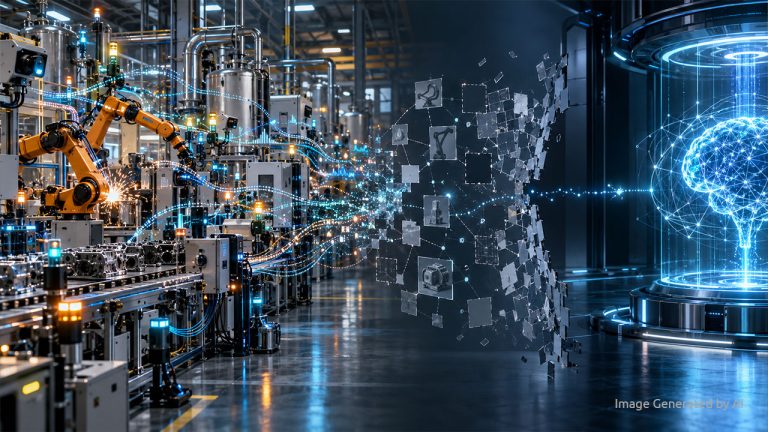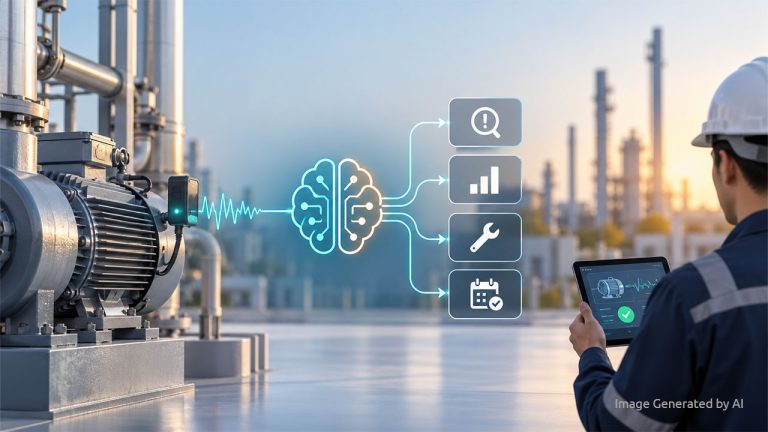
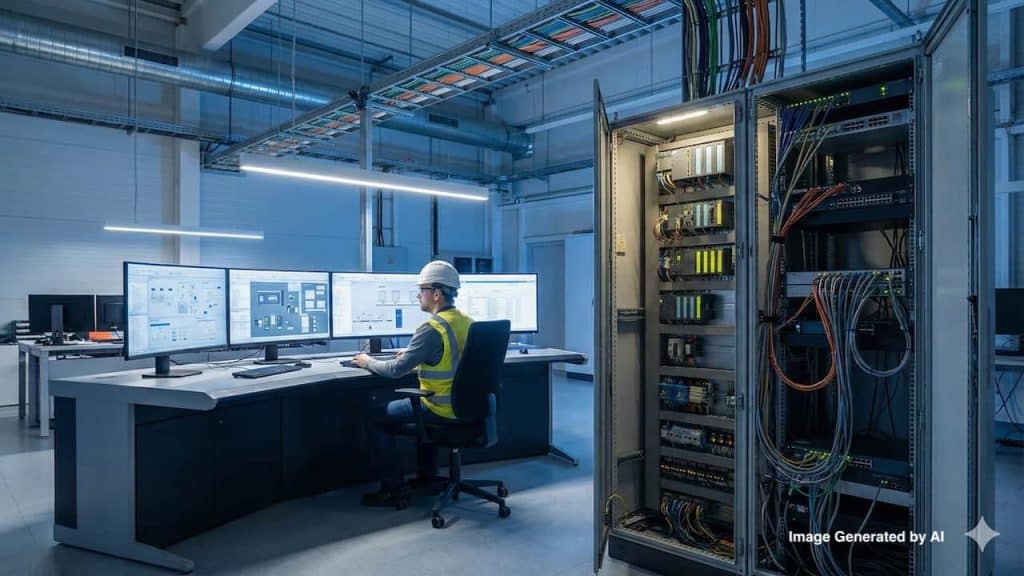
In the fast-paced world of industrial automation, manufacturers face a brutal dilemma. On one hand, the market moves at breakneck speed, demanding agility and new digital capabilities. On the other hand, plants are filled with assets that have been operating for decades.
For years, the industry solution was the dreaded “rip and replace”, tearing out expensive legacy hardware to access modern software capabilities, but this era may finally be drawing to a close.
The solution is a fundamental shift in architecture known as Software-Defined Automation (SDA).
Decoupling Hardware and Software: Breaking the Monolith
To understand the future, we have to look at the limitations of the past. Traditionally, automation solutions were “monolithic,” consisting of software tightly coupled to a specific hardware platform. If you wanted the new features, you had to buy the new box.
The new paradigm flips this on its head. The core definition of SDA is the ability to decouple hardware from software. By separating control applications and operation screens from specific hardware, manufacturers gain the flexibility to deploy software across different computing platforms.
This requires a shift toward “network-centric I/O” rather than I/O that is tightly coupled to a specific controller. When you combine this with a solid information model, you can bridge the physical and digital worlds, providing context to every signal coming from the plant floor.
| Feature | Legacy “Monolithic” Model | Software-Defined Automation (SDA) |
|---|---|---|
| Control Logic | Tightly coupled to specific hardware | Decoupled and hardware-independent |
| Upgrade Path | “Rip and Replace” required | Porting to different computing platforms |
| I/O Connection | Tightly coupled to a specific controller | Network-centric I/O |
| Information Model | Limited context/Siloed | Solid model providing digital context |
The Strategic Business Case: Innovation with Continuity
The most compelling argument for this shift is financial and operational stability. Manufacturers cannot afford to constantly overhaul their infrastructure. As Luis Duran, Industry Initiatives, Market Trends & Standardization from ABB, notes, the strategy must be “Innovation with Continuity”.
The goal is to bring innovation to the user while preserving the investment they have already made, whether that is in the applications they developed or the hardware that still has a useful lifecycle.
While the “rip and replace” model won’t disappear completely, the industry is moving toward a model where you can port applications from existing controllers to different versions without touching the wires.
Editorial Insight: This shift represents a transition from CAPEX-heavy “big bang” upgrades to an OPEX-friendly continuous improvement model. By allowing applications to be ported to general-purpose compute environments without “touching the wires,” SDA protects the massive historical investment in existing physical machinery while unlocking 2026 digital capabilities.
The Hidden Driver: The Workforce Crisis
While cost savings are excellent, there is a more urgent “human” reason to adopt software-defined architectures: The Talent Gap.
The automation industry is facing a massive generational shift. As experienced professionals leave the industry, a new generation is stepping in. These digital-native engineers cannot be expected to work with the tools of the past.
To attract and retain the talent required to run modern plants, manufacturers must provide a software design environment that new engineers are comfortable with and understand. Modernizing the architecture is as much about human resources as it is about technology.
The Ultimate KPI: Is It Resilient?
How does a CEO know if their investment in software-defined automation is paying off? It isn’t just about having the flashiest “flight simulator” or digital twin.
While the ability to port applications is a strong indicator of success, the ultimate KPIs remain unchanged: Is the plant running? Is it running safely? Is it reliable and resilient?
Software-defined automation is about using digital decoupling to ensure that the physical assets powering our world can remain reliable for decades to come.
SDA Strategy: Frequently Asked Questions
Q1: What is the definition of Software-Defined Automation (SDA)?
A: SDA is primarily about decoupling control applications and operation screens from specific, tightly coupled hardware platforms. This architecture relies on separating software from hardware, utilizing network-centric I/O, and implementing a solid information model that provides context to signals.
Q2: Is the “Rip and Replace” era of automation over?
A: Not entirely, but the industry is moving away from it. While some legacy assets will always require full replacement, the strategic goal is now “Innovation with Continuity,” prioritizing architectures that allow manufacturers to port existing applications to new platforms without replacing the physical installation.
Q3: Why is the workforce crisis driving automation strategy?
A: The industry faces a significant challenge as experienced professionals retire. New digital-native engineers require modern software design environments they can understand and work with comfortably, rather than sticking to legacy methods from 50 years ago.
Q4: What are the KPIs for Software-Defined Automation?
A: While technical metrics are important, the ultimate KPIs remain operational. A successful implementation is measured by whether the plant is running safely, reliably, and with resilience.
Q5: How does SDA address the challenges of “Brownfield” (existing) factories?
A: SDA enables “Innovation with Continuity” by allowing legacy applications to be ported from old controllers to modern versions or general-purpose computing platforms. This allows manufacturers to modernize capabilities and attract talent without the cost of replacing functional hardware.
This article was written based on an interview with Luis Duran, Industry Initiatives, Market Trends & Standardization, ABB, during ARC Forum 2026. AI tools were used to summarize and organize the information for the article, which was then verified by a human.
About the author