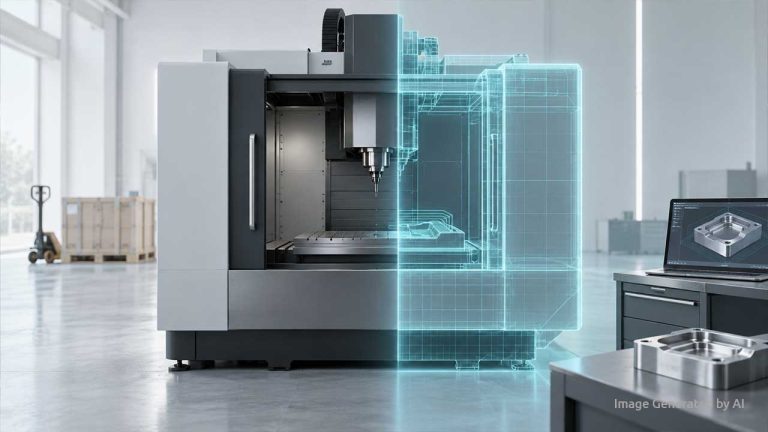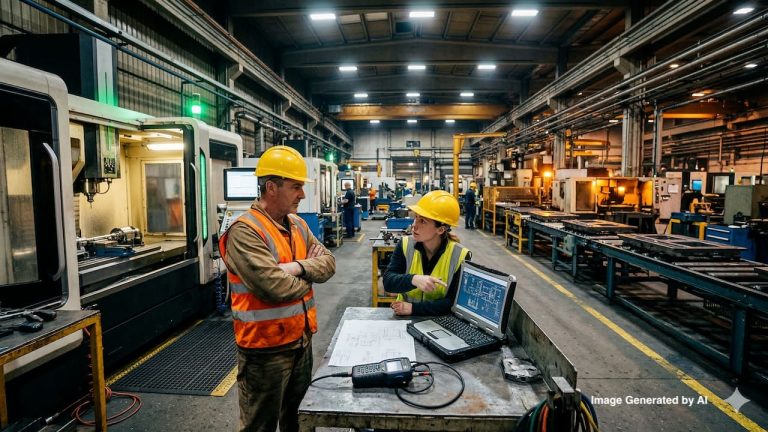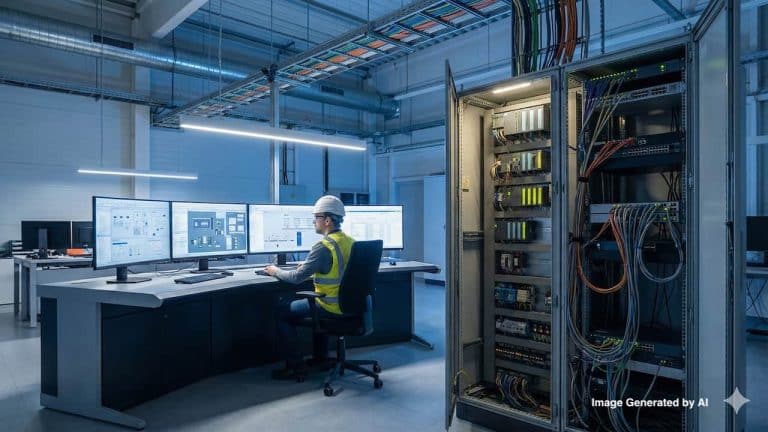

Brian Taylor, Head of Electronics and Semiconductor US at Siemens, explains why semiconductor fabs costing tens of billions of dollars need a connected digital twin strategy that links chip design through equipment behavior to facility management, closing the widening gap between design intent and operational reality.
Digital twins are emerging as the bridge between those two worlds. But they’re not just another piece of software or a line item in a digital roadmap. They represent a shift in how fabs are conceived, built, and managed — from static projects to continuously evolving systems.
What Does a Digital Twin Do in Semiconductor Manufacturing?
Digital twins in semiconductor fabs are working models that simulate, test, and optimize wafer processes or entire factory operations before and after physical deployment, connecting design-phase tools with live fab data and yield results.
Siemens has long used digital twins in the design phase through electronic design automation (EDA) tools. But the real transformation begins when those digital twins extend beyond the design lab — connecting to live fab operations, tool data, and yield results in real time.
When that happens, fabs move from guesswork to precision forecasting. Engineers can test how layout changes might impact yield, how process tweaks affect energy use, or how scheduling variations shift throughput — without stopping production or wasting a single wafer.
Why Do Piecemeal Digital Twin Pilots Fail in Fabs?
Fabs that adopt digital twin tools separately for predictive maintenance, sustainability tracking, and process modeling create disconnected systems. A “North Star” vision aligning departments, budgets, and systems around a shared digital foundation prevents fragmentation.
The real power of a digital twin lies in integration. Fabs need to define a North Star — a long-term vision for what success looks like in three, five, or even ten years — and then work backward from there.
That vision aligns departments, budgets, and systems around a shared digital foundation. When operations, engineering, and sustainability teams all feed data into a single digital twin ecosystem, every improvement in one area strengthens the others.
Without that alignment, Fabs risk investing in tools that deliver short-term results but don’t scale to future requirements.
How Do Digital Twins Accelerate Fab Construction?
Full-scope fab digital twins simulate thousands of scenarios before construction begins, identifying bottlenecks, adjusting equipment layouts, and simulating energy loads so fabs start production faster and stabilize earlier.
In an industry where time-to-market defines competitiveness, this speed matters. Every month saved in ramp-up can mean millions in additional revenue. Digital twins help fabs start faster, stabilize earlier, and adapt more quickly when product requirements shift.
They also build flexibility into assets designed to last decades. A fab designed today must produce not only current-generation chips but future designs that may have entirely different process requirements. A digital twin lets operators continuously model and reconfigure workflows — keeping the factory relevant and profitable over time.
What Is the Digital Thread in Semiconductor Manufacturing?
A digital thread links design data, manufacturing execution, and operational performance into a single source of truth for faster decisions, continuous feedback loops, and a framework for suppliers and sustainability teams.
This thread allows every stakeholder — from a design engineer to a facility manager — to work from the same source of truth. It enables faster decisions, fewer surprises, and a feedback loop that continuously improves both the digital and physical systems.
When applied at scale, digital twins don’t just optimize a fab — they redefine how the semiconductor ecosystem collaborates. Suppliers, partners, and sustainability teams can plug into the same digital framework to analyze performance, trace materials, and benchmark efficiency.
Why Is a Digital Twin Strategy Better Than Tools?
A digital twin strategy connects chip design through equipment behavior to facility management into one coherent, evolving model rather than treating each capability as a standalone implementation.
Fabs that build this foundation today will gain agility for what’s coming next: sustainability requirements, new process nodes, regional reshoring, and increasingly complex global supply chains.
In a world where fabs can cost tens of billions and take years to build, the most valuable blueprint may not be made of concrete and steel, but of data — a twin that learns, adapts, and guides the real factory toward its future.
Sponsored by Siemens
About the author
 Brian Taylor is a seasoned leader in the semiconductor industry, serving as Head of Semiconductor Sales / Head of Electronics & Semiconductor US at Siemens. With more than 20 years at Siemens, his expertise spans advanced manufacturing, automation architecture, and digitalization—focused on helping customers in the high-cost, high-complexity semiconductor ecosystem accelerate productivity and yield.