
Why Historians Cannot Feed Physical AI
· Artificial Intelligence & ML

Why Historians Cannot Feed Physical AI

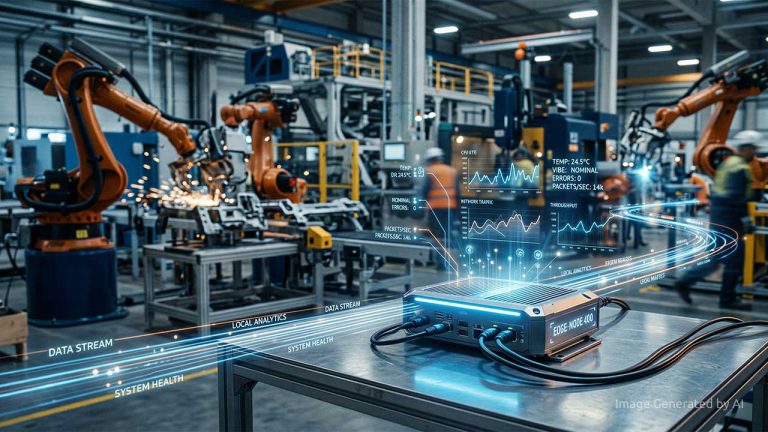
Physical AI systems that interpret sensor telemetry, predict equipment behavior, and trigger automated responses require two data capabilities that traditional historians were not designed to provide: high-resolution historical datasets for model training and continuous real-time telemetry for inference. In a new article, Conrad Chuang of InfluxData identifies four specific gaps between what historians deliver and […]

Read more →
6 Signs Your Data Historian Can’t Keep Up
· Connected Industry

6 Signs Your Data Historian Can’t Keep Up

Historian renewal notices show up as a procurement line item, usually larger than the previous year, and most teams sign and move on. Ryan Nelson, Director of Product Marketing at InfluxData, explains that the renewal moment is worth using to ask whether the current architecture can carry what the business needs over the next three […]

Read more →
How to Scale AI in Manufacturing
· Smart Manufacturing

How to Scale AI in Manufacturing

Most manufacturers know they need to start with AI. The common advice, “start small” with a use case, prove value, and scale, is incomplete on its own. Starting small without first thinking big leads to a collection of disconnected experiments that never compound into enterprise capability.At IIoT World’s AI Manufacturing Day 2026, a panel featuring […]

Read more →
What Makes Industrial AI Trustworthy?
· Smart Manufacturing

What Makes Industrial AI Trustworthy?

Manufacturing competition used to center on the mechanical speed of production lines and the efficiency of output. The advantage now belongs to organizations that react to data faster, catching a quality drift, a mechanical failure signal, or a process deviation before it becomes scrap, downtime, or a safety event. Reacting faster, though, requires trusting the […]

Read more →
From Sensor to Decision: Why Speed Defines Industrial AI
· Smart Manufacturing

From Sensor to Decision: Why Speed Defines Industrial AI

In manufacturing, the window between a small deviation and a costly event can be measured in seconds. A vibration pattern shifts, a batch parameter drifts, a temperature moves outside its normal band. The data exists, but by the time it reaches the person who can act, the window has closed. Response speed for AI in […]

Read more →
How Is Industrial AI Performing in Production?
· Artificial Intelligence

How Is Industrial AI Performing in Production?

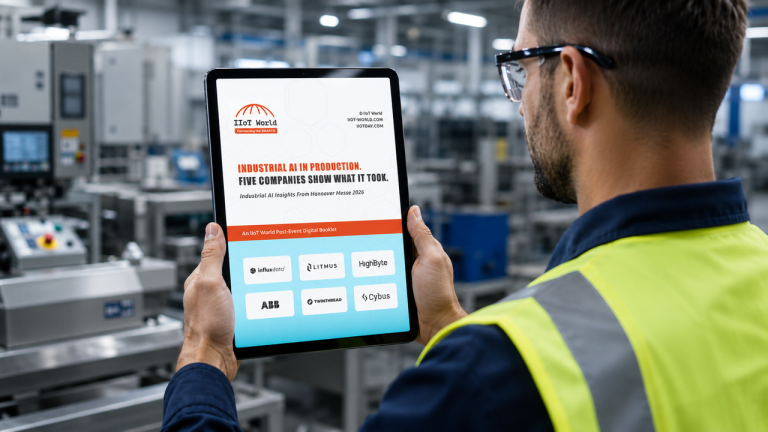
ABB resolves 80% of measurement device faults through an AI copilot, without a support call. HighByte compressed Alcon’s one-year plant-wide digital transformation to less than one month. InfluxData and Litmus take manufacturers from three sites to 300, with positive ROI in 60 to 90 days. Cybus reports 9% less downtime and 23% lower cloud costs […]

Read more →
Manufacturers Are Throwing Away the Data AI Needs
· Connected Industry

Manufacturers Are Throwing Away the Data AI Needs

Factories generate massive volumes of time series data from every sensor, controller, and production line, but many manufacturers reduce the fidelity of that data or discard it entirely because their existing infrastructure makes retention too expensive or too difficult. “It always pains me to see customers reducing fidelity or throwing data away for resource or […]

Read more →
What Edge AI Needs from Industrial Data
· Smart Manufacturing

What Edge AI Needs from Industrial Data

A temperature reading with a timestamp does not tell you whether it is Fahrenheit or centigrade, which factory generated it, which production line, or which asset. Without that context, the data cannot drive a decision. At Hannover Messe 2026, InfluxData and Litmus described how their integrated architecture solves this: Litmus Edge connects to shop floor […]

Read more →
The OT Veto: When Your Plant Floor Has Final Say on Your Digital Strategy
· Digital Disruption

The OT Veto: When Your Plant Floor Has Final Say on Your Digital Strategy

There is an unspoken rule in manufacturing technology that overrides every software license, every boardroom mandate, and every digital transformation roadmap. It is the OT Veto. This isn’t a failure of leadership or vision. It is the logical, inevitable outcome of a system where one group is measured purely on the certainty of production, and […]

Read more →
Time Series Database Buying Guide for Energy
· Energy

Time Series Database Buying Guide for Energy

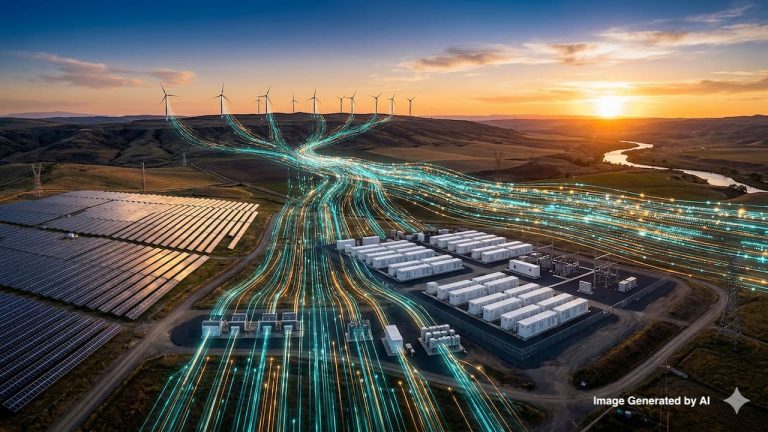
The data challenge facing energy operations todayPower grids, renewable energy sites, battery storage facilities, substations, and smart meter networks generate millions of time-stamped data points every second. This telemetry from sensors, SCADA systems, and field devices is the foundation for real-time monitoring, predictive maintenance, and grid stability. Without the right data infrastructure, none of it […]

Read more →
The Investment Filter: How AI Exposes the True Cost of Your Operational Data
· Predictive Maintenance

The Investment Filter: How AI Exposes the True Cost of Your Operational Data

For manufacturing leadership, every capital request comes with a projection: a return on investment, a payback period, a net present value. These metrics are designed to filter good bets from bad. But there is a new, critical filter emerging in the era of artificial intelligence, and it has nothing to do with financial modeling. It […]

Read more →
The Industrial Data Paradox: Why Your Factory’s Messy Reality is Your Smartest Asset
· Connected Industry

The Industrial Data Paradox: Why Your Factory’s Messy Reality is Your Smartest Asset

The graveyard of smart manufacturing projects is filled with perfect, scalable, future-proof monoliths. They are elegant technical cathedrals, engineered on whiteboards to last a decade. The problem is, the ground beneath a manufacturing operation is not solid. It is shifting sand, a living system of legacy machines, undocumented workarounds, and relentless production pressure. Your beautiful […]

Read more →