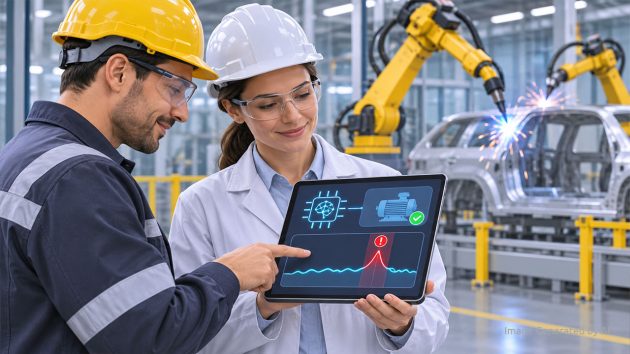
At the Stellantis plant in Goiana, Pernambuco, an AI-powered anomaly detection system is helping maintenance teams identify potential welding equipment failures before they disrupt production. In six months, the system helped prevent 14 equipment failures, recover 15 production hours in a single month, and support an expected annual production capacity increase of 810 vehicles.
But identifying potential failures was only half the challenge. The team also needed to build trust in the system’s predictions, giving maintenance engineers a way to understand what the AI was detecting and determine when action was necessary.
During the “From Months to Days: Accelerate Industrial AI with a Modern Data Architecture” session at the Industrial AI Summit 2026, Aron Semle of HighByte and Denis Leite of Mekatronik shared how the team developed the solution and built confidence in its predictions, from preparing industrial data for AI modeling to giving maintenance engineers the evidence needed to make informed decisions.
What Does it Take to Build an AI Model for Manufacturing?
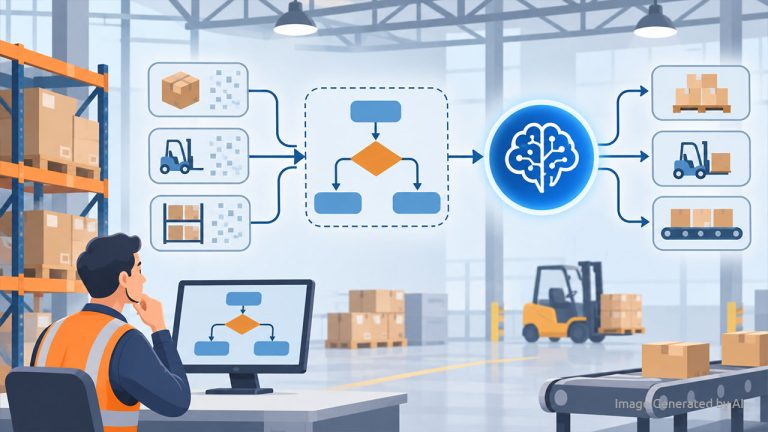
To develop the anomaly detection model, the team at Stellantis needed to bring together welding data from several sources, including TXT files, SQL databases, and operational systems.
Rather than sending that raw data directly to the data lake, the team organized and contextualized it around individual welding operations. This made it easier to analyze production activity, identify patterns, and spot unusual behavior that could indicate equipment problems.
Why Did Stellantis Build for Production From Day One?
Rather than starting with a pilot, the team at Stellantis designed the solution for production from day one. As Denis Leite explained, proving that a solution works is one thing. Making sure it can run reliably in a manufacturing environment is another. That meant planning for reliability, maintenance, and scalability from the start.
Stellantis also made sure its own engineers were involved throughout the project. While securing funding and support for industrial AI initiatives is one challenge, finding the time for internal teams to participate can be just as difficult. At Goiana, Stellantis made that a priority, giving the team access to the firsthand production knowledge needed to build and deploy the solution.
With the system designed for production, the next challenge was making sure engineers could understand and trust its predictions.
How Can Engineers Validate AI Predictions?
AI anomaly identification is only useful if engineers can understand why it was flagged and determine whether action is needed. At Stellantis, the team used dashboards, time-series data, and distribution charts to help engineers compare normal welding operations with anomalies the AI model detected.
Early versions of the visualizations didn’t clearly show the differences between normal and anomalous behavior. But the team refined these visualizations to make those differences easier to identify, giving engineers the context needed to validate predictions and make informed maintenance decisions. An engineer could look at the data and say: this is what usually happens, this is what happened in the case the model is flagging, and there is a real difference worth investigating.
| Early Version | Refined Approach | |
| Evidence clarity | Differences between normal and anomalous not visible | Normal vs anomalous clearly distinct in visualizations |
| Engineer response | Did not see enough reason to act | Agreed findings were worth investigating |
| Trust level | Model questioned at every alert | Model expected to be right |
As maintenance engineers investigated flagged cases and confirmed actual problems, their confidence in the system grew. Each validated prediction helped demonstrate the model’s ability to identify potential equipment failures, eventually making it a tool the plant could rely on in its 24/7 operations.
What’s Next for Industrial AI at Stellantis?
With the success of the welding anomaly detection system, Stellantis began exploring opportunities to expand the approach to additional plants and applications.
During the session, the team also indicated that results have continued to improve since the initial outcomes were reported. The next step is deciding where to apply it first.
This article is based on the “From Months to Days: Accelerate Industrial AI with a Modern Data Architecture” session at the Industrial AI Summit 2026. Speakers: Aron Semle of HighByte and Denis Leite of Mekatronik. Moderated by Hamish Mackenzie of IIoT World. The session was sponsored by HighByte.
Related from IIoT World