The manufacturing skills gap is no longer a looming crisis; it is a present reality. As experienced workers retire and skilled talent becomes harder to find, manufacturers need solutions that scale faster than traditional training programs.
The manufacturing industry is in the middle of a labor crunch. As experienced workers retire and skilled talent becomes harder to find, many factories are struggling to maintain consistency, efficiency, and quality. Generative AI is emerging as a powerful tool, not to replace human workers, but to support them, capture institutional knowledge, and make shop floor tasks easier to perform.
Today’s most promising GenAI applications aren’t theoretical. They’re already being used to reduce scrap, accelerate training, and make high-mix, low-volume operations more repeatable. From real-time guidance for assembly workers to digital copilots that learn from shift logs and engineering documents, manufacturers are using AI to close the skills gap and improve productivity—without massive overhauls or long deployment cycles.
AI as a Digital Trainer—Not Just an Analyst
Modern GenAI tools can record and interpret complex manual tasks, then break them down into visual, step-by-step guidance. This makes it easier for less-experienced workers to complete precision work accurately—especially in industries like medtech or electronics where defect rates are costly. One manufacturer reported cutting scrap by 60% after applying AI-driven process guidance on a high-variability line.
Capturing Expertise Before It Disappears
Tribal knowledge—once shared informally on the floor—is walking out the door. GenAI tools can extract that expertise from manuals, logs, and even technician notes, turning it into a digital assistant that provides on-demand answers and supports faster troubleshooting or training.
Scaling Best Practices Across Plants
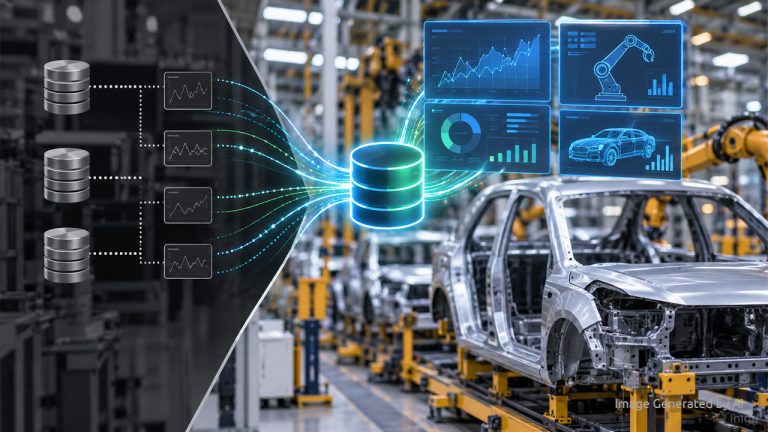
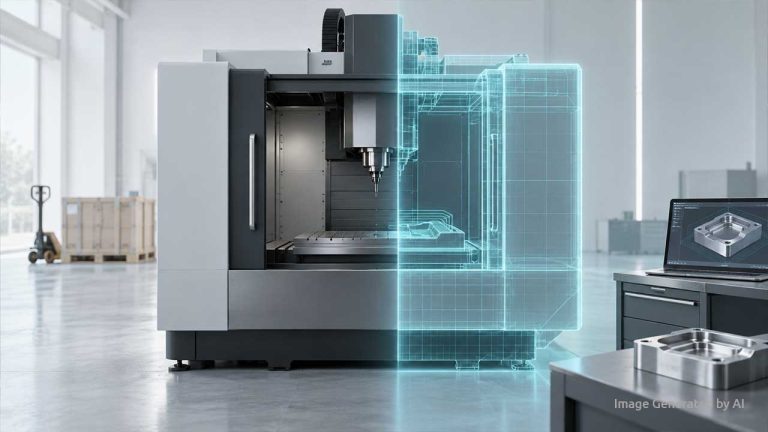
Generative AI that’s trained on factory-specific data—from CAD drawings to quality reports—can replicate the expertise of a high-performing site and scale it across a global network. It understands not just natural language, but the language of engineering, production, and operations.
From Automation to Augmentation
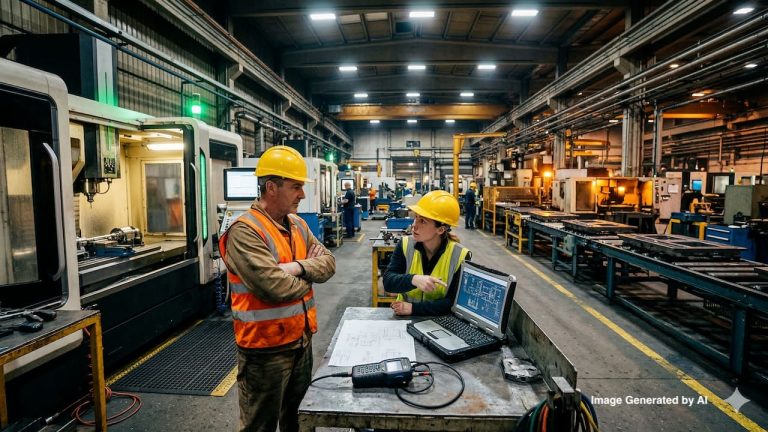
This isn’t about replacing humans. It’s about giving every operator a real-time co-pilot. GenAI can guide decisions, highlight errors, and adapt to real-world variability—especially in complex, dynamic production environments where traditional automation struggles.
Where to Start? With the Boring Stuff
The biggest returns often come from overlooked areas: manual stations, shift handovers, old SOPs. With modern GenAI tools, factories can digitize these touchpoints quickly, find inefficiencies, and make incremental improvements that scale.
Written based on insights from the session “Generative AI in Manufacturing: From Design to Production Optimization,” part of IIoT World Manufacturing Day 2025.
Related articles:
FAQ
1. How is generative AI being used to address the manufacturing skills gap?
Generative AI addresses the manufacturing skills gap through several practical applications. AI-powered training assistants can convert complex standard operating procedures into interactive, conversational guides that new operators can query in natural language while on the production line. Large language models fine-tuned on equipment manuals and maintenance logs enable knowledge capture from retiring experts, preserving institutional expertise that would otherwise be lost.
2. What are the risks of deploying generative AI for workforce training in manufacturing?
The primary risks include hallucination, where AI generates plausible but incorrect procedural instructions that could compromise safety or product quality. Manufacturers must implement validation workflows ensuring that AI-generated training content is reviewed by subject matter experts before deployment. Data privacy is another concern, as training LLMs on proprietary manufacturing data requires careful governance to prevent intellectual property leakage.
3. Which manufacturing roles benefit most from generative AI-powered upskilling?
Maintenance technicians benefit significantly because generative AI can provide real-time troubleshooting guidance by analyzing equipment sensor data alongside historical repair logs. Quality inspectors benefit from AI systems that generate defect classification guides tailored to specific product lines. Process engineers gain value from AI tools that synthesize production data into root cause analyses and recommend process parameter adjustments.
Related from IIoT World: