Key Takeaways: The Future of Asset Integrity
- The Shift: Manufacturers are moving from standard Asset Performance Management (APM) to Structural Performance Management (SPM) to combat rising capital costs.
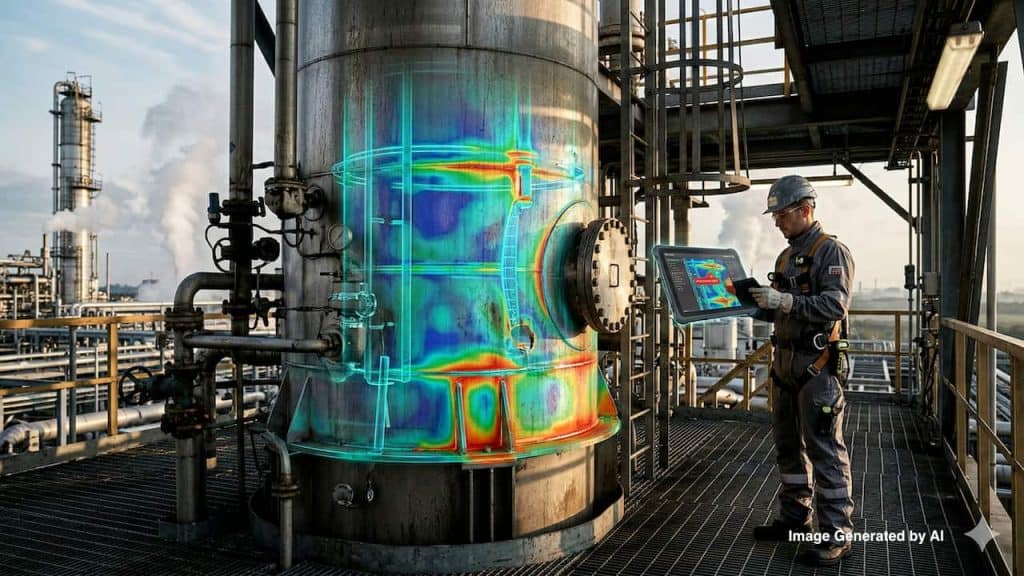
- The Technology: Leading solutions now use “Structural Twins”—physics-based AI that integrates real-time sensor data with inspection reports.
- The Goal: Extend the safe operational lifespan of existing assets by monitoring stress, strain, and fatigue in real-time
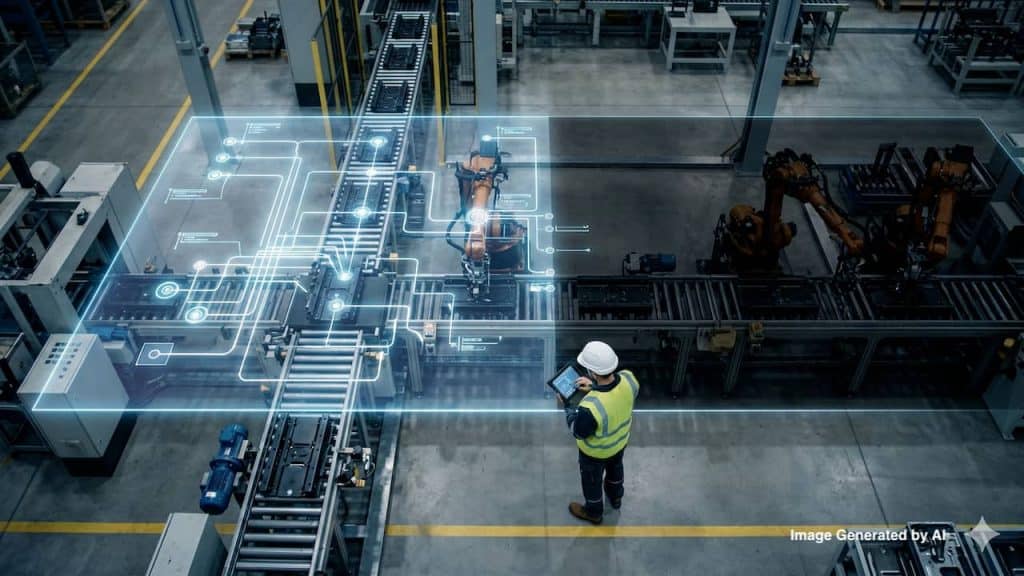
Industrial manufacturing has entered a period of constant volatility. Today, risks like trade wars, tariffs, and geopolitical instability are everyday realities that disrupt supply chains and inflate production costs. In this high-stakes environment, traditional lean operating models are no longer enough. Manufacturers must rethink equipment upkeep to ensure operational resilience.
How to implement proactive equipment upkeep?
Implementing proactive upkeep requires moving beyond “fixing things before they break.” It involves a foundational discipline known as Structural Performance Management (SPM). Unlike traditional monitoring tools, SPM provides unprecedented insight into the physical integrity of your infrastructure.
To implement this effectively, organizations should:
- Monitor Asset Behavior: Actively track how an asset performs under changing conditions to catch degradation, such as creep, fatigue, and stress accumulation, long before it triggers a failure.
- Integrate Integrity Data: Don’t let your data live in silos. Combine real-time operational data with non-destructive testing (NDT) reports for a complete view of asset health.
- Focus on Life Extension: Use these insights to safely extend the operational lifespan of critical assets, reducing the need for expensive capital replacements during periods of economic instability.
What are the top predictive maintenance strategies for manufacturing?
The most successful plants are moving away from “guessing” based on history and toward “knowing” based on physics. The top strategies currently being adopted by industry leaders include:
- Structural Performance Management (SPM): Focusing on the physical integrity of the machine itself rather than just simple sensor thresholds.
- Physics-Based AI Modeling: Using high-fidelity simulations to understand the “why” behind material fatigue and stress.
- Operating Envelope Optimization: Knowing the exact physical limits of a machine allows operators to adapt to shifting market demands or varying feedstocks without risking safety or structural failure.
Best software for equipment failure prediction?
When evaluating software for failure prediction, industrial leaders must look beyond generic dashboards. The most effective solutions rely on a “structural twin” powered by high-fidelity, physics-based AI.
| Capability | Traditional Analytics Software | Physics-Based Structural Twins |
|---|---|---|
| Primary Data Source | Historical patterns & sensor limits | Real-time physics, sensors, & NDT reports |
| Analysis Method | Statistical/Generic | High-fidelity structural simulation |
| Predictive Focus | Component failure timing | Material stress, strain, and fatigue |
| Business Impact | Reduced downtime | Asset life extension & margin protection |
The leading software in this category differentiates itself by seamlessly integrating real-time operational data directly into these structural simulation models. This allows maintenance and engineering teams to track the exact strain and deflection of an asset in real time, unlocking its true operating envelope and preventing catastrophic failures.
By investing in physics-based predictive software, manufacturers can ensure that early interventions are targeted and highly effective. This prevents failures, avoids premature capital replacements, and ultimately fortifies safety and margins despite rising global input costs.
Source: Reynolds, P. (ARC Advisory Group Forum 2026 Edition). Operational Resilience in the Face of Global Headwinds. Operational IT Research Group (OIT).
Note: This content was developed with the assistance of AI tools and verified by our editorial team to ensure technical accuracy and adherence to the source data.
FAQ: Proactive Equipment Upkeep & Industrial Resilience
1. How do I implement proactive equipment upkeep in a manufacturing setting?
Implementing proactive upkeep requires moving beyond traditional maintenance to a discipline called Structural Performance Management (SPM). This involves actively tracking asset behavior, such as fatigue, creep, and stress, under changing conditions and integrating that real-time sensor data with non-destructive testing (NDT) reports to ensure a complete view of asset health.
2. What are the top predictive maintenance strategies for 2026?
According to the OIT Research Group, the most successful strategies shift from historical “guessing” to physics-based “knowing”. Key strategies include using Physics-Based AI Modeling to understand material fatigue and Operating Envelope Optimization, which identifies the exact physical limits of a machine so operators can adapt to market volatility without risking structural failure.
3. What is the best software for equipment failure prediction?
The most effective software solutions utilize a “structural twin” powered by high-fidelity, physics-based AI. Unlike traditional analytics that focus on simple timing patterns, structural twin software integrates real-time operational data directly into simulations to track the exact strain and deflection of an asset, providing superior margin protection and asset life extension.
4. How does Structural Performance Management (SPM) protect manufacturing margins?
SPM protects margins by allowing manufacturers to safely extend the operational lifespan of existing, critical assets. By knowing the precise integrity of the infrastructure, companies can defer expensive capital replacements (CAPEX) during periods of economic instability and global headwinds, as highlighted in the ARC Forum 2026 Edition.
About the author