Digital twins have moved from experimental concept to operational necessity in automotive manufacturing, and the pace of adoption is accelerating. In this article, IIoT World examines how AI-powered digital twins enable automakers to simulate production lines, predict equipment failures before they cause downtime, and optimize quality at every stage of the vehicle lifecycle. Whether you are an operations leader evaluating digital twin platforms or an engineer seeking practical implementation guidance, this piece breaks down the current state of the technology, real-world deployment patterns, and the measurable outcomes manufacturers are achieving today.
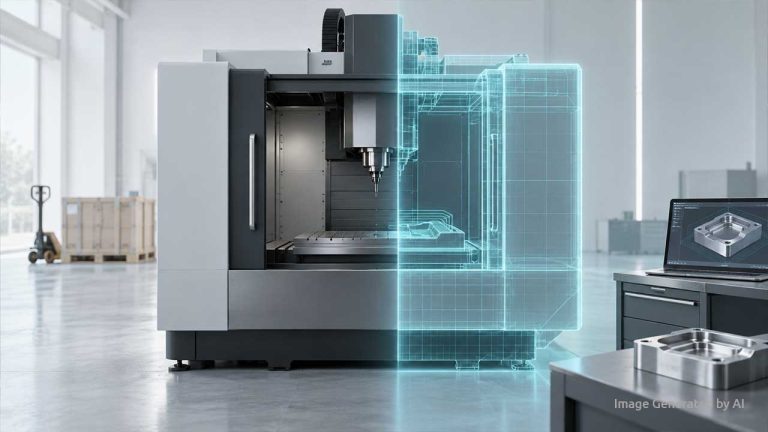
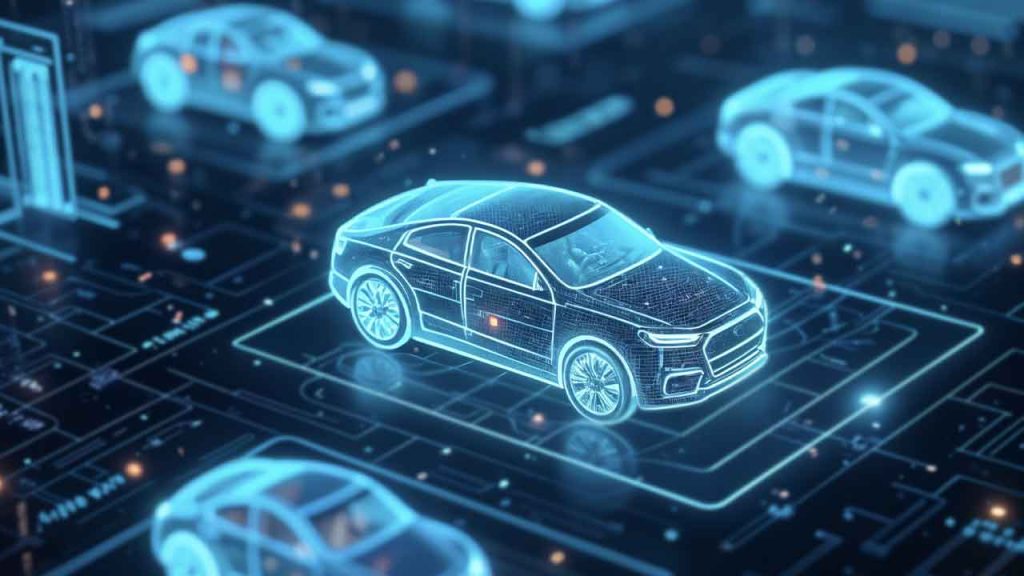
Digital twin technology, a virtual replica of physical products, processes, and environments, continues to evolve in the automotive OEM sector. It now spans the entire lifecycle of a vehicle, from research and development, engineering, and manufacturing to logistics, sales, aftersales, usage, and disposal. The integration of digital twin technology, within the broader concept of the Industrial Metaverse—is now a key focus across the automotive industry.
The researchers from Mercedes-Benz (VANs), Julian Gebhard, Judith Brenner and Yübo Wang, shared their experience at the Industrial Metaverse event in Munich, Germany of how automotive OEMs are leveraging digital twins in the real life:
- Time Efficiency – Shortening development processes
- Cost Reduction – Increasing efficiency through more simulations
- Quality Improvement – Enhancing data and product quality
- Certification Readiness – Ensuring the first physical car is ready for certification
- Cyber-Physical Systems Integration – Strengthening system-wide digital transformation
However, discussions with OEMs reveal ongoing challenges in digital twin collaboration, including digital trust, legal regulations, maturity levels, technical implementation, comfort and accessibility, and evolving user needs.
Let’s dive deeper into the two OEMs takes on the digital twin adoptions.
Use Cases and Implementations
- German Luxury OEM: Digital Twin for Simultaneous Engineering
A leading German luxury car manufacturer is leveraging digital twins as a core enabler of digital engineering. In contrast to traditional development models that follow a strict, step-by-step process, the company is shifting towards simultaneous engineering, where development phases overlap and run in parallel. This innovative approach integrates several key elements: advanced engineering services, a standardized framework for geometrical data, a semantic layer to interpret complex information, and value synchronization to ensure consistency across systems.
The concept has been successfully demonstrated through a real-world use case involving the synchronization of geometrical and behavioral data in a suspension system, highlighting how digital twins can bridge design and performance in real time.
This OEM has also transformed its production area into a software-defined business model, integrating hardware, software, and digital ecosystems. Their goal is to transition production planning into a fully digital process, allowing real-time production updates and eliminating manual interventions.
Furthermore, the company integrates digital twins with the Industrial Metaverse, enabling simulation, virtual testing, and commissioning throughout the vehicle lifecycle—from development to production and beyond.
Impact of Digital Twin
OEM reports significant efficiency gains through digital twin adoption:
- From Days to Minutes – Product and production concept alignment in minutes instead of days
- Faster Validation – Completion in minutes rather than weeks
- Halved Ramp-Up Times – Virtual commissioning and releases accelerate production readiness
- British OEM: IoT-Driven Live Digital Twins
A British luxury automotive brand has integrated IoT as a key enabler of live digital twins. Their approach supports:
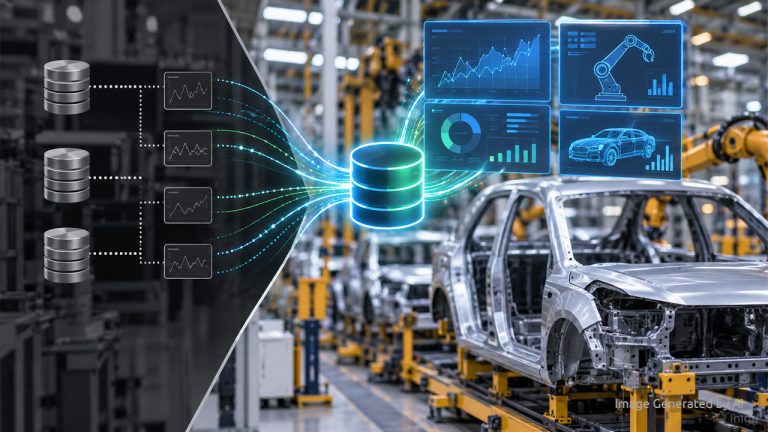
- Real-Time Data Analysis – Predictive analytics, bottleneck detection, and material flow optimization
- Performance Monitoring & Process Simulation – AI-powered decision-making sandboxes
- Conversational AI – Integrating GenAI-powered chatbots for voice-driven interaction
Their digital twin strategy involves:
- Integrating multiple data sources using custom connectors in Omniverse
- Developing optimization tools to enhance world loading and rendering efficiency
- Leveraging Omniverse’s extension technology to monitor and improve digital twin performance
Additionally, they have deployed Omniverse’s physics engine to create real-world simulations, enabling safe experimentation without real-world risks. Their pipeline for high-quality synthetic image generationaccelerates AI training, enhancing machine learning applications.
User Experience & Future Outlook
A strong UX component is critical for digital twin adoption. This OEM has developed an immersive, interactive UI that dynamically adapts information based on user needs and real-time process states. Users can engage with simulations, test real-world scenarios, and drive innovation in a safe, virtual environment.
Enablers of the Digital Twin Revolution
According to Digital Twin researcher Julian Gebhard, the industry is moving toward integrated federated systems that allow seamless data exchange and synchronization across tools and platforms.
These systems rely on semantic models and knowledge graphs to ensure interoperability and data integrity throughout the product development process. By structuring data as semantic triples (e.g. (Car) → (is colored) → (blue)) data is traversable, transforming raw data to knowledge. Furthermore, it becomes machine-readable, an enabler for collaboration across departments making development more efficient and consistent.
The next step is to use Knowledge Graphs to model product data on a value level, instead only connecting metadata. They enable dynamic feedback loops across systems, so that changes in one area, such as simulation results or geometry updates, can automatically influence related systems. This helps maintain consistency and accelerates iteration during development.
Moreover, when functional data is represented at the value level, it becomes possible to integrate disparate systems such as simulation and CAD tools into a unified, holistic viewer. In this integrated model, any change in geometry in one system automatically triggers updates in simulation parameters and physical properties, ensuring that the digital twin evolves in tandem with the actual product. This dynamic, bidirectional synchronization mirrors the demands of modern, agile product development, where rapid adaptation to change is not just beneficial but necessary for success.
Julian explains that “a growing number of automotive companies are now shifting from traditional databases to knowledge graph-based architectures, enriching their Digital Twins to represent the real world in more detail”.
The Next Evolution: AI-Powered Digital Twins
Based on conversations with digital experts from leading automotive organizations, the next frontier for digital twins lies in AI-driven simulation and automation. Companies are actively exploring areas such as:
- AI Agent Collaboration – Integrating AI-driven decision-making within the Industrial Metaverse
- Physical AI Training – Using synthetic data to test and refine AI models
- Enhanced Transparency – Real-time insights into planning and production progress
- Security & Collaboration – Optimizing process quality through interconnected simulation power
Expert Note: Boris Scharinger from Siemens Digital Industries views AI and Digital Twins as symbiotic technologies:
“AI is an essential tool for data integration, accelerating simulations, extracting insights, and preparing content for the industrial metaverse. System-level simulations and photorealistic visualizations within the industrial metaverse provide an excellent foundation for training industrial AI in real-world control applications.”
About the author
 This article was written by Jan Burian, a global manufacturing industry analyst, serves as the Head of Industry Insights at Trask. His expertise spans digital transformation, management, leadership, and the geopolitical influences shaping manufacturing and global supply chains.
Related articles:
FAQ
1. What is a digital twin in automotive manufacturing?
A digital twin in automotive manufacturing is a virtual replica of physical products, processes, and environments that spans the entire lifecycle of a vehicle, from research and development, engineering, and manufacturing to logistics, sales, aftersales, usage, and disposal. Automakers use digital twins to achieve time efficiency by shortening development processes, cost reduction through more simulations, quality improvement, certification readiness, and stronger cyber-physical systems integration.
2. What benefits do automotive OEMs report from digital twin adoption?
Researchers from Mercedes-Benz, including Julian Gebhard, Judith Brenner, and Yübo Wang, shared that digital twins deliver time efficiency by shortening development processes, cost reduction by increasing efficiency through more simulations, quality improvement through enhanced data and product quality, certification readiness by ensuring the first physical car is ready for certification, and stronger cyber-physical systems integration.
3. What are the biggest challenges when implementing digital twins in automotive manufacturing?
Discussions with OEMs reveal ongoing challenges in digital twin collaboration, including digital trust, legal regulations, maturity levels, technical implementation, comfort and accessibility, and evolving user needs.
Related from IIoT World: