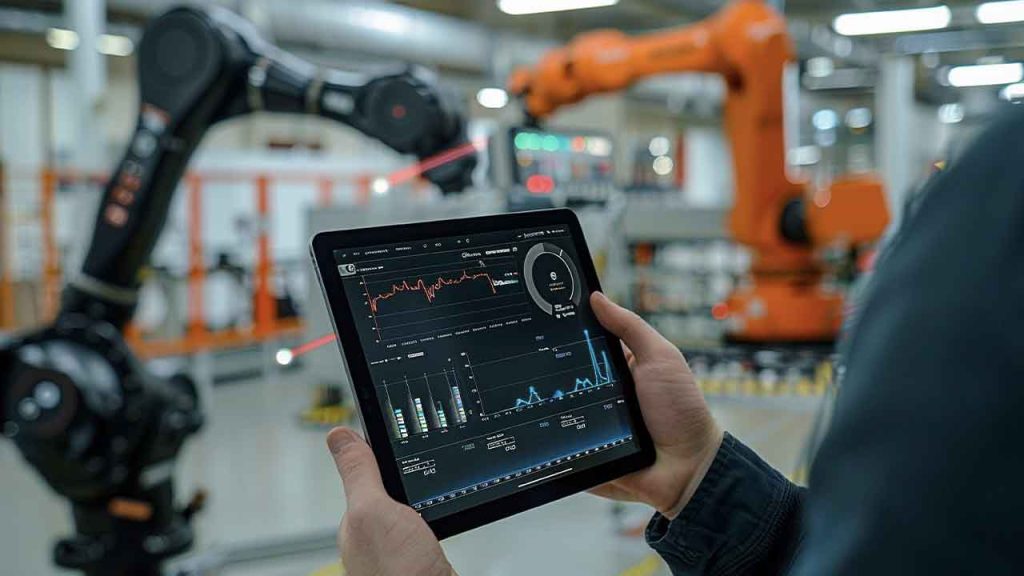

As industrial IoT deployments generate ever-larger volumes of time-series, event, and relational data, the choice of analytics architecture becomes a critical factor in whether organizations can extract actionable insights in real time or face costly bottlenecks. In this technical explainer, IIoT World examines how shared-nothing architecture and multi-model databases enable scalable, low-latency analytics for manufacturing, energy, and process industries. Readers will learn the architectural principles behind horizontal scalability, why multi-model databases are gaining traction over single-purpose data stores in IIoT environments, and how to evaluate these approaches for their own real-time analytics requirements.
What is Shared Nothing Architecture?
Shared Nothing Architecture is a distributed database model where each node operates independently with its own CPU, memory, and storage. By eliminating shared resource dependencies, this design provides key advantages:
- Horizontal scalability allows nodes to be added dynamically to handle increasing workloads.
- Fault tolerance ensures that if a node fails, the system remains operational without downtime.
- Performance optimization reduces latency and enhances real-time data processing.
This architecture is particularly useful for applications that require real-time analytics, high-speed search, and transactional queries.
The Role of Multi-Model Databases
Data in modern organizations exists in multiple formats, including relational tables, JSON documents, key-value pairs, and time-series data. Traditional databases manage structured and unstructured data separately, leading to inefficiencies. Multi-model databases address this challenge by supporting multiple data models within a single system.
- Unified data management reduces complexity by consolidating multiple database dependencies.
- Flexible querying enables data retrieval using familiar query languages like SQL.
- Cost and operational efficiency lower infrastructure expenses and simplify management.
- Adaptability allows integration with evolving technologies such as AI, IoT, and hybrid cloud environments.
Combining Shared Nothing Architecture and Multi-Model Databases
The combination of these two technologies creates a powerful solution for managing distributed data environments. Shared Nothing Architecture ensures scalability and fault tolerance, while multi-model databases provide the flexibility needed to handle diverse data formats. This approach supports real-time decision-making, predictive analytics, and AI-driven applications without the need for complex infrastructure overhauls.
Conclusion
By leveraging Shared Nothing Architecture and multi-model databases, organizations can achieve scalable, flexible, and cost-effective real-time analytics. This strategy enhances data management, eliminates silos, and supports modern use cases across various industries.
Source: This article summarizes the original piece from CrateDB. Read the full version here: Leveraging Shared Nothing Architecture and Multi-Model Databases.
Related articles:
- Expanding the Possibilities of Azure IoT with Real-Time Analytics
- Real-Time Visualization for IIoT Data
FAQ Section
1. What is shared-nothing architecture and why does it matter for industrial IoT analytics?
Shared-nothing architecture is a distributed computing approach where each node in a cluster has its own dedicated memory, storage, and processing resources, with no shared components that could become bottlenecks. For industrial IoT analytics, this matters because IIoT deployments can generate millions of data points per second from sensors, PLCs, and edge devices. Traditional shared-disk or monolithic database architectures struggle to scale horizontally under these workloads. Shared-nothing systems allow organizations to add nodes linearly as data volumes grow, maintaining consistent query performance. This architecture also provides inherent fault tolerance, as the failure of one node does not affect the availability of others.
2. How do multi-model databases compare to specialized databases for IIoT use cases?
Specialized databases, such as dedicated time-series databases or graph databases, excel at their specific data model but force organizations to maintain multiple database systems for different IIoT data types. Multi-model databases support time-series, document, key-value, and relational data within a single engine, reducing operational complexity and eliminating the need for data movement between systems. For IIoT use cases, this means sensor telemetry (time-series), equipment metadata (document), alarm relationships (graph), and production records (relational) can coexist in one platform. The tradeoff is that multi-model databases may not match the peak performance of specialized systems for any single data model, but the operational simplicity and reduced data integration overhead often outweigh this for mid-scale industrial deployments.
3. What are the key evaluation criteria when selecting a real-time analytics platform for manufacturing?
The most critical criteria include ingestion throughput (can the system handle your peak sensor data rate without backpressure), query latency at scale (sub-second responses on datasets spanning billions of rows), and horizontal scalability without downtime. Data retention policies matter significantly in manufacturing, where regulatory requirements may mandate years of historical data alongside real-time streams. Integration capabilities with existing industrial protocols such as OPC UA, MQTT, and Modbus should also be evaluated. Finally, total cost of ownership including licensing, infrastructure, and the engineering effort required to maintain the platform should be compared across at least three candidate architectures before committing.
Related from IIoT World: