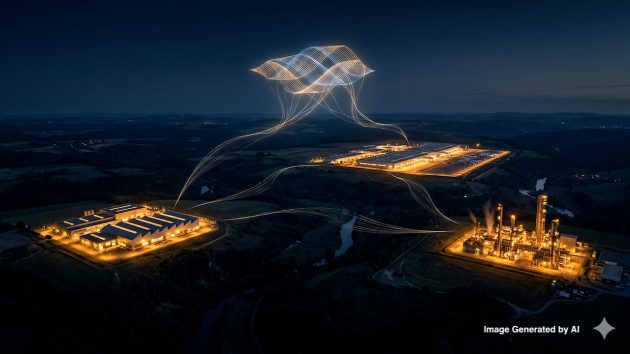
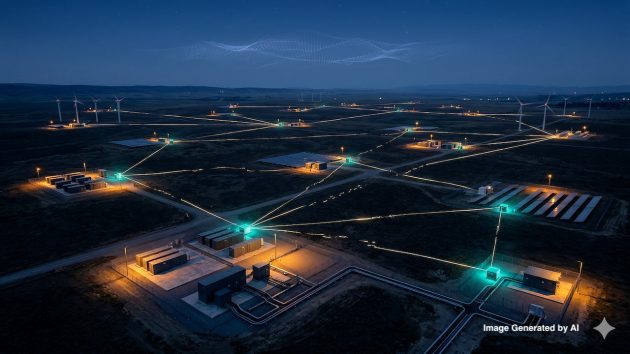
There certainly is no shortage of interest in applying AI to distributed energy operations. Battery storage operators want predictive analytics at the cell level. Renewable fleet managers want optimization recommendations across hundreds of sites. Grid operators want faster fault diagnostics closer to the asset. The ambition is real, and the use cases are sound.
But ambition is running ahead of readiness. In many operational environments, the foundational work on which AI depends has either not been completed or completed inconsistently. The result is a growing gap between where organizations want to deploy AI and where their data infrastructure can actually support it.
This is not a criticism. It is a pattern that shows up across the energy sector with striking regularity. The hard part of industrial AI is not the model. It is everything underneath it.
The three prerequisites that keep getting skipped
When people ask what it takes to make a distributed energy fleet AI-ready, the conversation usually jumps to compute power or model selection; those matter. But in practice, three more fundamental requirements tend to determine whether AI delivers value or becomes an expensive experiment.
The first is high-quality, normalized time series data. AI models are unforgiving about data quality. A 50-millisecond timestamp drift between two sensors can distort a model’s output. When assets from different manufacturers produce data in different formats, at different intervals, and with different naming conventions, the raw material that AI needs simply is not there yet. Normalization is not a preliminary step that you finish and move past. It is a continuous discipline, especially in environments where assets, configurations, and service agreements change over time.
The second is consistent semantic tagging. A voltage reading means very little to nothing to an AI model unless it knows the asset, the operating context, the position in the grid topology, and what normal looks like for that specific location at that specific time. Semantic tagging provides that context. Without it, models are processing numbers without meaning. Many energy operators are data-rich but insight-poor. The gap between those two states is almost always a context problem, not a volume problem.
The third is edge compute, capable of running inference locally. For energy operations where decisions need to happen in under a second, sending data to the cloud for processing and waiting for a response is not viable. The intelligence has to run where the data originates. That requires not just hardware, but also a software infrastructure that can support model deployment, monitoring, and updates across distributed sites.
AI in energy is advisory today, and that is the right call
There is a natural temptation to push AI toward autonomous decision-making in energy environments. The technology is advancing, the pressure to optimize is real, and the promise of removing humans from time-sensitive control loops is appealing on paper.
But the energy sector is right to move slowly here. Safety-critical systems are designed and certified in accordance with established engineering standards. AI has not yet earned a role in autonomous decision-making for those functions, and for good reason. The potential for unpredictable behavior, particularly with machine learning models and emerging agentic AI approaches, introduces a risk that operational environments cannot afford to absorb without much more mature governance frameworks.
What AI does well right now in these environments is fault diagnostics, predictive maintenance, optimization recommendations, and operational advisory. Real gains are being made in areas like using AI to accelerate site configuration, build contextualized troubleshooting guides from service records and live asset data, and prioritize maintenance actions across large fleets. In all of these cases, the human remains in the decision loop. The AI accelerates the work. It does not replace the judgment.
Explainability matters here, too. If a model is going to influence how a battery storage system behaves or how an operator responds to an event, the people relying on that output need to understand why the model is making the recommendations it does. AI should not be a black box in environments where the consequences of a bad decision are physical, not just computational.
Lifecycle management is the gap nobody plans for
Even when organizations get the data foundation right and deploy models that work, a second gap tends to open: lifecycle management. Models need to be updated as conditions change. They need to be monitored for drift. They need to be rolled back when something goes wrong. And in distributed energy environments, all of that needs to happen at fleet scale, across hundreds or thousands of edge nodes, often without anyone physically present at the site.
This is the orchestration challenge, and it is easy to underestimate. In disconnected, lights-out edge environments where remote access is limited, managing model updates, security patches, and configuration changes becomes a serious operational concern. When firmware does not match across sites that were commissioned years apart, or when a model has been running without validation for months, trust erodes quietly. By the time someone notices, the AI is no longer doing what it was deployed to do.
The bottom line
Deploying AI in distributed energy systems is not primarily a model problem. It is an infrastructure problem, a data quality problem, and a governance problem. The organizations making real progress are the ones that started with the foundation: normalized data, semantic context, edge compute, and the orchestration to manage it all over time.
The future most people in this space are working toward, fleets of distributed energy resources that can self-optimize and participate in markets with minimal human intervention, depends on getting these fundamentals right first. The models will follow. But only if the ground they stand on is solid.
Sponsored by IOTech
By Andrew Foster, Chief Product Officer, IOTech
Frequently Asked Questions
1. What does “AI-ready” actually mean for distributed energy systems?
Being AI-ready means having an infrastructure that supports high-quality normalized time-series data, consistent semantic tagging for operational context, and edge compute capabilities for local inference. Without these three pillars, AI models cannot produce reliable or actionable insights.
2. Why do AI projects often fail in the energy sector?
Most energy AI pilots fail because of “garbage in, garbage out” data issues. Common hurdles include timestamp drift between sensors, inconsistent data formats across different asset manufacturers, and a lack of semantic context, which prevents the AI from understanding the asset’s role in the grid topology.
3. Why is edge computing required for AI in distributed energy?
Edge computing is necessary because energy operations often require sub-second decision-making. Sending massive amounts of data to the cloud for processing introduces latency that is non-viable for critical functions like fault diagnostics. Local inference ensures the intelligence stays where the data originates.
4. Should AI be autonomous or advisory in energy operations?
Currently, AI is best suited for advisory roles, such as predictive maintenance and optimization recommendations. Because energy systems are safety-critical, keeping a “human-in-the-loop” is essential to mitigate risks associated with model unpredictability or “black box” decision-making.
5. What is the biggest challenge in scaling AI across an energy fleet?
The primary challenge is lifecycle management. Organizations often underestimate the complexity of monitoring model drift, deploying security patches, and managing configuration updates across thousands of remote, distributed edge nodes without physical site access.