
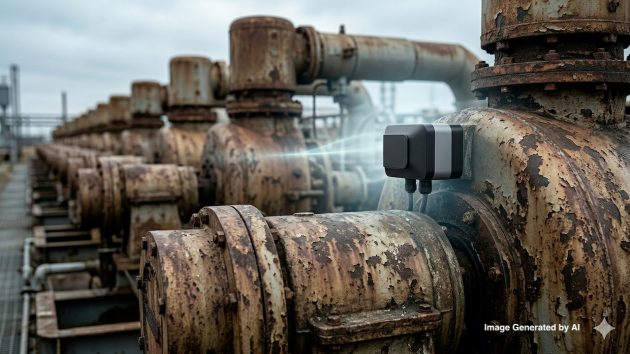
The energy industry is currently managing the transition of aging brownfield assets while addressing a shift in workforce expertise. At IIoT World Energy Day, a panel of industry experts discussed the operational frameworks required to deploy Edge AI for maintaining infrastructure uptime.
Addressing the Expertise Gap with Prescriptive Analytics
As experienced engineers retire, energy companies lose the intuitive knowledge required to diagnose equipment issues by sound or touch. Sundeep Ahluwalia, Chief Product Officer at TDK SensEI, explained that Edge AI aims to digitize this expertise.
TDK SensEI, which stands for Sensors with Edge Intelligence, focuses on:
- Predictive Maintenance: Providing a window of several days to a month to address potential failures before they occur.
- Prescriptive Analytics: Analyzing historical maintenance logs and real-time data to provide specific repair instructions to junior technicians, effectively shortening the learning curve.
Data Foundation: From Silos to Real-Time Streams
Magnus McCune, CTO at HiveMQ, noted that the primary technical barrier to scaling AI is the lack of accessible data. In brownfield environments, data is often stranded in isolated systems like historians, SCADA, and maintenance logs that do not communicate.
Key requirements for a scalable data layer include:
- Connectivity: Extracting data from legacy PLCs and onto a shared network.
- Contextualization: Ensuring data points carry metadata such as site location, asset ID, and normal operating ranges so downstream AI models can interpret them correctly.
- Reliability: Utilizing MQTT as a lightweight streaming layer to maintain data flow during network instability.
“No data is bad, but bad data is worse,” said Magnus McCune.
Security Realities: Data Poisoning at the Edge
As infrastructure becomes more connected, the security focus is shifting from simple data privacy to data integrity. Andrew Hopkins, President at PrivacyChain, highlighted the risk of data poisoning, where malicious data is fed into a model to trigger incorrect operational decisions.
To mitigate this, security must be pushed to the edge. By validating and managing data at the point of generation, operators can ensure the integrity of the information used for AI inference and training.
Operational Sustainability and Power Efficiency
Deploying AI at the edge also addresses energy consumption concerns. Sundeep Ahluwalia noted that TDK SensEI runs AI models directly on battery-powered sensors. By processing data at the source and only transmitting the final inference rather than raw data streams, companies can:
- Maximize the battery life of wireless hardware.
- Reduce the bandwidth and power required for cloud-based processing.
Implementation Summary
| Challenge | Technical Strategy |
| Aging Infrastructure | Retrofit brownfield assets with edge-intelligent sensors. |
| Workforce Transition | Use prescriptive analytics to provide actionable repair data. |
| Data Inconsistency | Implement a common data layer using MQTT. |
| Cyber Risk | Utilize distributed data management to prevent data poisoning. |
Source and Methodology Disclosure: This article is based on the “Edge AI: Driving Smarter Machine Health Monitoring for Energy Infrastructure” panel discussion, sponsored by TDK SensEI at IIoT World Energy Day. We utilized AI tools to summarize the session and optimize the structure for clarity.
Thank you to the panelists: Sundeep Ahluwalia, Chief Product Officer, TDK SensEI, Andrew Hopkins, President, PrivacyChain, Magnus McCune, Chief Technology Officer, HiveMQ, Luciano Narcisi, Director of Research, ARC Advisory Group.
Frequently Asked Questions
1. How does Edge AI improve asset health monitoring in energy?
Edge AI enables real-time monitoring and local data processing directly at the sensor level. This allows for immediate failure detection in aging brownfield assets, reduces bandwidth costs, and ensures continuous operation even when cloud connectivity is unstable.
2. What is the difference between predictive maintenance and prescriptive analytics?
Predictive maintenance provides a window of time to address potential equipment failures before they happen. Prescriptive analytics goes a step further by analyzing historical logs and real-time data to provide technicians with specific, actionable repair instructions, which helps bridge the industry’s growing expertise gap.
3. Why is MQTT used for AI data in energy infrastructure?
MQTT is a lightweight messaging protocol ideal for energy environments where network stability can be inconsistent. It acts as a reliable streaming layer that ensures data from legacy systems (like PLCs and SCADA) is contextualized with metadata so AI models can interpret it correctly.
4. What are the security risks of deploying AI at the edge?
A significant risk is “data poisoning,” where malicious or corrupted data is fed into an AI model to trigger incorrect operational decisions. To mitigate this, security must be pushed to the edge to validate data integrity at the point of generation before it is used for AI training or inference.
5. How does Edge AI enhance power efficiency for remote sensors?
By processing data locally and only transmitting final inferences rather than raw data streams, Edge AI significantly reduces the power required for transmission. This allows battery-powered sensors on remote energy infrastructure to maximize their operational lifespan.