
The Factory Floor Can’t Adapt Without This
· Discrete Manufacturing

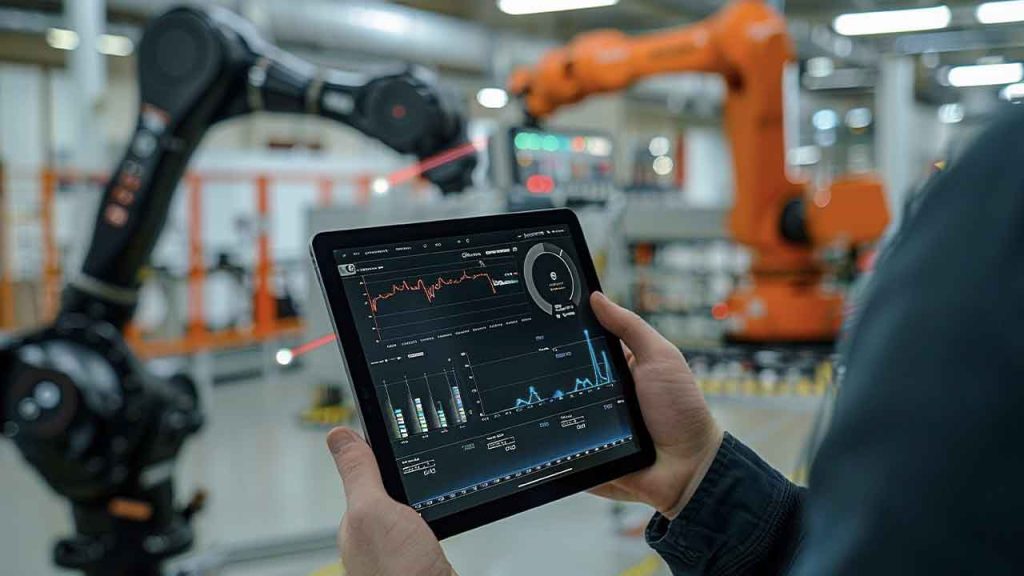
The Factory Floor Can’t Adapt Without This

Manufacturers are under relentless pressure to adapt—fast. But while the demand for agility is everywhere, the reality on the ground tells a different story. Most factory floors still rely on outdated systems, fragmented data, and manual workarounds that leave them exposed to disruptions.The problem isn’t the lack of ambition. It’s the absence of a reliable […]

Read more →


What Generative AI Is Really Changing on the Factory Floor
· Discrete Manufacturing

What Generative AI Is Really Changing on the Factory Floor

Forget the hype. Generative AI isn’t replacing workers or designing entire factories — yet. But it is changing what happens on the factory floor, where complexity, variability, and labor shortages meet real-time decisions. From reducing assembly errors to preserving expertise before it walks out the door, generative AI is beginning to solve the gritty, everyday […]

Read more →
Why Edge-to-Cloud Data Symmetry Is the Foundation of Scalable Smart Manufacturing
· Hybrid Manufacturing

Why Edge-to-Cloud Data Symmetry Is the Foundation of Scalable Smart Manufacturing

As manufacturers accelerate their digital transformation journeys, the limitations of fragmented data environments are becoming more visible—and more costly. The promise of smart manufacturing hinges on one capability: enabling data to move seamlessly from the factory floor to the cloud and back without loss, latency, or complexity.This is where edge-to-cloud synchronization emerges not as an […]

Read more →
Digital Transformation Without the Downtime: A Strategic Guide for Manufacturers
· Hybrid Manufacturing

Digital Transformation Without the Downtime: A Strategic Guide for Manufacturers

Digital transformation is a top priority for manufacturers—but executing it without disrupting daily operations remains one of the toughest challenges in the industry. Downtime is expensive. Retraining teams is resource-intensive. And implementing new systems while maintaining output often feels impossible.IIoT World has published a new white paper: “How to Execute Digital Transformation Without Disrupting Your Production,” […]

Read more →
8 steps manufacturers can take to digital transformation
· Process Manufacturing

8 steps manufacturers can take to digital transformation

The thought of digitalization can be overwhelming. When we first started talking about IIoT or digitalization about a decade ago, the concepts were prescribed as an all-encompassing, top-down approach taking the industrial world from Industry 3.0 to Industry 4.0.However, that approach proved to be too big. Rather than identify real problems that could be fixed, […]

Read more →
July 2025 Industrial IoT & ICS Cybersecurity Events
· Connected Industry

July 2025 Industrial IoT & ICS Cybersecurity Events

July 2025 is packed with high-impact events for professionals navigating the rapidly evolving landscapes of Industrial IoT, cybersecurity, and smart manufacturing. From Tokyo to Munich to San Jose, these summits bring together global leaders, engineers, innovators, and decision-makers to explore the latest in AI-powered industrial systems, secure communications, and digital transformation strategies. Whether you’re a […]

Read more →
From Data to Insights: Turning Industrial Data into Actionable Intelligence
· Process Manufacturing

From Data to Insights: Turning Industrial Data into Actionable Intelligence

Manufacturing plants generate enormous volumes of data every second, from vibration sensors on rotating equipment to temperature readings in chemical reactors and throughput counters on packaging lines. Yet the vast majority of this data is never analyzed in time to influence decisions on the shop floor. In this article, IIoT World explores the end-to-end journey […]

Read more →
Minimizing lost time and equipment in manufacturing with real-time asset tracking
· Discrete Manufacturing

Minimizing lost time and equipment in manufacturing with real-time asset tracking

Access to the correct assets, equipment, and raw materials at the right time is vital for maintaining production schedules in a busy factory. Workers can spend up to 20% of their time searching for missing tools, leading to delays, frustration, and increased safety risks. These inefficiencies can cause significant downtime, especially in high-value manufacturing environments. […]

Read more →
How Open Data Standards Power Industrial Process Optimization
· Process Manufacturing

How Open Data Standards Power Industrial Process Optimization

Proprietary data silos remain one of the largest barriers to scaling industrial process optimization across multi-vendor factory environments. Open data standards such as OPC UA, MQTT, and Sparkplug B offer a path forward by establishing common data models and communication protocols that allow equipment from different manufacturers to share information seamlessly. In this article, IIoT […]

Read more →
What’s Next for MES? Find Out at MESI 4.0 Summit 2025 in Porto
· Discrete Manufacturing

What’s Next for MES? Find Out at MESI 4.0 Summit 2025 in Porto

As manufacturers continue to navigate evolving demands, supply chain complexity, and fast-paced technological change, the need for scalable, intelligent, and resilient systems is front and center. The MESI 4.0 Summit 2025, hosted by Critical Manufacturing, offers a platform for manufacturing and technology leaders to explore how MES and Industry 4.0 technologies are being applied to meet these […]

Read more →
A Guide to Manufacturing Data Analytics – Why Manufacturers Need a Modern Data Platform
· Analytics

A Guide to Manufacturing Data Analytics – Why Manufacturers Need a Modern Data Platform

In the age of digital transformation, data is more than a byproduct—it’s a powerful asset. But most manufacturers are sitting on untapped potential. This white paper from Critical Manufacturing explores how modern data platforms, combined with MES systems, are reshaping industrial operations—from the shop floor to executive decision-making.Readers will gain a clear understanding of how “dark data”—the 60–90% […]

Read more →