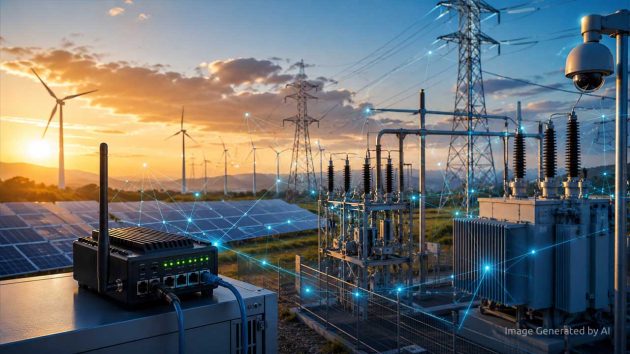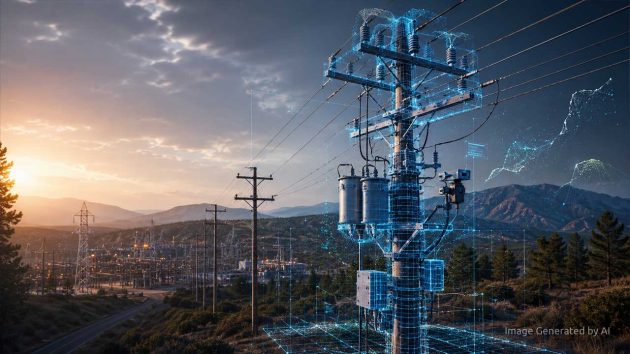
Energy grids face unprecedented complexity as distributed generation, aging infrastructure, and volatile demand patterns converge. Traditional reliability strategies, built around scheduled maintenance and historical failure rates, are no longer sufficient to prevent cascading outages or optimize increasingly dynamic load profiles. AI-enabled predictive analytics offers a fundamentally different approach, using real-time data from IIoT sensors deployed across transformers, substations, and transmission lines to forecast equipment degradation, detect anomalies before they escalate, and recommend preemptive interventions. In this IIoT World deep dive, we examine how utilities and grid operators are moving beyond basic reliability metrics to achieve true grid resilience, where systems not only avoid failures but adapt intelligently to changing conditions. The transition demands new data architectures, new operational workflows, and a clear understanding of what predictive models can and cannot deliver.
Extreme weather events, rising renewable penetration, and cyber risks are exposing a critical weakness in global power systems: our grids were designed for reliability, not resilience. While reliability is about minimizing day-to-day interruptions, resilience is about recovering quickly from major disruptions – whether a hurricane, wildfire, or coordinated cyberattack.
In a recent IIoT World panel, experts emphasized that AI-enabled predictive analytics is emerging as the bridge between the two. By combining data from sensors, digital twins, and Distributed Energy Resources (DERs), utilities can move from reactive recovery to proactive resilience.
Sensors are the foundation. Transmission grids already rely on robust sensor networks to track voltage, current, and weather conditions. But distribution grids – where energy meets end users – lag behind. Emerging solutions like Advanced Metering Infrastructure (AMI) and IoT-enabled devices are now filling this gap, delivering real-time insights into transformer health and load patterns. The challenge: cybersecurity, costs, and the ability to actually use the flood of data already being generated.
AI is the enabler. With predictive analytics, utilities can forecast line sag with LiDAR, anticipate transformer overheating, or predict renewable fluctuations before they cause outages. This doesn’t eliminate failures, but it reshapes how fast the grid can respond and recover.
Standardization is the multiplier. MQTT – once a niche protocol for oil and gas, now an open standard – was highlighted as a model for secure, lightweight, and scalable data exchange. Without open standards, AI insights remain siloed; with them, utilities can build interoperable, cross-industry resilience strategies.
DERs are the resilience wildcard. Rooftop solar, flexible loads, and local storage offer resilience by decentralizing supply. Yet most utilities lack real-time visibility into DER operations. AI-driven integration can close this gap, making DERs a dependable resource instead of an unpredictable variable.
Finally, resilience is not just technical – it’s human. Workforce shortages are accelerating AI and automation adoption. Retirees, upskilled employees, and digital-native hires will all play a role, but AI lowers the skill barrier, enabling staff to focus on high-value decision-making instead of repetitive monitoring.
The future grid won’t only be judged by SAIDI or SAIFI. It will be measured by recovery speed, redundancy under stress, and adaptability to disruption – all areas where AI-enabled predictive analytics is already making inroads.
Source: Panel discussion “AI-Enabled Predictive Analytics for Grid Resilience,” organized by IIoT World
Related articles:
- The future of reliable energy: How IIoT is powering smarter microgrids
- Transforming Grid Edge Communication: The Future of Intelligent Energy Systems
FAQ
1: How does AI-enabled predictive analytics improve energy grid reliability?
AI predictive analytics ingests continuous streams of data from IIoT sensors measuring temperature, vibration, oil chemistry, load current, and environmental conditions across grid assets. Machine learning models trained on this data identify degradation patterns weeks or months before equipment failure occurs. For example, dissolved gas analysis combined with transformer load history can predict winding insulation breakdown with over 90% accuracy at a 30-day horizon. This allows utilities to schedule maintenance during low-demand windows rather than responding to emergency outages. The result is fewer unplanned outages, lower repair costs, and improved regulatory compliance with reliability standards such as NERC TPL.
2: What types of IIoT sensors are used for grid predictive analytics?
The most common sensor types include dissolved gas analyzers (DGA) for oil-filled transformers, partial discharge monitors for switchgear and cables, vibration sensors for rotating equipment like turbines and generators, thermal imaging cameras for hotspot detection, and phasor measurement units (PMUs) for real-time grid stability monitoring. Modern deployments also incorporate weather stations and satellite data feeds to correlate environmental conditions with asset stress. Edge computing gateways aggregate and preprocess this data locally before transmitting to cloud-based analytics platforms, reducing bandwidth costs and enabling sub-second response times for critical alerts.
3: What is the difference between grid reliability and grid resilience in the context of predictive analytics?
Reliability focuses on preventing individual component failures and maintaining uptime targets, typically measured by metrics like SAIDI (System Average Interruption Duration Index) and SAIFI (System Average Interruption Frequency Index). Resilience goes further by addressing the grid’s ability to anticipate, absorb, adapt to, and rapidly recover from high-impact, low-probability events such as extreme weather, cyberattacks, or cascading failures. Predictive analytics supports resilience by modeling scenario-based stress tests, identifying the weakest links in interconnected systems, and enabling dyn
Related from IIoT World: