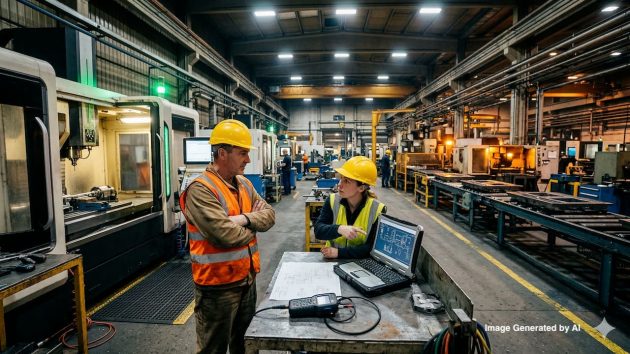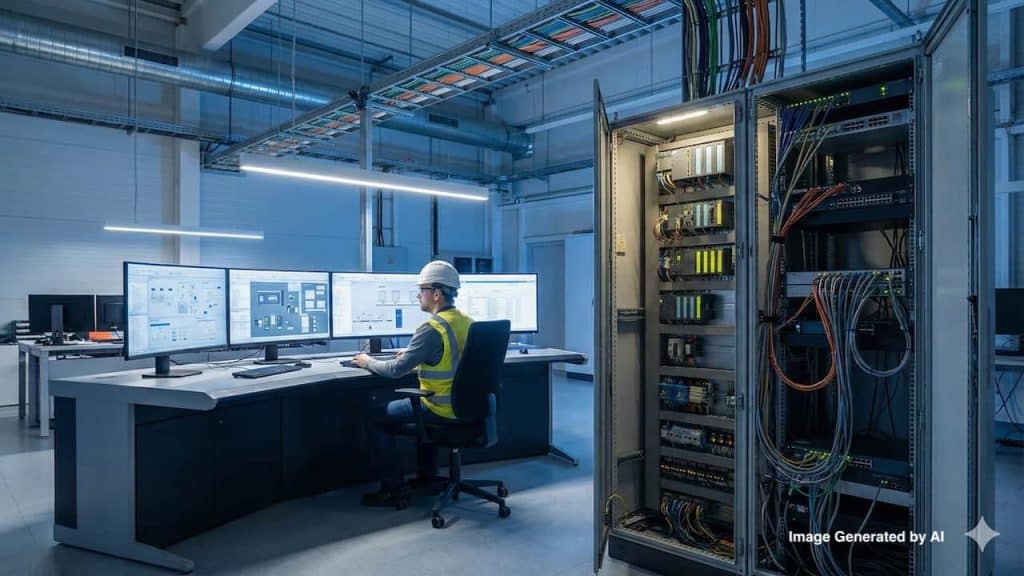
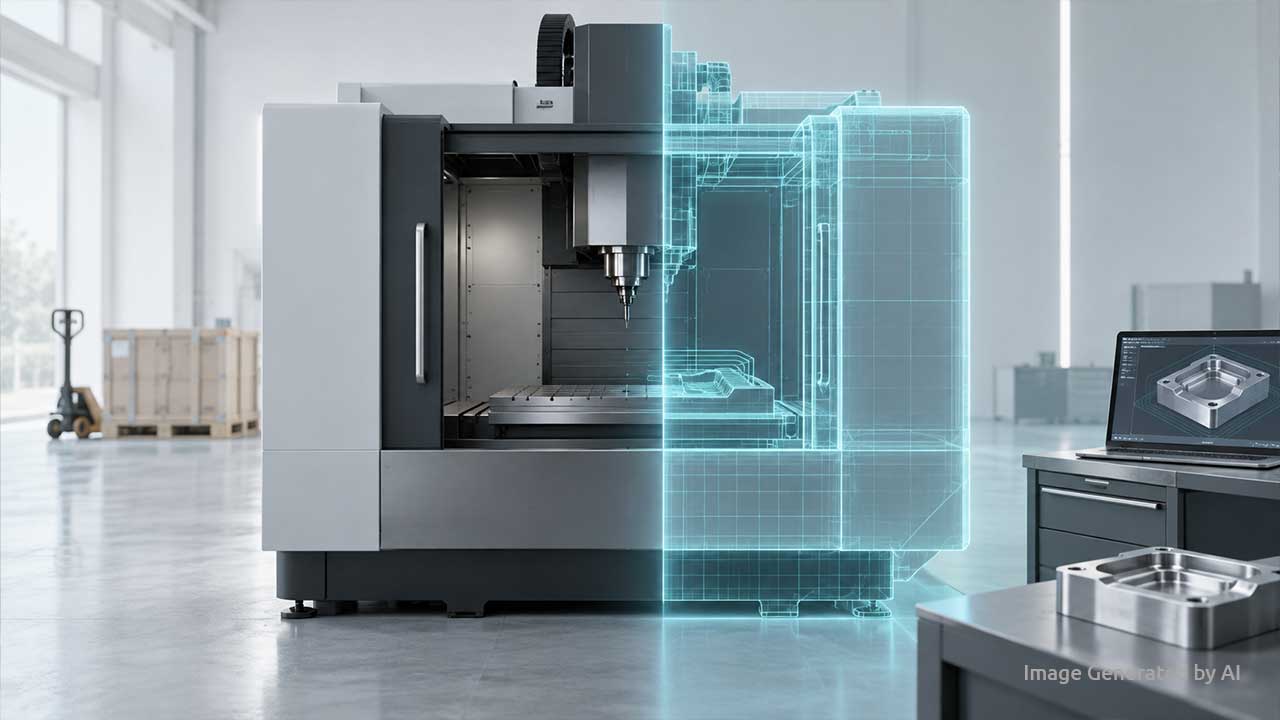
A machine shop lays out $300,000 on a new machine and waits roughly two months before it cuts a single part. At IMTS 2026, Brent Kephart of Siemens explained what causes the delay and how the company’s “Meet at the Machine” initiative cuts that delay: a digital copy of the machine, delivered the day after the purchase order.
Why Does a New Machine Take Months to Start Earning?
The machine arrives but the operator, the software to run it, and the commissioning environment all need to be sorted out separately. In a tool shop, the CEO or president signs off on the purchase order, and the machine sits on the floor while everything around it gets figured out. The machine tool OEM often does not receive full payment until the machine is commissioned at the customer site, so the delay costs both sides.
What Does Day-One Productivity Mean?
The day after a machine shop places its purchase order, the shop gets a digital copy of the machine on its desktop, including CAM and a validated working post-processor. Operators train and run first jobs in the digital environment while waiting for the physical machine to arrive. When the machine lands on the floor, it is productive from day one.
The digital copy runs on Siemens’ Run MyVirtual Machine platform, which uses real SINUMERIK control logic rather than approximate software models. The virtual machine presents the same operating and programming interface as the physical SINUMERIK ONE controller, so operators training on the desktop are learning the exact HMI they will use in production. The platform simulates the complete machine, including axes, tooling, holders, fixtures, and workpiece motion, and identifies collisions between machine components before a program reaches the shop floor. NC program verification and job setup move to the desktop, and machine-accurate cycle time calculations let shops plan production schedules before the physical machine arrives.
Day-one productivity is the first offering under Siemens’ “Meet at the Machine” initiative, which brings hardware and software teams together with machine tool OEM partners. Five-axis machines at the same performance level all compete on speeds, feeds, and price, so OEMs need a differentiator beyond those specs. Without automation and digitization, they have few ways to stand apart. A longer roadmap of additional capabilities is planned under the initiative.
Why Is This Digital Twin Based on Actuals?
Standard CNC simulation uses theoretical characteristics of a five-axis machine to predict what will happen with a given part. Because Siemens builds the controller, the digital twin uses the actual RPMs, speeds, force, and power of that specific machine. The simulation reflects what that machine will actually do, not what a theoretical scenario predicts.
Manufacturers using the platform in production report measurable results. Rusch Maschinenteile, a German manufacturer, used a SINUMERIK ONE digital twin on a DMG MORI machine to reduce cycle times by around 20% and eliminate up to 80% of manual programming tasks through automated shopfloor programming.
Small and medium manufacturers cannot find enough people, and the shortage has been growing for years. When the digital twin reflects the actual machine, operators train on what it will do in production, so more people can run jobs without specific machining expertise. For a machine shop owner spending $300,000 on a new machine in a multi-vendor environment, the focus shifts from the operator’s background to the finished part.
This article is based on a video interview with Brent Kephart, Global Portfolio Director, Part Manufacturing at Siemens, and Lucian Fogoros of IIoT World, recorded at IMTS 2026. AI tools were used to help summarize and organize the content. Reviewed and edited by the IIoT World editorial team.
Sponsored by Siemens.
Sources: