When an AI system recommends a quality action and the recommendation turns out to be wrong, the model does not carry the production loss, answer to the customer, sign the quality record, or explain the safety event. The people who relied on that recommendation do. And as AI moves beyond answering questions toward routing supplier issues, supporting maintenance decisions, and suggesting process changes, the question of who owns the outcome becomes harder to manage without a clear structure around it.
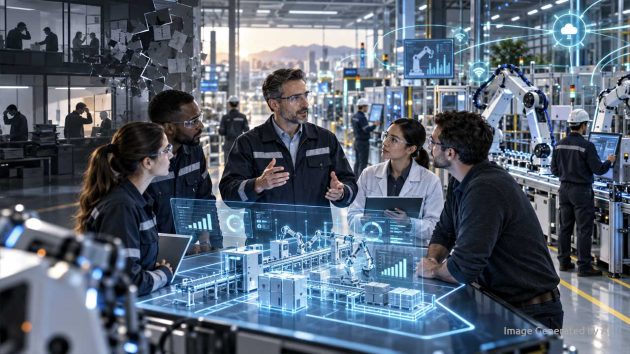
During a session at IIoT World’s AI Manufacturing Day 2026, Chris Huff and Anthony Vigliotti of Adlib Software, alongside Mathias Oppelt of Siemens, described the accountability structures manufacturers need before giving AI agents operational authority.
Decisions Have Owners
Accountability for AI-supported decisions stays with people. The plant manager, quality leader, operations leader, or CEO still owns the outcome, and AI is a tool inside that accountability.
Most AI discussions focus on capability: can the system read the document, find the pattern, make a recommendation, trigger the next workflow step? Those questions matter, but they skip the harder ones. Who approves the action? Who reviews the exception? Who decides when AI is allowed to move forward, and who stops the workflow when the result looks wrong? Without clear ownership of those decisions, AI can create confusion instead of speed.
How Much Authority Should an Agent Have?
Not every manufacturing decision should carry the same level of automation. Classifying an incoming inspection report is a lower-risk task for AI than recommending a process change, and comparing a maintenance log against a service schedule carries less weight than supporting a quality release decision. The further AI moves toward actions that affect physical operations, the more scrutiny the decision requires.
Manufacturers need to define what each AI system is allowed to do. Searching, extracting, summarizing, comparing, recommending, routing, escalating, and preparing a decision package all sit at different points on that spectrum. Approving, releasing, changing, or executing without human review is a different matter entirely, and safety becomes a key dimension in deciding which agent can make which decision.
Treat AI Like New Equipment on the Floor
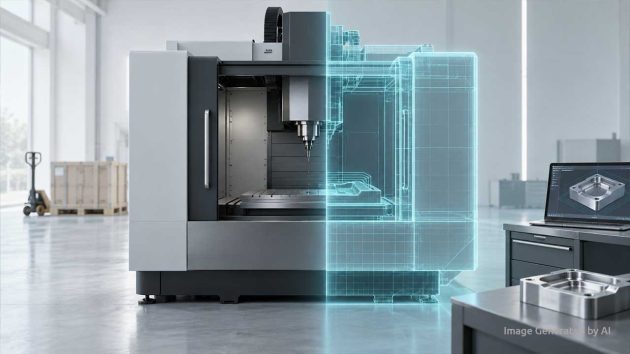
Manufacturers already know how to introduce risk into a plant carefully. When a new machine is added to the floor, teams do not simply plug it in and hope for the best. They define the process, training, documentation, escalation path, supplier contacts, maintenance plan, safety considerations, and what happens when something breaks. AI technology deserves the same level of planning, even though it is software and does not feel as tangible as a machine.
Cross-functional teams that bring new equipment into production plan what happens if it fails, where the documentation lives, who handles escalation, and how the supplier relationship works. AI systems that support manufacturing workflows need operating procedures, owners, escalation paths, monitoring, and recovery plans built around them the same way. If the system gives the wrong recommendation, stalls in a workflow, or fails to retrieve the right information, the plant should not be figuring out the response for the first time.
Accountability Through the Orchestration Layer
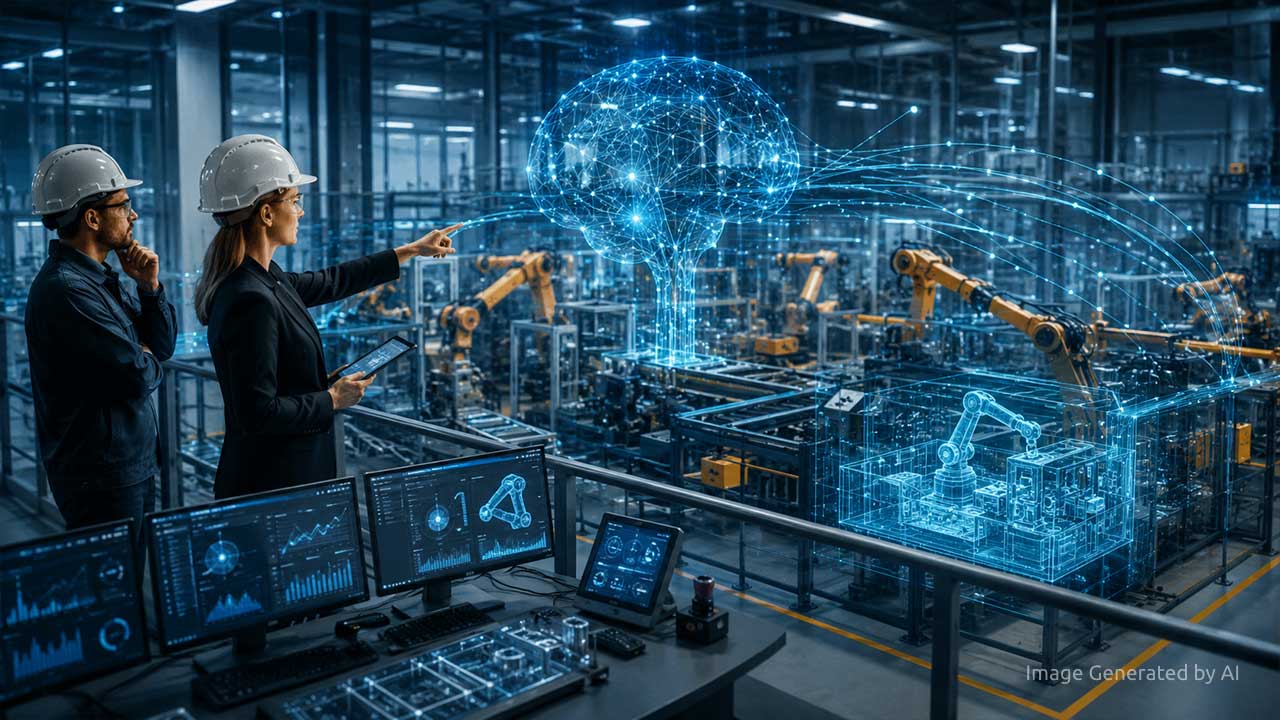
AI agents rarely work alone. They usually sit inside a workflow with other systems, data sources, applications, and human approvals. The orchestration layer controls how information moves, where handoffs happen, which systems are involved, and what occurs when something fails. It is also the place where manufacturers can log actions, track errors, monitor agent behavior, and create visibility into what the AI-supported workflow is actually doing.
A practical first step is proper error logging, callbacks across applications, and visibility into where an agent stalled, paused, or created a problem. When an AI-supported workflow fails, teams need to know:
- which agent was involved
- what information it used
- what action it attempted
- where the workflow stopped
- which system accepted or rejected the output
- who reviewed or approved the recommendation
- what exception path was triggered
Without that operational visibility, accountability becomes guesswork.
Test It on the Digital Twin First
When AI recommendations move closer to physical operations, manufacturers need a validation step between the recommendation and the action. Simulation and digital twins can provide that step. Before an AI recommendation is applied in the real world, it can be tested against a digital twin or simulation model, and if it proves sound in the virtual environment, it may then move closer to real operations.
Human responsibility stays, but decision-makers get a better way to evaluate risk before approving action. This matters most in areas where AI could affect production flow, equipment behavior, process parameters, quality outcomes, or safety margins, where a virtual validation step helps separate a recommendation that sounds reasonable from one that is operationally safe.
Oversight as an Operational Skill
As AI agents become part of plant workflows, people stay in the process, but their role shifts. Earlier automation programs showed a similar pattern: workers who once performed certain tasks became managers of software bots, still responsible for the work but focused on oversight, quality checking, and making sure the digital worker performed correctly.
The same shift is likely with AI agents in manufacturing. The person responsible for a workflow may not perform every manual step themselves but instead supervise an AI-supported process, review exceptions, approve higher-risk recommendations, investigate failures, and tune how the system works over time. Manufacturers will need people who understand both the process and the AI-supported workflow well enough to know when the system is right, when it is incomplete, and when it should not act. That skill stays rooted in manufacturing knowledge, and AI adds to it without replacing the process expertise behind it.
Workflows Where Ownership Already Exists
AI action works best where ownership is already well defined. Equipment calibration records, production deviation reports, maintenance work orders, and engineering change orders often already have owners, escalation paths, review rules, and required approvals built in. These workflows are better candidates for AI support because the decision rights already exist, and the AI system can be added into a known process rather than creating a new accountability problem.
A practical approach is to map the workflow before adding AI:
- What task will AI support?
- What decision is being made?
- Who owns the decision today?
- What can AI do without approval?
- What requires human review?
- What must be logged?
- What happens if the AI output is wrong or incomplete?
- What is the escalation path?
Mapping these questions keeps the conversation grounded in manufacturing operations instead of broad AI strategy.
Control First
AI can help manufacturers move faster by reducing manual work, surfacing relevant information, preparing decisions, routing exceptions, and supporting more consistent workflows. But it should not create uncertainty about who is responsible when something goes wrong.
For factory AI, trust is also about control: who gave the system authority, who monitored the workflow, who approved the action, who handled the exception, and who owns the outcome. Until those questions are answered, AI should stay in support mode. Once they are answered, manufacturers can use AI more confidently, because the operating model around it is clear.
Related from IIoT World
- Who Controls AI-Generated Factory Software?
- Eliminating the “Hidden Factory”: The Economics of Agentic Quality Control
- Small Language Models: The Factory AI for the Modern Plant Floor
This article is based on a panel discussion at IIoT World’s AI Manufacturing Day 2026, sponsored by Adlib Software. Panelists: Chris Huff, CEO, Adlib Software; Anthony Vigliotti, CPO, Adlib Software; and Mathias Oppelt, Vice President Head of Customer Driven Innovation, Siemens. Moderated by Hamish Mackenzie, Advisory Board Member, IIoT World. AI tools were used to help summarize and organize the content. Reviewed and edited by the IIoT World editorial team.
Sponsored by Adlib Software. Editorially Independent.
FAQ
1. Who is accountable when manufacturing AI makes a wrong decision?
The plant manager, quality leader, operations leader, or CEO still owns the outcome. AI is a tool inside that accountability, not a substitute for it. Manufacturers need to define who approves actions, who reviews exceptions, who stops the workflow when results look wrong, and who explains the decision if there is a problem later. Without clear ownership, AI creates confusion instead of speed.
2. How should manufacturers set authority limits for AI agents?
Not every decision should have the same level of automation. An AI agent that summarizes documentation does not need the same controls as one that recommends a process change. Manufacturers should define what each AI system is allowed to do: search, extract, summarize, compare, recommend, route, or escalate. Actions like approve, release, change, or execute should require human review. Safety becomes a new dimension in deciding which agent can make which decision.
3. Why does AI in manufacturing need an orchestration layer?
AI agents rarely work alone. They sit inside workflows with other systems, data sources, and human approvals. The orchestration layer controls how information moves, where handoffs happen, and what occurs when something fails. It provides the error logging, callbacks, and visibility manufacturers need to know which agent was involved, what information it used, and where the workflow stopped. Without orchestration, accountability becomes guesswork.