
At GE Vernova Accelerate 2026, Smita Bhat and Brian Johnson presented the Proficy AI roadmap spanning seven initiative themes across MES, Historian, and SCADA. The roadmap organizes AI capabilities into three tiers: chatbots that wait for input and respond once, copilots that suggest actions while the user stays in control, and autonomous agents that detect anomalies, query the historian, open tickets, recommend fixes, and schedule follow-up monitoring. Model Context Protocol (MCP) provides a standard way for AI to safely use tools, APIs, and data, while 12 governance principles define boundaries for accountability, human oversight, and auditability across all tiers.
Chatbot, Copilot, Agent: Three Tiers of Manufacturing AI
The presentation distinguished three levels of AI capability based on autonomy and the ability to act independently.
| Chatbot (Reactive) | Copilot (Assistive) | Agent (Autonomous) | |
| How it works | Waits for input, responds once, no memory of goals | Helps complete tasks, suggests actions, user stays in control | Accepts goals, breaks them into tasks, chooses tools, takes actions, adjusts plans |
| Example | “Here’s the answer you asked for.” | “I recommend running this report. Do you want me to?” | “I detected an anomaly, queried the historian, opened a ticket, recommended a fix and scheduled follow-up monitoring.” |
The progression moves from no autonomy to full goal management. Chatbots have no ability to act in the world. Copilots have limited autonomy, with the user staying in control. Agents observe results, adjust their plans, and execute multi-step workflows.
Seven Initiative Themes Across the Proficy Product Line
The AI roadmap covers seven themes, each tied to specific products and user roles.
| Theme | Products | Primary Users |
| Natural Language Access | Talk to Your Analytic Data, Historian Interactive SQL Assistant, Chat with Proficy MES, MCP Client + MCP Server | Operators, Process Engineers, Quality Engineers, Shift / Section Managers, Plant Managers |
| Visualization and UI Generation | Operations Hub AI Screen Builder, Next Gen SCADA (Project Mango) | Engineers, Admins, System Integrators, Services |
| Operational and Agentic Automation | Agentic Historian, Agentic AI Platform (Flowise) | Historian Administrators, Operators (with safeguards), Platform Teams |
| Configuration Acceleration | Smart Factory MES Configuration Assistant, MES Auto Configuration (paused learnings) | Admins / Super Users, System Integrators, Services |
| Migration and Modernization | Historian VB Script to Python Migration | Admins, System Integrators, Services, Managers |
| Enablement, Support, and Productivity | Historian Help/Knowledge Base Assistant, iFIX Help Bot, Language Translation Agent | End Users, Engineers |
| Shared AI Platform | MCP Server (data exposure), MCP Client (unified chat pattern), Shared RAG, Prompts, and Agents | Product Teams, Platform Teams, VELOTIC / PTC Alignment |
Natural language access targets the widest user base: operators, process engineers, quality engineers, shift/section managers, and plant managers who need analytics without learning tools or syntax. Expected benefits include faster insights, a lower skill barrier, and reduced reliance on experts.
Visualization and UI generation focuses on building screens. Operations Hub AI Screen Builder and Next Gen SCADA (Project Mango) generate dashboards, screens, and SCADA experiences from prompts. The target outcomes are dramatically faster screen creation, consistent visualization patterns, and easier modernization.
Operational and agentic automation represents the highest autonomy tier. Agentic Historian and the Agentic AI Platform (built on Flowise) perform monitored operational actions with safeguards for operator-facing workflows. The intended benefits are reduced manual admin work, more resilient operations, and a foundation for autonomous operations with controls.
Smart Factory MES Configuration Assistant provides assisted configuration journeys instead of manual setup. A related initiative, MES Auto Configuration, is listed as paused learnings. The remaining themes address migration (converting legacy VB Script to Python for Historian), productivity (help bots for Historian and iFIX, a language translation agent), and shared platform capabilities that provide reusable AI foundations across all Proficy products.
How MCP Connects AI to Industrial Systems
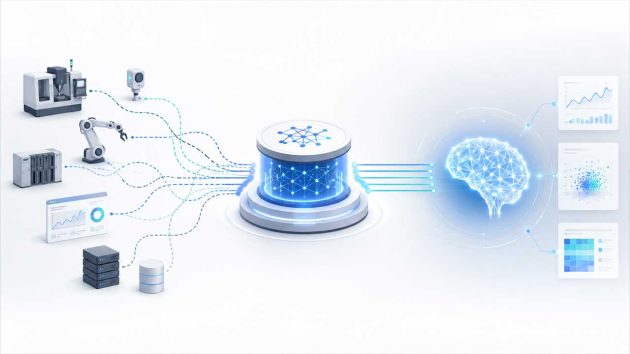
Model Context Protocol (MCP) standardizes how AI connects to external tools, APIs, and data sources. Instead of relying on fragile, prompt-based tool instructions, MCP uses strict input/output schemas so AI can discover and interact with available capabilities in a structured way.
Tools are exposed through an MCP Server. AI dynamically discovers and uses available capabilities. Inputs and outputs are defined with strict schemas, producing more predictable AI behavior with built-in security, auditability, and governance.
In the Proficy architecture, MCP appears in two roles. MCP Server handles data exposure. MCP Client provides a unified chat pattern across products. Both are part of the shared AI platform capabilities, designed for reuse across the entire Proficy product line instead of one-off bots per product.
Twelve Principles for Governing Industrial AI
The presentation defined 12 governance principles that apply across all AI initiatives:
- Accountability. AI systems must have clear human ownership.
- Transparency. Users and stakeholders must understand what the AI does and its limits.
- Fairness and Non-Discrimination. AI must not create or amplify unfair bias.
- Safety and Harm Prevention. AI should avoid foreseeable harm and degrade safely.
- Security and Data Protection. AI systems must be protected like any other critical system.
- Privacy. AI should respect individual and organizational data rights.
- Reliability and Performance. AI systems must perform consistently within defined bounds.
- Human Oversight. Humans must remain in control of high-impact decisions.
- Risk-Based Governance. Not all AI needs the same level of control.
- Auditability and Traceability. AI decisions must be reconstructable after the fact.
- Lifecycle Governance. Governance applies from idea to retirement.
- Compliance and Alignment. AI must align with laws, regulations, and organizational values.
This article is based on a presentation by Smita Bhat and Brian Johnson at GE Vernova Accelerate 2026. Lucian Fogoros of IIoT World attended the event. AI tools were used to help summarize and organize the content. Reviewed and edited by the IIoT World editorial team.
Related from IIoT World
- What Does Agentic AI Look Like in a Real Smart Factory?
- Can Manufacturers Trust AI to Act on Its Own?
- Factory AI Autonomy: What Bayer, Alcon, and National Grid Did Differently
Frequently Asked Questions
1. What is the difference between a chatbot, copilot, and AI agent in manufacturing?
A chatbot waits for a question and returns a single answer with no memory of goals and no ability to act. A copilot suggests actions but requires human approval before executing, keeping the user in control. An AI agent accepts or sets goals, breaks them into subtasks, selects tools, takes actions, observes results, and adjusts plans. In a manufacturing context, a chatbot might return a Historian query result, a copilot might recommend generating a specific report, and an agent might detect an anomaly, query historical data, open a ticket, recommend a fix, and schedule follow-up monitoring.
2. What is Model Context Protocol and how does it work in industrial AI?
Model Context Protocol (MCP) standardizes how AI connects to external tools, APIs, and data sources. Tools are exposed through an MCP Server, and AI dynamically discovers available capabilities using strict input/output schemas. MCP replaces fragile prompt-based tool instructions with structured connections, producing more predictable AI behavior with built-in security, auditability, and governance. In the Proficy architecture, MCP Server exposes industrial data and MCP Client provides a unified chat pattern across MES, Historian, and SCADA products.
3. How should manufacturers govern AI systems in production environments?
A governance framework presented at GE Vernova Accelerate 2026 defines 12 principles for industrial AI: accountability (clear human ownership), transparency, fairness, safety, security, privacy, reliability, human oversight, risk-based governance, auditability, lifecycle governance, and compliance. Risk-based governance means not all AI needs the same level of control. Governance applies across the full AI lifecycle, from initial concept through deployment and retirement.
4. What AI capabilities are available across Proficy MES, Historian, and SCADA?
The Proficy AI roadmap spans seven themes. Natural language access includes Historian Interactive SQL Assistant and Chat with Proficy MES. Visualization tools include Operations Hub AI Screen Builder and Next Gen SCADA (Project Mango). Agentic automation includes Agentic Historian and an Agentic AI Platform built on Flowise. Configuration acceleration includes Smart Factory MES Configuration Assistant. Support tools include help bots for Historian and iFIX, plus a language translation agent. MCP Server and MCP Client form a shared AI platform layer connecting all products.