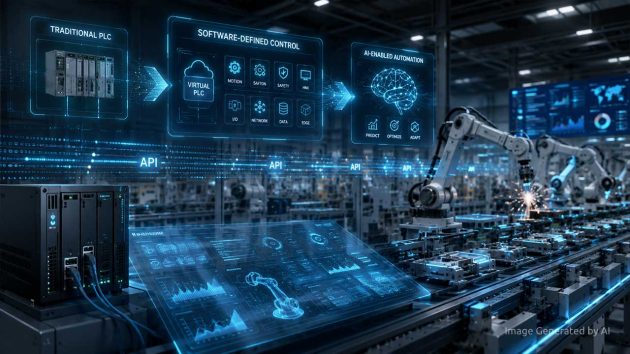
Software-defined automation moves control logic from dedicated PLCs onto industrial PCs and standard server hardware, while the physical equipment, inputs/outputs, drives, and motors, stays on the shop floor. Engineering changes too, from predefined toolchains with fixed workflows to an open system where teams connect Siemens, third-party, and OEM tools through APIs and a package management system. At Hannover Messe 2026, Siemens presented three entry points for manufacturers: the S7-1500 virtual PLC, Industrial Edge for AI applications, and an open engineering toolchain.
Where Do Manufacturers Start with Software-Defined Automation?
Software-defined automation brings IT and software development practices into industrial automation without removing the physical hardware that runs a plant. Inputs/outputs, drives, motors, and actuators stay on the shop floor. What changes is where the control logic runs and how the engineering gets done. Siemens offers three entry points, each matching a different set of customer priorities:
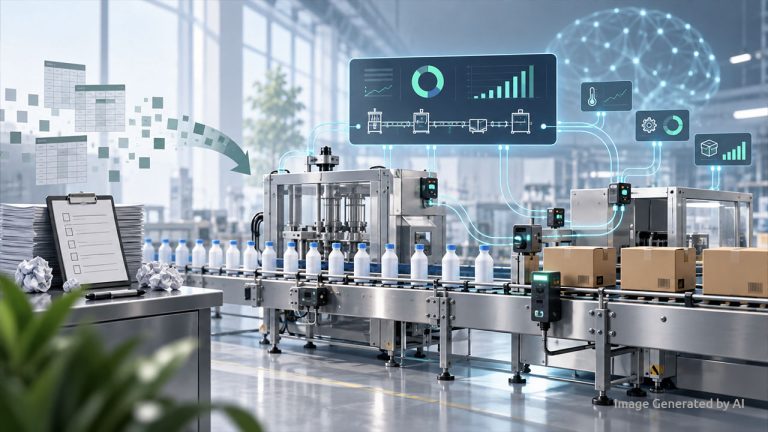
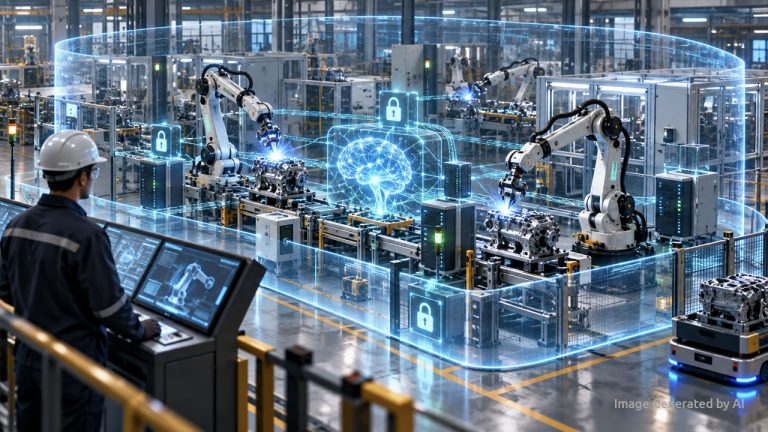
Centralized compute. Manufacturers who want to run AI solutions or place computing capacity close to their production lines deploy the S7-1500 virtual PLC, a virtual representation of the traditional tried and tested hardware PLC, including a safety version for safety-rated applications. Instead of running control programs on dedicated hardware, the logic moves to industrial PCs and server infrastructure.
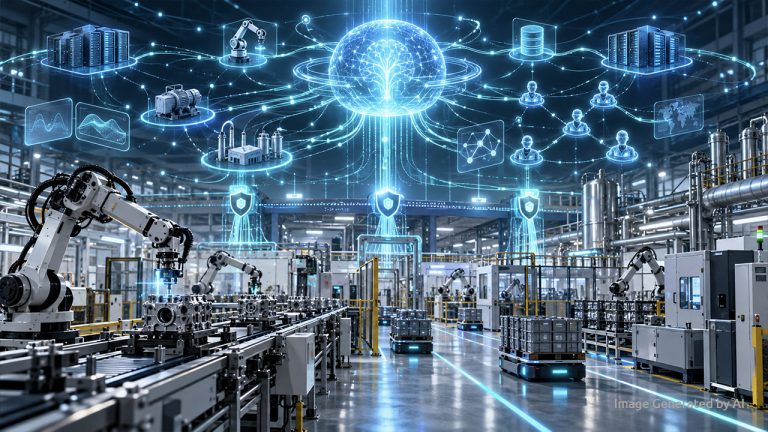
Data and AI applications. Using Siemens Industrial Edge, manufacturers run AI and data workloads on industrial PCs, in a server rack, or on standard server infrastructure. These applications run on the same software infrastructure that manages the virtualized control.
Open engineering. Manufacturers who want a more modern development approach adopt the open engineering toolchain. A package management system lets teams add software components, and an API-first design means engineers connect third-party, OEM, and Siemens tools to make the engineering workflow more efficient. This also opens the door to using AI inside the engineering workflow, not only on the production floor.
Why Does Scaling Industrial AI Require Software-Defined Systems?
Siemens positions software-defined automation as the foundation for scaling AI at an operational level in manufacturing. To get there, manufacturers need both the flexibility and the abstraction from hardware that a software-defined systems approach provides.
At the Siemens Innovation Hub in Hall 27 at Hannover Messe, Matthias Schulz described the connection: “We want to show how tomorrow’s industry is powered by Industrial AI. And we believe that Industrial AI is the major transformational shift that we are seeing in industry right now.” To reach that scale, manufacturers need the kind of hardware abstraction that software-defined automation provides, so that AI can scale at an operational level in manufacturing or production.
How Does the Automation Engineer’s Role Change?
The automation engineer’s role shifts from writing code to overseeing how the code base is standardized and orchestrating AI-powered tools. Matthias Schulz described this as moving from being “a person that writes the code or the applications to a more oversight person that looks at the standardization of the code base and then uses agents and copilots to work with them to generate more efficient, more flexible and more adaptive solutions.”
This has happened before in industrial automation. Physical rewiring gave way to software-based control, and engineers had to develop new skills without their roles disappearing. Software-defined automation adds a further layer, where engineers become architects who manage software systems rather than writing every function by hand.
Orchestration operates at two levels. At the shopfloor, Siemens demonstrated together with Accenture how AI orchestrates and adapts the software that produces adaptive products. AI handles decisions like production scheduling and sequencing, determining which manufacturing steps follow each other. For standardized products, these are routine decisions. For individualized products, many more steps need coordination, and that is where AI-driven orchestration needs to be addressed. Whether a human stays in the decision loop depends on the type of decision being made.
| Traditional automation | Software-defined automation | |
| Control hardware | Dedicated PLCs | Industrial PCs, server infrastructure (S7-1500 virtual PLC) |
| Engineering toolchain | Predefined toolchains with predefined workflows | Open, modular, API-first with package management |
| Third-party integration | Not described as open | Connect third-party, OEM, and Siemens tools through APIs |
| AI deployment | Not on same infrastructure as control | Runs on same software infrastructure as virtualized control |
| Engineer’s role | Writes code and applications | Orchestrator, architect, works with AI agents and copilots |
| Production orchestration | Standard scheduling tasks | AI-driven scheduling and sequencing for individualized products |
Based on a video interview with Matthias Schulz, Marketing & Communications Manager for Software-Defined Automation & Innovation at Siemens, recorded by Lucian Fogoros of IIoT World at Hannover Messe 2026.
Part of a paid awareness campaign for Siemens. Editorially independent.
Frequently Asked Questions
1. What is software-defined automation?
Software-defined automation moves the control logic in a factory from dedicated hardware PLCs to industrial PCs and standard server infrastructure. The physical equipment stays on the shop floor. Engineering shifts to an open, API-based toolchain with package management that lets manufacturers connect Siemens, third-party, and OEM tools and deploy AI both on the production floor and inside the engineering workflow.
2. What is the Siemens S7-1500 virtual PLC?
The S7-1500 virtual PLC is a software version of the traditional Siemens S7-1500 hardware PLC. It runs on industrial PCs or server infrastructure instead of dedicated hardware, including a safety version for safety-rated applications. Manufacturers use it to centralize compute and run AI solutions alongside their automation programs.
3. How does software-defined automation support Industrial AI?
Software-defined automation provides the hardware abstraction and flexibility needed to scale AI at an operational level in manufacturing. AI workloads run on the same software infrastructure as virtualized control. Siemens describes Industrial AI as the major transformational shift in industry, with software-defined systems as the foundation.
4. How does the automation engineer’s role change with software-defined automation?
The role shifts from writing code to overseeing code base standardization and orchestrating AI tools. Engineers use AI agents and copilots to generate automation solutions rather than programming each function manually. At the shopfloor level, AI handles production scheduling and sequencing decisions, with human oversight depending on the type of decision.
About the author