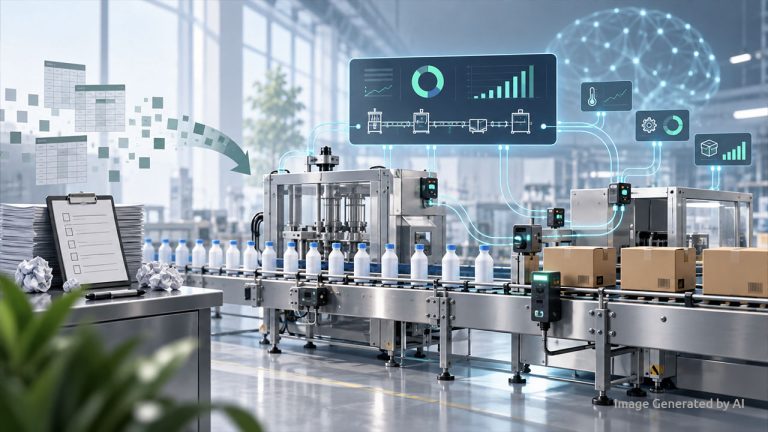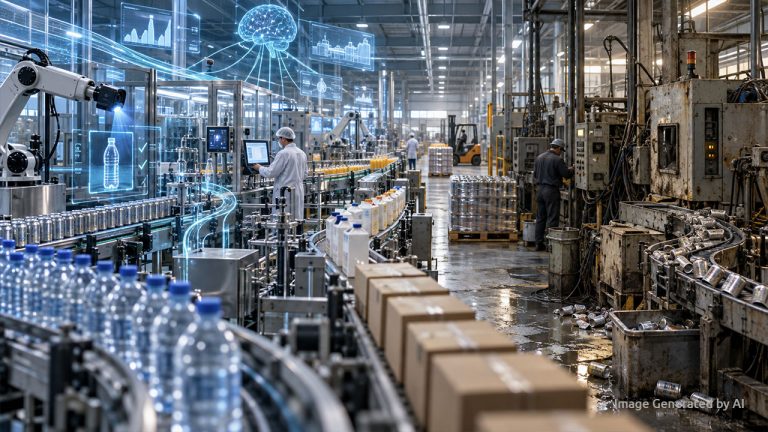
In this IIoT World interview, industry experts examine how AI orchestration solves the process drift challenge that stalls most industrial AI deployments, moving beyond data drift to address the real-world complexity of chemical plants, refineries, and continuous manufacturing. With the “steady state” of manufacturing becoming a historical relic due to volatile energy costs, shifting feedstocks, and a shrinking workforce, companies are increasingly adopting Industrial AI Orchestration. Rather than merely deploying isolated models, this technology serves as the essential “glue” that safely integrates high-order AI with both human operators and physical control systems
Moving Beyond Data Drift to Process Drift
In the world of IT, “data drift” is the common enemy. However, in a physical plant, the real challenge is process drift.
Process drift occurs when the actual physical environment, temperature, humidity, or raw material quality changes, moving the system away from its optimal performance. An orchestration layer addresses this by:
- Monitoring environmental changes in real-time.
- Validating AI recommendations against digital twin simulations before any parameters are adjusted in the control system.
- Safely activating AI only when the system is in the correct operational mode.
The “Good Enough” Simulation: Safety First
A common barrier to AI adoption is the belief that you need a “perfect” digital twin. In reality, a simulation is “good enough” if its outputs align with real production data and can be verified by a senior operator.
Manufacturers don’t need to build these simulations from scratch. By reusing engineering-grade simulations and virtual commissioning tools already developed during the plant’s design phase, teams can create executable digital twins for runtime operations.
The Golden Rule of Safety: Even the most advanced AI should never override core safety systems. Safety functionalities must remain independent, maintaining the power to override any manual or AI-driven optimization.
Protecting Operator Ownership in an Autonomous World
As we move toward 2030, the manufacturing industry faces a “silver tsunami” as experienced baby boomers retire. This leaves a knowledge gap that AI must fill, but not at the expense of human authority.
Effective orchestration protects operator ownership through:
- The Power of Refusal: The AI proposes changes and explains why they are needed, but the operator has the final call to acknowledge or reject the recommendation.
- Explainability: By providing feedback on why a recommendation was rejected, operators help “train” the system for future autonomous operations.
- Clear Authority Hierarchy: Following industry standards like Module Type Package (MTP), the control structure dictates a strict order of operations:
| Priority Level | Authority Entity | Role in Orchestration |
| Level 1 (Highest) | Human Operator | Final call to accept/reject AI recommendations; power of refusal. |
| Level 2 | Automated Actions | Pre-programmed safety triggers and internal logic loops. |
| Level 3 (Lowest) | External AI | Proposes optimizations based on digital twin validation. |
Adapting to a Complex Environment
The transition from manual control loops to AI-driven orchestration is a necessity for sustainability and cost-management. By focusing on process drift and maintaining human-in-the-loop safeguards, manufacturers can optimize production even when the “steady state” is nowhere to be found.
About the Experts: This article is based on an interview featuring Axel Lorenz, CEO of Process Automation at Siemens AG; Annemarie Breu, Sr. Director of Automation Software Deployment & Incubation at Siemens; and Caleb Eastman, Field CTO, Americas at Siemens, during ARC Forum 2026.
Sponsored by Siemens
About the Author
 Lucian Fogoros is a Co-Founder of IIoT World, a leading digital media outlet focused on Industrial AI, IoT, and Cybersecurity. With over two decades of experience in the industrial automation and software sectors, Lucian is a recognized thought leader dedicated to bridging the gap between technology innovation and practical industrial application. He frequently covers major global forums to provide executives with the data-driven insights needed to navigate the digital transformation landscape.
FAQ: Industrial AI Orchestration & Process Drift
1. What is the difference between data drift and process drift in manufacturing?
While “data drift” is primarily an IT concern, “process drift” occurs on the physical plant floor. Process drift happens when environmental factors, such as temperature, humidity, or changes in raw material quality, shift the system away from its optimal performance. Industrial AI orchestration monitors these physical changes in real-time to adjust operations safely.
2. Do manufacturers need a perfect “digital twin” to implement AI?
No. A common misconception is that AI requires a flawless digital twin. In reality, a simulation is “good enough” if its outputs match real production data and can be verified by an experienced operator. To save time and resources, plants can reuse engineering-grade simulations and virtual commissioning tools that were already built during the facility’s design phase.
3. How does Industrial AI orchestration protect worker safety and operator authority?
Even with advanced AI, the human operator always retains the highest level of authority. Effective orchestration gives operators the “power of refusal,” meaning the AI only proposes and explains optimizations, but the operator makes the final call. Additionally, core safety systems remain completely independent and can always override AI-driven actions.
4. Why is the transition to AI orchestration critical right now?
The traditional “steady state” of manufacturing no longer exists due to volatile energy costs and shifting supply chains. Furthermore, the industry is facing a “silver tsunami” as experienced workers retire. AI orchestration is necessary to capture this disappearing institutional knowledge and manage complex, dynamic environments sustainably.