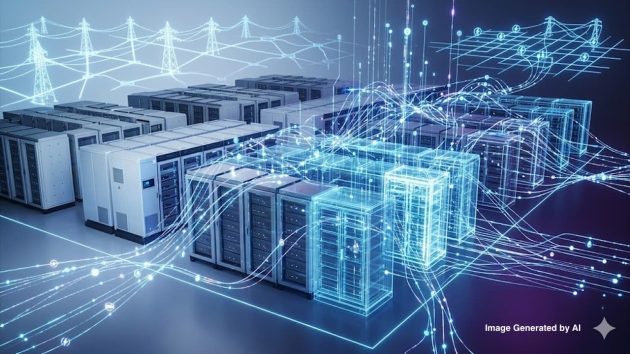

The energy sector is undergoing a fundamental shift as distributed generation, battery storage, and electric vehicle charging push intelligence to the grid edge. Traditional centralized SCADA architectures cannot keep pace with the millisecond-level decision-making required at thousands of endpoints. In this guide, IIoT World explores how modern grid edge communication protocols and architectures enable utilities and energy companies to orchestrate distributed energy resources (DERs) reliably, securely, and at scale. Whether you are an operations technology leader evaluating new communication stacks or an engineer designing edge deployments, this article provides the frameworks and practical insights you need to future-proof your energy infrastructure.
The Dilemma of Intelligent Solar Injection and Storage
In many regions, buildings equipped with solar installations supply power to the grid without considering immediate local consumption requirements. Additionally, some buildings have ‘dumb’ batteries that continue charging even when prioritizing energy delivery to the grid would be more beneficial. Grid operators currently lack direct control or incentives to encourage grid-friendly behavior, leading to inefficiencies and increased reliance on backup power plants. Addressing this challenge requires a complex regulatory and technological framework, but one clear solution could be implementing a connectivity option that aligns both the grid operators’ objectives and the asset owners’ interests.
The Importance of Reliable Data Connectivity
Utilities are forced to manage the complexity of connectivity and data acquisition at the grid edge while balancing both short and long-term demands. This leads to a target architecture that includes the capability to gain reliable data from Distributed Energy Resources (DER) applicable appliances for energy transactions. High-quality and dependable data are essential for utilities to ensure a stable and reliable energy supply, which can constantly adapt to fluctuating needs.
Challenges in Current Communication Technologies
Data connectivity through domestic Wi-Fi or vendor-managed cellular channels is not dependable, and the data acquired must be under the direct secure handling and governance of the utility. The utility sector has gained extensive experience in rolling out communication technologies at the grid edge, especially through large-scale smart metering initiatives. Numerous reports show how critical a well-informed decision can be, emphasizing the long-term impact on operations and the value of examining results to guide future requirements.
The Emergence of NR+ as a Promising Standard
NR+ represents the convergence of decades of RF Mesh advancements in shared spectrum with over 40 years of continuous governance principles applied in the DECT band. This spectrum regulation enforces core requirements, including coexistence, business continuity, and reliability at scale, ensuring a robust foundation for future connectivity. NR+ combines ultra-reliability and scalability, with secure, interference-free operation in a dedicated, license-exempt radio frequency spectrum.
The Role of Smart Metering in Modern Energy Management
Smart metering has played an essential role in national smart grid systems and the transition towards sustainable energy solutions. It now serves as the foundation for advancing grid-edge contributions toward a more decentralized, resilient, and carbon-neutral energy system. The evolution of smart metering from a simple meter-to-cash tool to a platform for flexibility enablement and settlement unlocks significant potential for modern energy management.
The Future of Grid Edge Communication
The energy transition relies on robust connectivity that aligns with the industry’s long-term energy objectives, sustainability, reliability, and affordability while ensuring utilities maintain governance over communication networks. As Advanced Metering Infrastructure (AMI) continues to evolve, the transition from centralized generation to decentralized, flexible, and data-driven energy systems requires resilient, future-proof solutions. NR+ sets a new benchmark for utility-owned, scalable, and future-ready communication networks, ensuring that the grid edge remains adaptive, intelligent, and capable of meeting evolving challenges without fear of technology obsolescence.
Conclusion
By embracing advanced connectivity standards like NR+, utilities are not just investing in better smart metering infrastructure; they are laying the foundation for an intelligent energy ecosystem that can accommodate the growing needs of electrification, demand-side flexibility, and renewable integration. This transformation will make the transition to a sustainable energy future both reliable and affordable.
About the author
 Alan Sillito (Regional Head North America) is a seasoned IoT and wireless connectivity expert, currently serving at Wirepas, a company renowned for its innovative mesh networking solutions. With a career spanning over two decades, Alan has held pivotal roles in leading technology firms, including NXP Semiconductors and ST-Ericsson, where he focused on strategic account management and marketing.
Related articles:
- Driving Sustainability Forward with IIoT: Smarter Processes for a Greener Future
- Small Modular Reactors: The Key to a Sustainable Energy Future
FAQ Section
1. What is grid edge communication and why does it matter for modern energy systems?
Grid edge communication refers to the data exchange layer that connects distributed energy assets, such as solar inverters, battery systems, EV chargers, and smart meters, to utility control centers and cloud platforms. It matters because more than 500 GW of distributed energy capacity has been installed globally, and coordinating these assets in real time requires low-latency, high-reliability communication. Without a robust grid edge communication layer, utilities face voltage instability, load imbalances, and stranded renewable generation. Modern protocols like IEEE 2030.5, OpenADR, and MQTT-SN are purpose-built for these constraints, enabling sub-second telemetry and command execution at the grid periphery.
2. What communication protocols are most commonly used at the grid edge?
The most widely adopted protocols include DNP3 (Distributed Network Protocol), which remains the backbone for substation automation in North America; IEC 61850, which supports high-speed peer-to-peer messaging within substations; IEEE 2030.5 (Smart Energy Profile 2.0), which is mandated for DER integration in California’s Rule 21; and MQTT, which provides lightweight publish-subscribe messaging suited for bandwidth-constrained edge devices. Selecting the right protocol depends on latency requirements, bandwidth availability, cybersecurity posture, and interoperability with existing OT infrastructure. Many utilities deploy protocol translation gateways to bridge legacy and modern stacks.
3. How does IIoT technology improve grid reliability and efficiency?
IIoT sensors and edge computing devices enable continuous condition monitoring of transformers, switchgear, and distribution lines, catching anomalies before they cause outages. Predictive analytics models running at the edge can forecast localized demand spikes within 15-minute intervals, allowing automatic load balancing without roundtrip cloud latency. Field studies show that utilities deploying IIoT-enabled grid edge solutions have reduced unplanned outages by up to 30% and improved asset utilization by 15 to 20%. Additionally, real-time visibility into DER output allows grid operators to defer costly infrastructure upgrades by dynamically managing capacity.
Related from IIoT World: