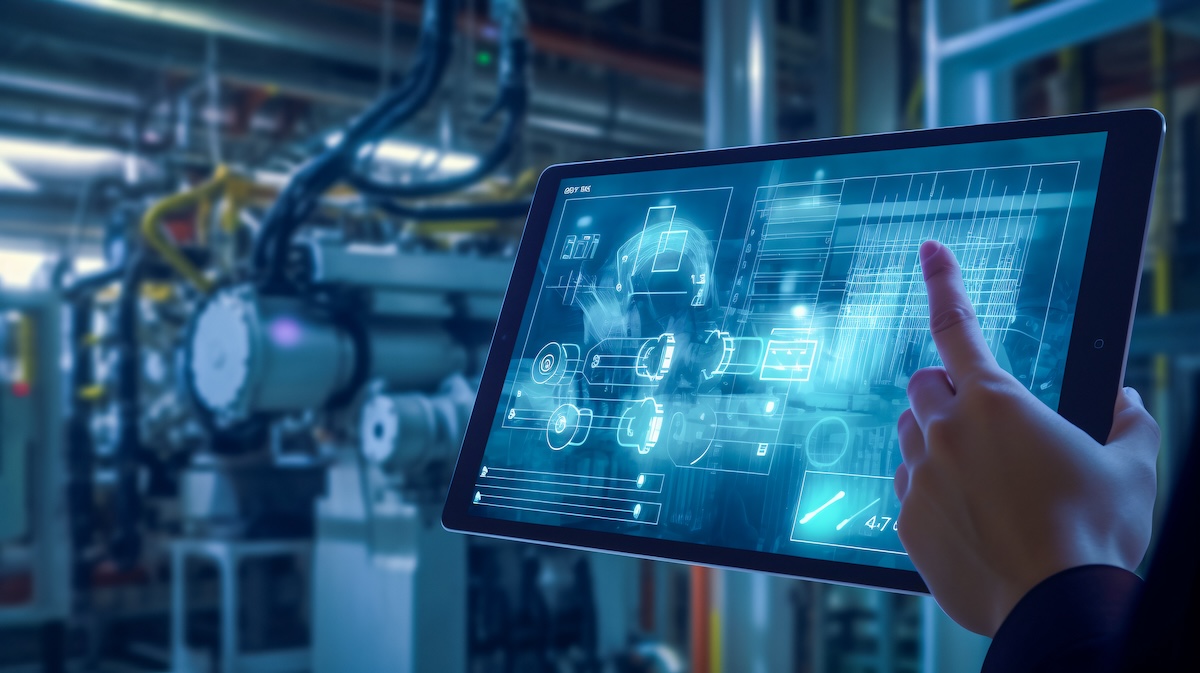
Industry 5.0 marks a fundamental evolution in how manufacturers integrate advanced technologies with human expertise, and IIoT World examines what this shift means for the Industrial Internet of Things. This article explores the core principles of Industry 5.0, including human-centric design, sustainability, and resilience, and explains how these priorities are accelerating IIoT adoption across sectors. Readers will learn how collaborative AI, digital twins, and sensor-driven automation converge under the Industry 5.0 framework to create smarter, more adaptive production environments. Whether you are a plant manager evaluating new technology investments or an engineer designing connected systems, this guide provides the strategic context needed to align IIoT deployments with next-generation manufacturing goals.
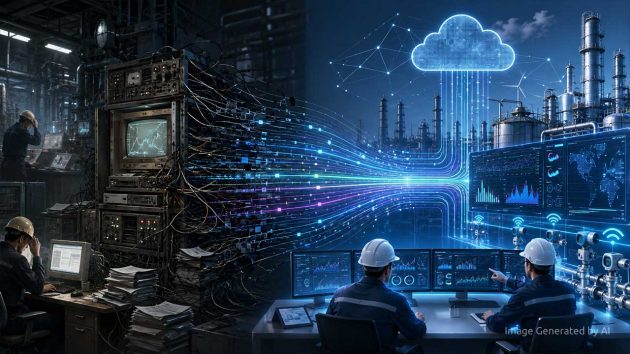
While factories and other industrial applications have made huge strides in terms of technology development and deployment, with predictive maintenance, robotics, and more allowing for digitization, this is now being looked at through a new lens: how industry can still achieve its efficiency and profitability goals while simultaneously accounting for sustainability initiatives – cleaner manufacturing, less resource waste, lower energy consumption – and worker wellbeing. And this is driving yet another wave of technology innovation and adoption involving access to and analysis of data. Ultimately, this is where the Industrial Internet of Things (IIoT) converges with the move to Industry 5.0 and where IIoT will come into its own.
Several requirements are bringing IoT to industry:
• The need for data, which means deploying a high volume of sensors to “see” what is happening across all aspects of industry
• The desire for privacy, in that industrial innovation can be a significant differentiator and is thus closely guarded
•The preference for solutions that do not add significant operational costs or, even better, that offer an ROI that ultimately reduces costs
IIoT has the tools today to meet all these requirements. Long-range wide-area network (LoRaWAN) technology is fit-for-purpose to support IIoT. Low-cost and easy to deploy, these networks enable the collection of massive amounts of data that support a wide range of industrial use cases to streamline operations and better manage resources, equipment, safety, and the environment.
Privacy is addressed through several attributes of the technology; it can be deployed via a variety of network types, which include public, private, community, satellite, or hybrid. This flexibility allows for coverage in remote and non-cellular areas. Industry-leading security further ensures that a company’s data remains its own.
Another benefit is that LoRaWAN deployments cost significantly less than other networking technologies. A single gateway has the capacity to support thousands of sensors, allowing it to support large campuses with several use cases deployed. As a low-power networking technology, it offers high energy efficiency, further reducing costs.
The technology can be used to monitor and manage plant, factory, and equipment conditions, efficient use of resources, and worker safety. This enables asset longevity, predictive maintenance, fast remote responses, reduced processing costs, increased profitability, improved safety, sustainable manufacturing, enabling of AI, condition-based asset monitoring, and more.
Some examples of how the technology is used across a variety of industries include:
Oil and gas
Monitor tanks, pipes, pressure vessels, rotating equipment, valves, and fluid levels to enable leak detection and guide predictive maintenance.
Manufacturing efficiency and productivity
Optimize manufacturing quality by remotely measuring tank levels and valve positions, detecting leaks, and activating alerts and alarms.
Chemical processing management
Gain real-time visibility of processes and identify issues or areas for improvement before failures happen.
Power generation and transmission
Maximize the transmission and distribution of conventional or renewable energy.
Ultimately, IIoT will bring the goals of Industry 5.0 to fruition by optimizing industrial operations, sustainability, and worker wellbeing. Technologies like LoRaWAN have an integral role in cutting costs, streamlining operations, and achieving scalability through flexible business models while anticipating continuous innovation and evolution in the future.
About the author
 This article was written by Donna Moore, CEO and Chairwoman, LoRa Alliance. Having about two decades of experience, Donna Moore started her career as a nurse and then moved over to the business side of healthcare and then moved towards the technology industry. Today, she is highly regarded in the industry as a great catalyst and as an enabler for future-proof technology adoption. Her current work at LoRa Alliance is bringing to life new-age innovations with LoRaWAN use cases.
FAQ Section
1. What is the difference between Industry 4.0 and Industry 5.0 in the context of IIoT?
Industry 4.0 focused primarily on automation, data exchange, and machine-to-machine communication through IIoT infrastructure. Industry 5.0 builds on this foundation but adds three guiding principles: human-centricity, sustainability, and resilience. In practical terms, this means IIoT deployments under Industry 5.0 prioritize augmenting human workers with AI-powered insights, achieving efficiency and profitability goals while simultaneously accounting for sustainability initiatives , such as cleaner manufacturing, less resource waste, and lower energy consumption , and worker wellbeing.
2. How does Industry 5.0 drive new use cases for Industrial AI?
Industry 5.0 creates demand for AI systems that work alongside human operators rather than replacing them. The shift is driving a new wave of technology innovation and adoption centered on access to and analysis of data. This includes collaborative AI, digital twins, and sensor-driven automation that converge under the Industry 5.0 framework to create smarter, more adaptive production environments. The goal is for IIoT to enable industry to meet efficiency and profitability goals while also addressing sustainability and worker wellbeing simultaneously.
3. What steps should manufacturers take to transition their IIoT infrastructure toward Industry 5.0?
The transition begins with recognizing the requirements bringing IoT to industry: the need for data through high-volume sensor deployment, the desire for privacy to protect industrial innovation, and the preference for solutions that do not add significant operational costs , or that offer an ROI that ultimately reduces costs. Manufacturers should align IIoT deployments with Industry 5.0’s core principles of human-centricity, sustainability, and resilience, ensuring that connected systems support worker wellbeing and cleaner manufacturing alongside efficiency and profitability goals.
Related from IIoT World: