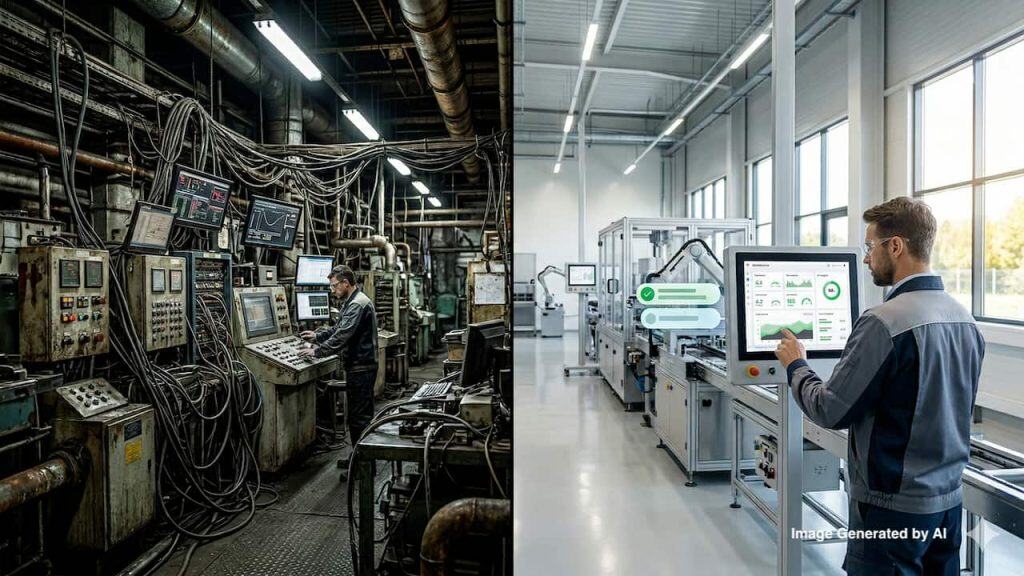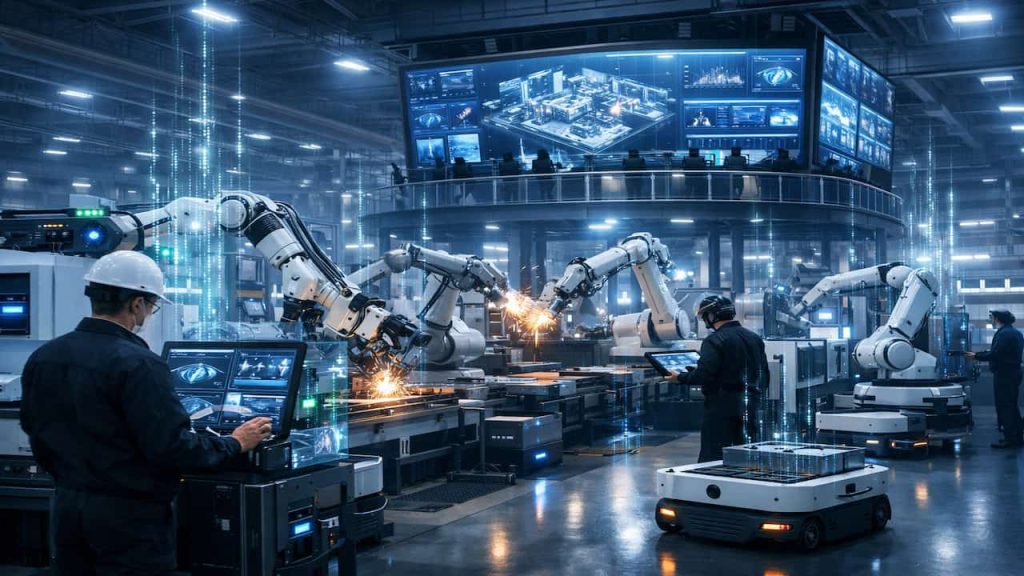

For the past few years, manufacturers have heard the same message on repeat: AI is ready for industry. But a quieter question is now being asked inside control rooms and boardrooms alike — is industry ready for AI?
At this year’s Honeywell User Group in The Hague, that question came into focus. Beneath the enthusiasm around artificial intelligence was a dose of realism: the technology works. The challenge is whether the plants using it are prepared to make it work well.
From Pilots to Production
Cesar Bravo, AI Solutions Director at Honeywell, has spent years helping manufacturers implement AI at scale. His view is pragmatic: technology should follow a problem, not lead it.
Manufacturers, he said, often rush to deploy digital tools before clearly defining the challenge they’re meant to solve. The result? Another system to manage, more dashboards to reconcile, and little measurable value.
The difference between those still testing AI and those scaling it is focus. “You start with the challenge,” Bravo said. “You identify the use case first, then apply technology where it fits.”
That simple reversal — use case before technology — separates experimentation from transformation.
Data Discipline: The Real Indicator of Readiness
So how can you tell if a plant is ready for AI?
Cesar Bravo doesn’t point to infrastructure or investment levels, but to something more basic: data discipline.
Manufacturers with years of disconnected systems, gaps, and noise in their historical data can’t expect clean results. “Before, data from history was messy—lots of gaps, inconsistencies,” he explained. “Now companies are getting better at maintaining and cleaning data, but it still takes procedure.”
Those procedures — standardized collection, validation, and preprocessing — determine whether AI insights are trustworthy. Plants that treat data like a raw material, not an afterthought, are the ones that extract real value.
Accuracy Is the New Competitive Edge
Erikjan Franssen, General Manager for International Markets at Adlib, agrees — and adds a crucial layer: democratization.
AI is no longer confined to data scientists. Thanks to natural-language interfaces, anyone in the plant can query a model and get answers.
That accessibility creates new opportunities, but also new risks. “Now that anyone can access AI,” Franssen said, “accuracy becomes a big factor. You have to make sure the source data and inputs are right.”
In precision manufacturing, a small inaccuracy can ripple through a production run or a maintenance schedule. Clean data pipelines — verified, standardized, and contextual — are fast becoming as critical as clean process streams.
Unearthing Decades of Untapped Insight
Both experts pointed out that most manufacturers already have the raw material for AI success — they’re just not using it. Decades of logs, PDFs, supplier manuals, and engineering drawings contain lessons that never make it into analytics platforms.
Modern AI tools can finally read and structure that information, turning what was once trapped in unstructured documents into usable intelligence. Instead of starting from scratch, plants can build on what they already know — connecting historical insight with live process data to create a complete picture of performance.
What Readiness Looks Like
When AI projects move from the lab to live production, the difference between success and frustration usually comes down to preparation.
Plants that perform proper factory and site testing before rollout, Bravo said, tend to avoid costly disruptions. Those that skip that step often discover small configuration differences that derail entire implementations.
Readiness, then, is not about adopting more tools. It’s about cultivating habits: clean data, defined use cases, tested systems, and accountability for quality.
The Next Step Forward
Manufacturing has reached a turning point. AI isn’t the barrier anymore — alignment is.
Plants that invest in data discipline and validation will see faster decisions, better accuracy, and measurable returns. Those that don’t will keep adding layers of complexity without clarity.
AI may be ready for the industry. The real question is which manufacturers are ready for AI.
This article was written based on a video interview at the Honeywell User Group in The Hague, with Cesar Bravo, AI Solutions Director at Honeywell, and Erikjan Franssen, General Manager – International Markets at Adlib.
Sponsored by Adlib. Travel to the event was supported by Honeywell.
About the author
Lucian Fogoros is the Co-founder of IIoT World.