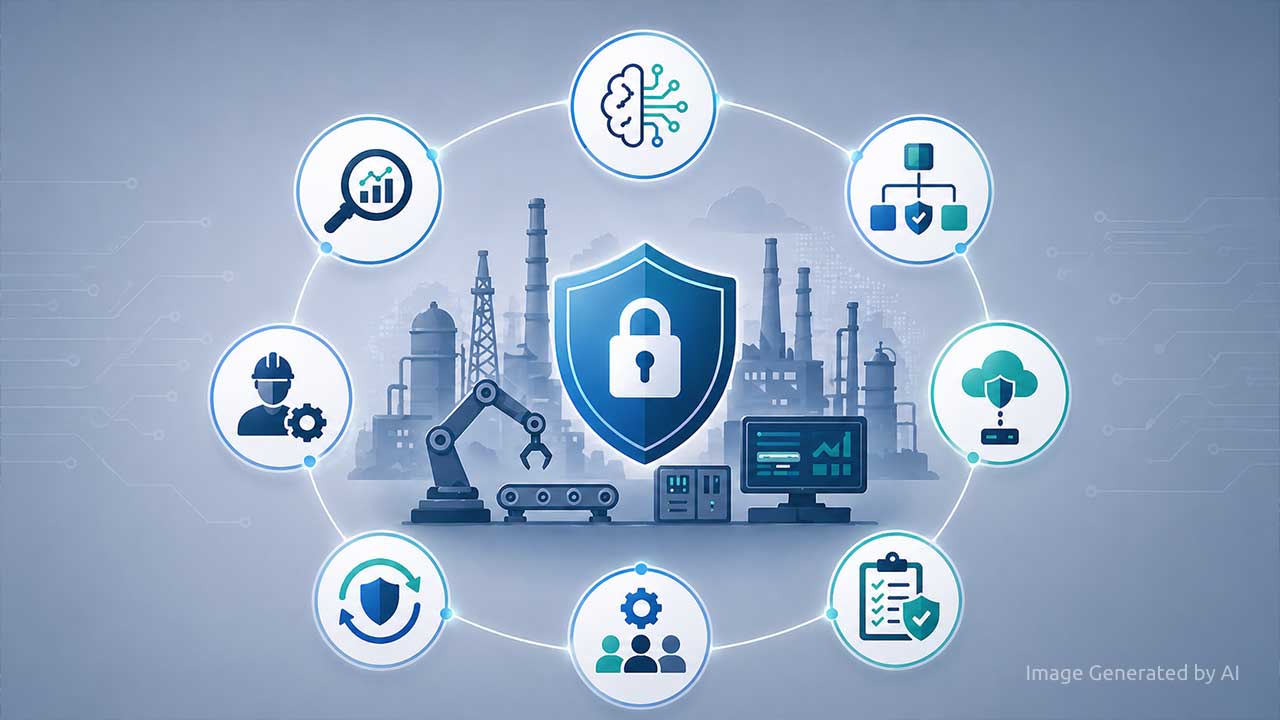
The convergence of IT and OT networks across manufacturing, energy, and critical infrastructure has brought industrial control systems (ICS) into direct contact with the same threat actors targeting enterprise IT. Threat actors now pursue industrial data as aggressively as system access, using AI to accelerate attack sophistication while defenders adopt frameworks like IEC 62443, NIST 800-82, and the EU’s NIS2 directive to establish auditable baselines. This IIoT World article, drawn from five expert sessions at IIoT World virtual conferences on ICS cybersecurity, AI, and energy security, outlines seven trends shaping how organizations defend operational technology in 2026.
1. How Are AI-Powered Attacks Changing ICS/OT Threat Patterns?
Threat actors are using artificial intelligence to exfiltrate industrial data and train their own models to generate increasingly sophisticated attacks, shifting the primary risk from system disruption to data theft. Modern ransomware tactics reflect this shift: attackers prioritize pure data theft and extortion over the encryption algorithms that defined earlier campaigns. The implication for defenders is direct. Traditional perimeter security focused on preventing unauthorized access into the network. The current threat model demands equal attention to outbound data flows, because stolen industrial data feeds the next generation of AI-driven attacks. Stopping the unauthorized flow of data out of the network is now as important as stopping the intruder from getting in.
2. CISOs and the Board Take Direct Ownership of OT Risk
Responsibility for OT cybersecurity is moving from local plant managers to Chief Information Security Officers (CISOs) and the executive board. Traditionally, OT security operated as a plant-level concern with limited budgets and minimal connection to enterprise security strategy. The shift to executive ownership provides the sponsorship necessary to secure adequate funding and resources to mature these traditionally lean programs. Board-level engagement also aligns OT risk with enterprise risk management, giving control system vulnerabilities the same executive attention as corporate network threats. For security teams on the ground, this means access to centralized visibility across facilities, standardized security policies, and the budget authority that plant-level programs rarely had on their own.
3. Which Cybersecurity Frameworks Apply to Industrial Control Systems?
Four primary frameworks guide ICS cybersecurity strategy in 2026: IEC 62443, NIST 800-82, the EU’s NIS2 directive, and TSA security directives. Organizations are moving from ad-hoc security toward these structured guidelines to mandate secure, auditable baselines across operations. The Purdue Model remains the foundational method for separating IT and OT networks into hierarchical levels that prevent lateral threat movement between enterprise and industrial zones. Beyond the Purdue Model’s network segmentation, each framework addresses a different dimension of ICS protection.
| Framework | Primary Focus |
| Purdue Model | Separating IT and OT networks to prevent lateral threat movement |
| IEC 62443 | International standard for industrial automation security |
| NIST 800-82 | US guide to industrial control system security |
| NIS2 Directive | EU mandate for secure, auditable baselines across critical infrastructure |
| TSA Security Directives | Sector-specific mandates targeting pipeline and transportation operators |
In practice, organizations combine multiple frameworks: the Purdue Model defines the network architecture, IEC 62443 sets security requirements for systems within that architecture, and NIS2 or TSA directives establish the regulatory obligations for specific jurisdictions and sectors.
4. How Does Zero Trust Work in Industrial OT Environments?
Zero Trust in industrial environments means every connected device must prove its identity before communicating with any other device on the network. The concept of implicit trust within OT networks, where any device on the local segment was assumed to be authorized, is giving way to cryptographic verification at every connection point. Trust, as experts in these sessions noted, is a human notion that cannot be applied blindly to machines. Every connected asset, from smart meters to programmable logic controllers (PLCs), must be issued a unique digital identity using Public Key Infrastructure (PKI). PKI assigns each device a cryptographic certificate that authenticates its communications, making it possible to verify that a command sent to a PLC originates from an authorized source rather than a compromised endpoint. This device-level authentication applies across the full range of connected OT assets, from smart meters to PLCs to field devices across distributed operations.
5. Securing the “Sneakernet”: USB Drives and Transient Devices
USB drives and contractor laptops account for nearly 27% of OT incidents in recent industry studies, making transient devices a persistent and significant threat vector. Despite advancements in network-based defenses, the physical movement of data on removable media bypasses every firewall and network monitoring tool in the security stack. Manufacturers are addressing this gap by deploying physical sanitization kiosks at facility entrances that scan all removable media before it reaches the plant floor. Every portable device passes through scanning and verification before connecting to any OT system. For high-security environments where even scanned media presents too much risk, operators use hardware-enforced data diodes to guarantee physically one-way data transfers out of the OT network, ensuring that external data cannot flow into production systems through the same channel.
6. Deep Supply Chain Scrutiny and Software Bills of Materials
Security scrutiny now extends beyond tier-one vendors into tier-two and tier-three suppliers to uncover deeply embedded software vulnerabilities. A vulnerability in a component supplied by a third-tier vendor can propagate through the supply chain undetected, reaching production environments inside otherwise trusted products. Asset owners are making security a strict condition of procurement by demanding full visibility into Software Bills of Materials (SBOMs), transparent vulnerability disclosure policies, and defined patch management responsibilities from their vendors. An SBOM provides a complete inventory of every software component, library, and dependency within a product, enabling asset owners to assess their exposure when a new vulnerability is disclosed. This procurement-driven approach shifts security accountability upstream, requiring vendors to demonstrate compliance before their products enter the factory.
7. “Secure by Design” Replaces Reactive Vulnerability Patching
The traditional IT approach of constantly chasing and patching vulnerabilities is extremely difficult in OT environments, where patch cycles might only occur every three years during a planned shutdown. Production systems that run continuously cannot be taken offline for regular security updates the way enterprise servers can. The industry is pivoting toward “secure by design” and “secure by default” approaches, engineering out risk at the beginning of the product lifecycle rather than bolting on fixes after deployment. The approach focuses on building systems that continue operating safely even if an individual device or connection is compromised, reducing the burden on asset owners to perform extensive post-deployment hardening. When a product ships secure by default, the organization’s security posture depends less on the speed of its patching process and more on the quality of its initial deployment.
For more on the regulatory frameworks driving these trends, see Achieving Regulatory Compliance for Connected Devices on IIoT World. Browse more ICS cybersecurity coverage or check the IIoT World Events Calendar for upcoming sessions.
Frequently Asked Questions
1. What are the biggest ICS/OT cybersecurity threats in 2026?
According to experts featured on IIoT World, the top threats include AI-powered data exfiltration (where attackers steal industrial data to train more sophisticated attack models), transient device risks (USB drives and contractor laptops cause nearly 27% of OT incidents), and deeply embedded supply chain vulnerabilities in tier-two and tier-three software components.
2. What is the Purdue Model in OT cybersecurity?
The Purdue Model is the foundational framework for separating IT and OT networks in industrial environments. It defines hierarchical network levels that prevent lateral threat movement between enterprise systems and industrial control systems.
3. What cybersecurity frameworks apply to industrial control systems?
The primary frameworks include IEC 62443 (the international standard for industrial automation security), NIST 800-82 (US guide to ICS security), the EU’s NIS2 directive (mandating security baselines for critical infrastructure), and TSA security directives (targeting pipeline and transportation sectors).
4. How does Zero Trust work in industrial environments?
In industrial Zero Trust, every connected device, from PLCs to smart meters, must authenticate its identity using Public Key Infrastructure (PKI) before communicating. Each device is issued a unique digital identity, and implicit network trust is eliminated.
About the author