
We are getting the conversation about data infrastructure backwards.
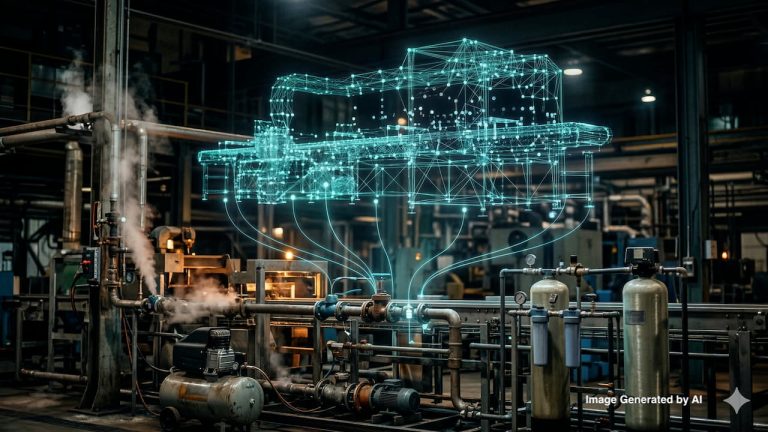
The chatter online is saturated with debates on cloud versus edge, the merits of one database over another, and the magical promise of AI algorithms. These are implementation details. The fundamental, unglamorous, and decisive battleground for predictive operations lies elsewhere. It’s in the cultural and mechanical translation layer between the physical world of spinning rotors, hydraulic pressures, and legacy controllers, and the digital world of data frames and machine learning models.
The secret isn’t in the tool your data scientist uses. It’s in making sure the tool is fed a truth that your most seasoned operator would recognize.
The “Why” is More Valuable Than the “What”
Collecting a terabyte of sensor readings is trivial. Understanding why a pressure gauge reading of 42.7 psi on Tuesday morning is an anomaly, while the same reading on Thursday afternoon is perfectly normal, is everything. That “why” is not in the data stream. It’s tribal knowledge. It lives in the head of the technician who knows that Machine #3 runs hotter after the weekly maintenance washdown, or that the old PLC on Line B was rewired a decade ago by a since-retired engineer.
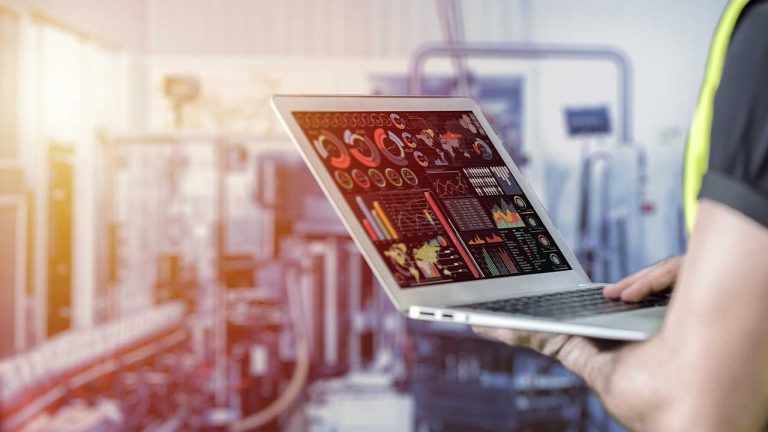
The new critical capability is not data collection; it’s contextualization. This is the act of marrying high-velocity time-series data with the slow-moving, experiential knowledge of your physical operations. Without it, you are building AI on a foundation of perfectly measured, yet utterly meaningless, numbers. You will generate insights that are statistically significant and operationally absurd.
From Data Pipelines to Knowledge Pipelines
The old infrastructure goal was to move data from point A to point B. The new imperative is to design a system that allows knowledge to flow backward.
This means your infrastructure must be built for a two-way street. It must not only ingest sensor tags but also provide a frictionless way for the floor technician to tag a data stream with a note: “Valve sticking – manual override applied from 14:00 to 14:23.” It must allow the process engineer to easily link a batch ID from the MES to a specific vibration profile in the historian. This contextual metadata is the Rosetta Stone that allows your data scientist’s models to interpret the raw signals correctly.
Your most valuable data infrastructure component might not be a database at all. It might be a simple, mobile-friendly interface that lets your OT staff annotate the data in real-time, in their flow of work.
The New Organizational Linchpin: The Bilingual Engineer
This need for translation creates a new critical role, one that is often organic and unrecognized: the bilingual engineer. This is the individual who can read a Python script and a P&ID diagram with equal fluency. They understand the cost of cloud egress and the sound of a failing bearing. They are the human bridge that prevents the classic failure where a brilliant model detects a “plant shutdown” anomaly that was, in reality, a scheduled lunch break.
Investing in this translation layer—through tools that foster collaboration and roles that span the OT-IT divide—is a more concrete and impactful step towards predictive operations than prematurely debating neural network architectures. It ensures that the intelligence you are so diligently building is grounded in the reality of your factory floor.
The future belongs not to the manufacturer with the most data, but to the one whose data tells the truest story. And that story is co-written by the operator, the engineer, and the algorithm, on a platform built for their collaboration.
Profile: The Bilingual Engineer (OT-IT Translator)
-
IT Proficiency: Python/R, SQL, Data Frame Manipulation, Cloud Egress Management.
-
OT Proficiency: P&ID Diagrams, PLC Logic, Vibration Analysis, Hydraulic Systems.
-
Core Function: Marrying high-velocity time-series data with experiential tribal knowledge to prevent “operationally absurd” AI insights.
Sponsored by InfluxData
This article was written based on the IIoT World Manufacturing Day session, “Building Data Infrastructure for Predictive Operations,” sponsored by InfluxData. Thank you to the speakers for their ground-level insights: Benjamin Corbett of InfluxData, Sam Elsner of Litmus, and Calvin Hamus of SkyIO. Also, special thanks to the moderator of the session, Rick Franzosa.