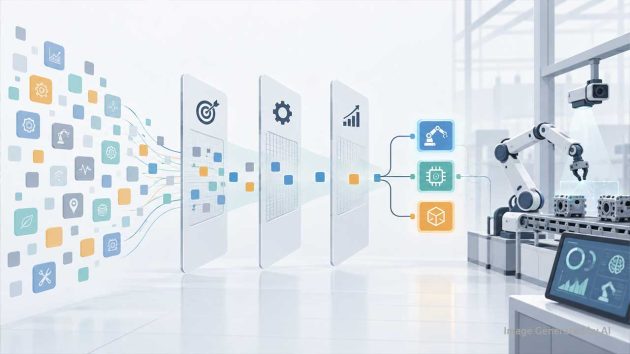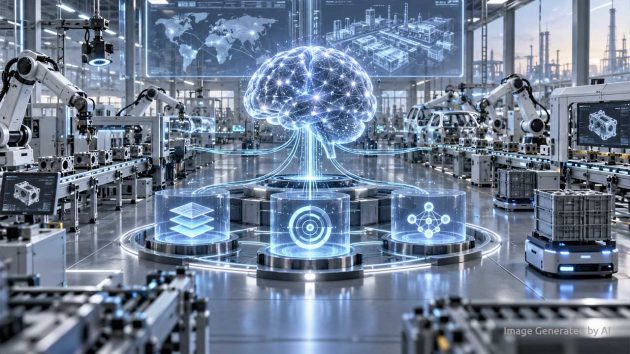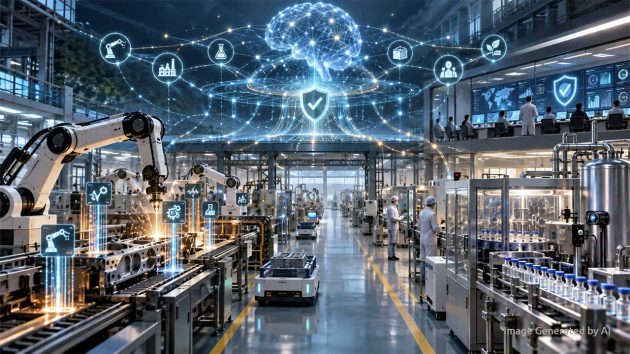
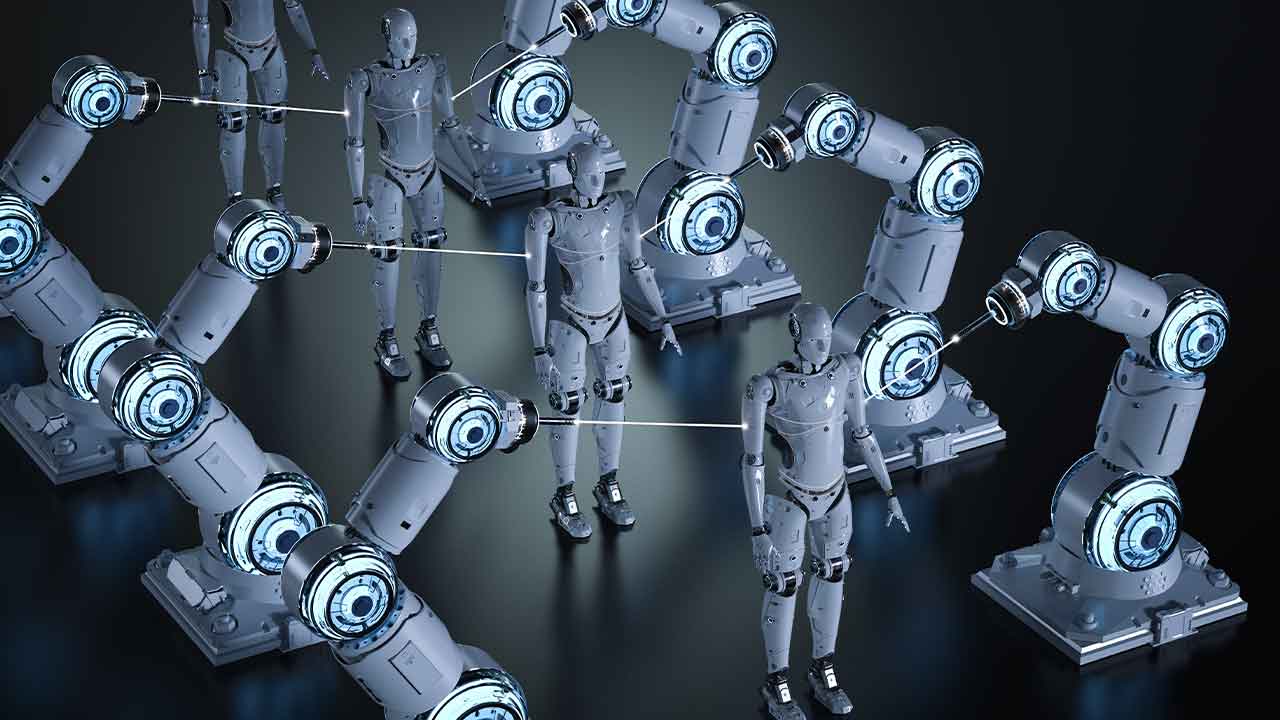
Physical AI represents a fundamental shift in how intelligent systems interact with the real world. Unlike traditional software-based AI that processes data in the cloud, physical AI embeds perception, decision-making, and learning directly into robots and autonomous machines operating on factory floors, in warehouses, and across supply chains. In this article, IIoT World explores the technologies powering this new era of embodied intelligence, from simulation-trained neural networks and digital twins to advanced sensor fusion and edge computing. For manufacturers, logistics operators, and industrial engineers, understanding physical AI is no longer optional; it is becoming a prerequisite for staying competitive in an era of labor shortages, rising customization demands, and accelerating production cycles.
The world of robotics is about to experience a revolution—and it’s not just any revolution. Think back to the breakthrough moment of ChatGPT in language processing. Now imagine that same kind of moment happening in robotics. That’s what we’re seeing with the rise of Physical AI, as highlighted by Jensen Huang’s keynote at CES 2025. It’s being called the “ChatGPT moment” for robotics, and it marks the point where AI, combined with advanced robotics, takes a giant leap forward. So, what’s all the buzz about? Well, we’re entering a world where AI isn’t just thinking in the abstract, it’s interacting with the physical world. Just as ChatGPT can process vast amounts of cognitive data to generate responses, Physical AI is learning to understand the physical world by processing sensory data and making predictions about how to interact with it. It’s like giving robots the ability to think like humans but with the added complexity of moving, touching, and responding to the world around them.
The Rise of Physical AI
At the heart of this leap is NVIDIA’s Omniverse. This platform allows developers to create hyper-realistic simulations of the physical world, which can then be used to train AI models. The beauty of this? It lets us gather renewable data without having to rely on the impracticalities of real-world data collection. By simulating real-world scenarios, NVIDIA is not only speeding up the development of Physical AI, but they’re also opening up access to this technology for others to build on. Take their Cosmos initiative, for example—this is where collaboration and open resources help accelerate the pace of innovation. It’s like creating a virtual sandbox where AI can learn, grow, and get smarter, faster. And trust me, this is just the beginning.
The Impact of Physical AI
As we step into this new era, the possibilities of Physical AI are pretty mind-blowing. Imagine autonomous vehicles seamlessly navigating our cities or humanoid robots moving through environments built for humans, performing tasks we never thought possible. These robots won’t just be tools; they’ll be intelligent agents, learning and adapting as they interact with the world. We’re talking about robots in every corner of our lives—whether it’s autonomous vehicles transforming transportation or robots stepping into personal assistance roles. These intelligent machines will be categorized into three main areas: knowledge robots, autonomous vehicles, and humanoid robots. And as technology accelerates, we’ll see them everywhere, redefining entire industries.
The Road Ahead
Looking ahead to 2025 and beyond, Physical AI is set to change everything. We’re on the verge of a future where robots do more than just carry out tasks—they’ll understand them. They’ll be able to adapt to complex environments, interact with humans, and make decisions in real-time. And the companies leading the charge, like NVIDIA, are already making huge strides in this direction. This isn’t just about having smarter robots—it’s about integrating AI with the physical world, creating a seamless connection that will unlock new possibilities. From healthcare to transportation to home assistance, the potential applications are endless.
We’re just getting started, folks. The future of robotics is here, and it’s powered by Physical AI.
This interview with Rev Lebaredian, Vice President, Omniverse & Simulation Technology at NVIDIA, was recorded by Kevin O’Donovan, a member of IIoT World’s Board of Advisors.
FAQ Section
1. What is physical AI and how does it differ from traditional industrial AI?
Physical AI refers to artificial intelligence that is embodied in hardware, meaning it perceives, reasons about, and acts upon the physical world in real time. Traditional industrial AI typically operates on historical data sets, performing tasks like demand forecasting or quality prediction in software. Physical AI, by contrast, combines sensor fusion, computer vision, and reinforcement learning to enable robots and autonomous systems to navigate unstructured environments, manipulate objects with dexterity, and adapt to changing conditions without explicit reprogramming. Companies like NVIDIA, Boston Dynamics, and several industrial robotics firms are investing heavily in this space, with the market for AI-powered industrial robots expected to exceed $20 billion by 2028.
2. What are the most promising use cases for physical AI in manufacturing?
The highest-impact applications include autonomous mobile robots (AMRs) for intralogistics, AI-guided robotic assembly for high-mix production lines, and collaborative robots (cobots) capable of learning tasks through demonstration rather than programming. Physical AI also enables advanced bin-picking systems that can identify and grasp randomly oriented parts with near-human accuracy. In quality inspection, AI-equipped robotic arms can perform multi-angle visual and tactile assessments at speeds far exceeding manual methods. These use cases collectively address the dual challenge of labor scarcity and the need for greater production flexibility.
3. What infrastructure do manufacturers need to deploy physical AI?
Deploying physical AI requires several foundational layers. First, manufacturers need robust edge computing infrastructure to process sensor data locally with low latency, often in the single-digit millisecond range required for real-time robotic control. Second, digital twin environments are essential for training and validating AI models in simulation before deploying them on physical hardware. Third, a reliable industrial network, ideally supporting protocols like TSN or 5G, is necessary to ensure deterministic communication between robots, sensors, and control systems. Finally, organizations need data pipelines that connect physical AI outputs to broader enterprise systems such as MES and ERP platforms for end-to-end visibility.
Related from IIoT World: