For more than a century, our factories have been powered by automation—machines tirelessly repeating the same motions, churning out parts, and, occasionally, chewing up a wrench if something went wrong. Automation gave us the Industrial Revolution and, eventually, affordable toasters. But as powerful as automation has been, it has one fatal flaw: it can’t think.
Today, we’re entering a new era: an era of autonomy. It’s automation with a brain.
Automation: The Mindless Marathoner
Think of automation as the gold medalist of repetition. It’s a system designed to do a specific task with speed, precision, and zero creativity. A conveyor belt doesn’t pause when something looks off. When something goes wrong—a misaligned part, a power fluctuation, or a human stepping into the wrong place—automation doesn’t adapt. It either stops or, worse, keeps going.
Automation’s superpower is consistency. Its kryptonite is context.
Take the humble automated forklift. It can shuffle pallets from Point A to Point B all day long as long as everything is perfectly in place and no one steps into its path. Shift a pallet an inch to the left or drop a stray box in the aisle, and suddenly our robotic worker is confused, possibly dangerous, and definitely flashing its hazard light for help.
Autonomy: Automation That Went to College
Now imagine the same forklift, but with a brain.
An autonomous forklift doesn’t just follow a fixed path; it perceives its environment, makes decisions, and adapts. If a pallet is crooked, it adjusts its approach. If someone steps in front of it, it slows down or reroutes. It doesn’t panic, doesn’t call for a manager, and doesn’t knock over a stack of inventory worth more than your annual salary.
That’s the key difference: automation executes; autonomy understands and executes.
In autonomy, machines use sensors, data, and algorithms to make real-time decisions. They don’t just follow instructions; they interpret them. It’s the difference between a pianist performing a memorized piece and a jazz musician improvising in real time. Both create music, but only one adapts to the moment as it evolves.
Why the World Is Moving Toward Autonomy
So why are we shifting from automation to autonomy now? The short answer: reality finally caught up. The longer answer: COVID, geopolitics, and demographics.
1. Fragile Global Supply Chains
When the pandemic hit, the world learned a hard truth: efficiency isn’t the same as resilience. Decades of offshoring had built a just-in-time supply chain stretched across oceans. But when ports shut down and ships idled, “just in time” became “not anytime soon.” Companies began looking to bring production back home, closer to consumers and control.
2. The Cost of Reshoring
But bringing factories back to the U.S. isn’t as simple as plugging in the machines and flipping the switch. Labor costs here can be 10x higher than in overseas manufacturing hubs. And with tight margins and competitive markets, that math doesn’t add up unless you can make each worker dramatically more productive.
3. The Labor Shortage Nobody Can Ignore
Even if companies were willing to absorb the higher costs, there’s another problem: there simply aren’t enough workers. Demographic trends such as aging populations, declining birth rates, and shifting career preferences mean the industrial workforce is shrinking. You can’t build an economy on “Help Wanted” signs alone.
Autonomy: The Multiplier of Human Potential
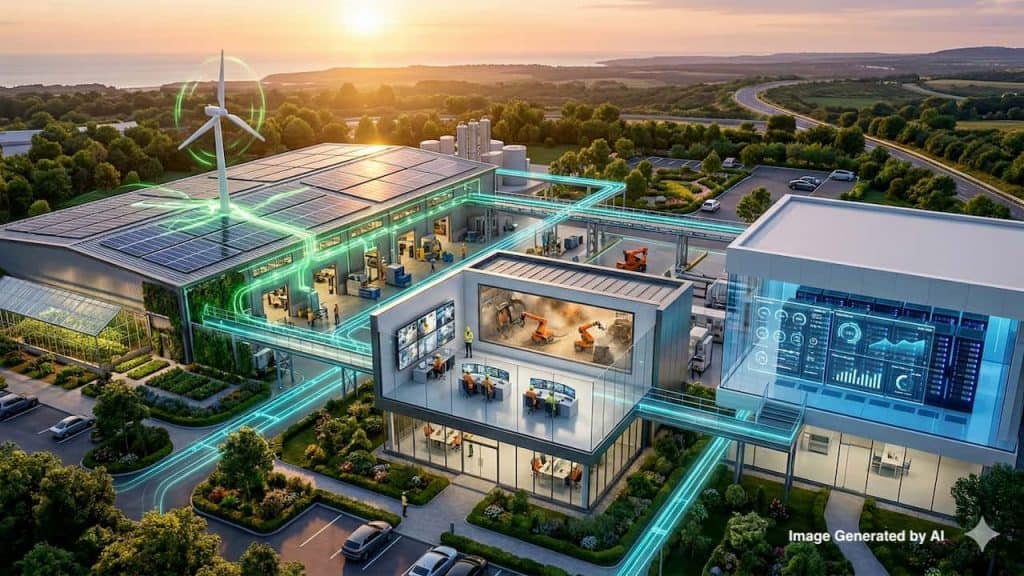
This is where autonomy steps in, not to replace people, but to amplify them. The goal isn’t to build fully robotic factories that run in the dark; it’s to build smart factories where humans and intelligent machines collaborate. Picture a worker supervising ten autonomous forklifts instead of driving one. Or a technician who monitors a fleet of self-diagnosing machines that schedule their own maintenance.
In this vision, autonomy doesn’t eliminate human labor; it multiplies its impact. It’s not about making humans obsolete; it’s about making them superhumanly productive.
The End of “Set It and Forget It”
The shift to autonomy isn’t just technological; it’s philosophical. Automation was about control: we programmed machines to behave exactly as instructed, and if the environment changed, the system struggled. Autonomy, by contrast, is about trust, designing systems that can think and act within defined boundaries.
That requires a mindset shift. It’s no longer enough to say, “The machine does what it’s told.” Now, we have to ask, “Does the machine understand what it’s doing?” And even more importantly, “Does it know what to do when something goes wrong?”
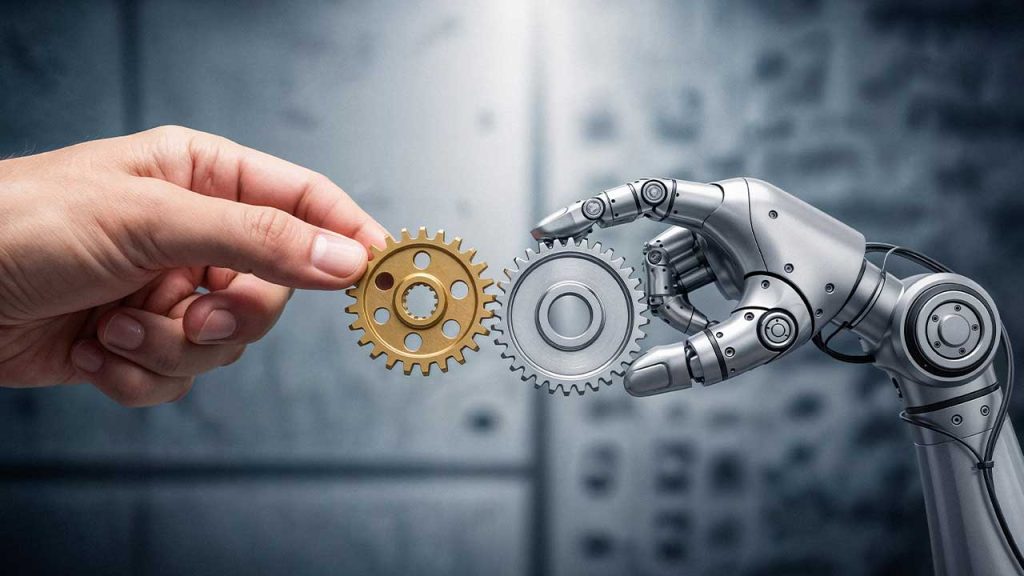
Autonomy demands not just sensors and AI, but a new relationship between humans and machines—one built on communication, collaboration, and the occasional need for an emergency stop button.
Automation Was the Engine. Autonomy Is the Driver.
Automation got us to where we are. It built skyscrapers, smartphones, and the global economy. But it’s not enough for the future. The world is too complex, too dynamic, and too unpredictable for rigid systems that can’t adapt.
Autonomy is the next evolution. A leap from mindless motion to mindful action. It’s the moment when machines stop just doing work and start understanding work.
So yes, the age of automation is ending. But don’t be sad about it. It’s like watching a beloved actor retire after a long career because their kid just won the Oscar for Best New Talent.
The Future Belongs to the Smart
The world doesn’t need more machines that follow orders; it needs machines that understand intentions. Autonomy is not about replacing people, it’s about giving them partners that think, react, and adapt.
Automation made us efficient.
Autonomy will make us resilient.
And if we do it right, we won’t just get faster; we’ll get smarter. Maybe even a little wiser. And a whole lot more productive, think 50x.
About the author
This article was written by Amir Sharif, COO of 3Laws.