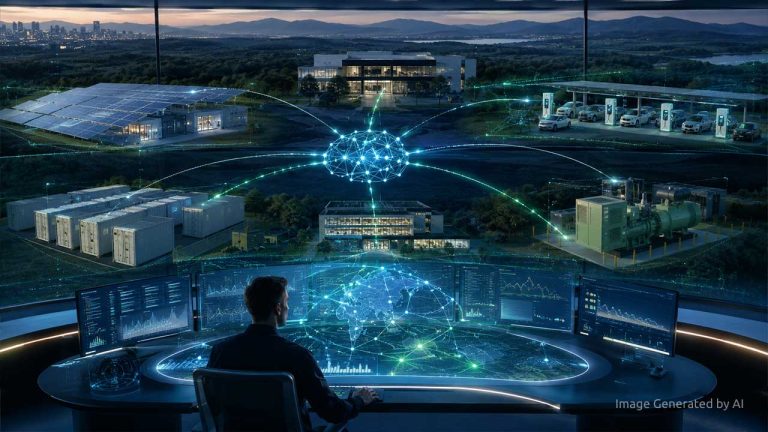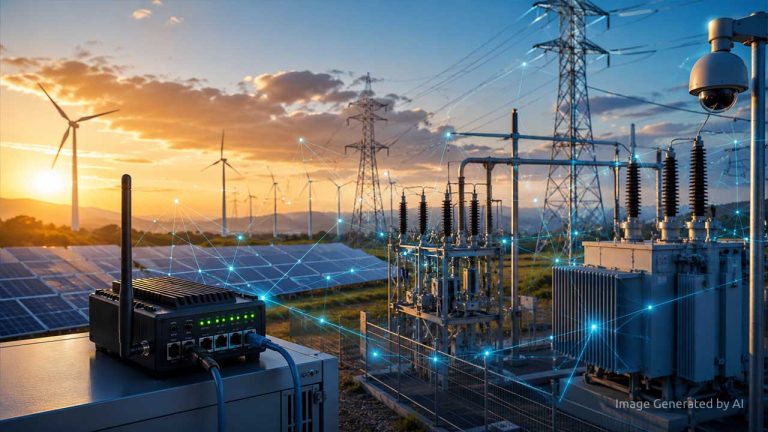
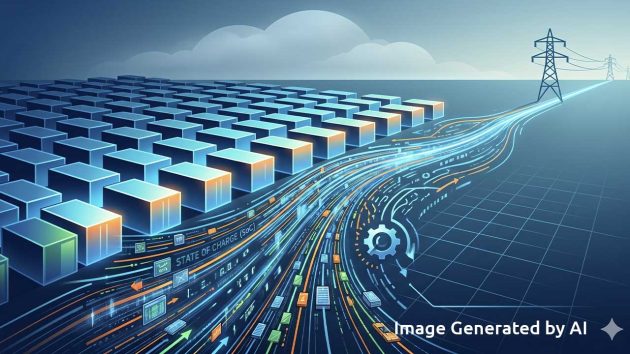
A battery cell is roughly the size of a cell phone. A battery enclosure is the size of a shipping container. A single site can have thousands of those containers, and for each individual cell inside, operators need state of charge and state of health readings every one to 10 seconds, or even faster during charge and discharge cycles. As Janko Isidorovic of Fluence Energy noted during IIoT World Energy Day 2026, the resulting data volume is enormous.
That scale alone makes battery storage the most data-intensive asset class on the grid. But volume is only one dimension. Battery systems must respond within 150 milliseconds to meet strict grid requirements. The hardware is designed for 20 to 25-year lifespans, during which components will fail and replacements will run different firmware. Network cables sit alongside 10-megawatt power sources. And commercial agreements can shift mid-contract, changing the entire operating model.
Brenna Wood of EDF Power Solutions North America, whose company manages 16 gigawatts across wind, solar, and battery storage, described batteries as probably the most difficult part of their fleet to manage.
Regulations That Change Over Time
Janko Isidorovic stressed that battery edge systems need to be built for a regulatory environment that moves. Grid requirements are strict and must be obeyed, but they also change over time. That means operators have to design flexible systems that can adopt and comply with future regulations that have not been written yet.
That flexibility requirement shapes everything about the architecture. It means the edge platform cannot be purpose-built for today’s rules alone. It has to accommodate new requirements running on hardware that was installed years earlier.
Hardware That Outlasts Its Own Components
Battery energy storage systems are designed to run for 20 to 25 years. Over that span, devices will break. In 10 or 15 years, operators may not be able to procure the exact same device, and even if they can, it will not have the same firmware.
This creates a compounding data challenge. A function that existed on the original hardware may produce a different data set on the replacement. The edge system needs to maintain context for both, processing data fast enough at the edge for local control while also summarizing, down-sampling, and pushing it to the cloud with proper context. The same function, running on more or less the same device, can produce different data sets because one unit is 10 years old and the other is brand new.
Network Cables Next to 10-Megawatt Sources
Janko Isidorovic raised a practical challenge that rarely makes it into architecture slide decks. Battery storage sites put a lot of devices on the network, and in the energy sector, network cables run right next to 10-megawatt battery sources.
In most IT environments, networks tend to just work. On a battery storage site, making sure the network is free of noise and reliable takes deliberate engineering that data center teams rarely need to think about.
When the Business Model Shifts, the Data Requirements Follow
Brenna Wood described a challenge at EDF that is specific to batteries but instructive for anyone managing grid data infrastructure. EDF’s wind and solar fleets have reached the greatest maturity in terms of data operations. Batteries are a different story, in part because the market around them is changing much more quickly, with new participants and new technology.
The operational impacts are concrete. Brenna Wood described situations where EDF had to take on the balancing of the battery, which required a whole different depth of data. What had been configured for one operating model was insufficient for the new one. As commercial agreements shift, the operating model has to change along with them.
Getting to cell-level data access, understanding the full depth of what the battery is doing, was something EDF had to learn through experience. Effective battery operations require going much further down into the asset at the cell level than most operators initially plan for.
The People Part
Brenna Wood also raised something that she said does not get enough focus. Grid data infrastructure projects are organizational change projects. Complex systems affect teams of people, and that means managing a significant amount of organizational change alongside the technology.
EDF evaluated its data infrastructure options through both a technology lens and a business lens, including the actual cost of change to the business. Decisions about what to automate, how to retrain teams, and how to maintain service levels during transitions required close collaboration between technology teams and the people who run operations day-to-day.
Her advice for anyone designing these systems: “When things break down, how are you bringing it back online? What’s the return to service?” Those questions need answers during design, not after deployment.
The Cost Question
Brenna Wood was direct about cost: there has to be a business case and some sort of payback. Whether the driver is productivity, new revenue from market participation, or reducing hidden costs already embedded in the organization, the investment needs to justify itself. There will always be trade-offs between upfront cost, run costs, and costs that may already be hidden in the organization.
Andrew Foster of IOTech Systems described the vendor approach to making this more accessible: building edge technology that supports plug-and-play AI, where operators can choose from different types of models and plug them into the platform, with lifecycle management for orchestration, updating, and rollback. As he put it, “Providing that infrastructure that allows people to do it with as least friction as possible obviously encourages its use, enables its use, and then I think that’ll drive down the cost of operating AI technologies in these environments.”
This session, “Turning Industrial Data into Energy Insight: Scalable Edge Solutions for Modern Grids,” was part of IIoT World Energy Day 2026, sponsored by IOTech Systems. We thank all panelists for their insights:
- Andrew Foster, Product Director, IOTech Systems
- Brenna Wood, Senior Group Product Manager, EDF Power Solutions North America
- Cody Falcon, Global Digital Portfolio and Technology Leader, Energy Industries, ABB
- Janko Isidorovic, System Architect, Fluence Energy
Moderated by Hamish Mackenzie, Advisory Board Member, IIoT World.
This article was written based on the transcript of the live panel session at IIoT World Energy Day 2026. AI tools were used to help summarize and organize the content from the discussion.
Sponsored by IOTech Systems.