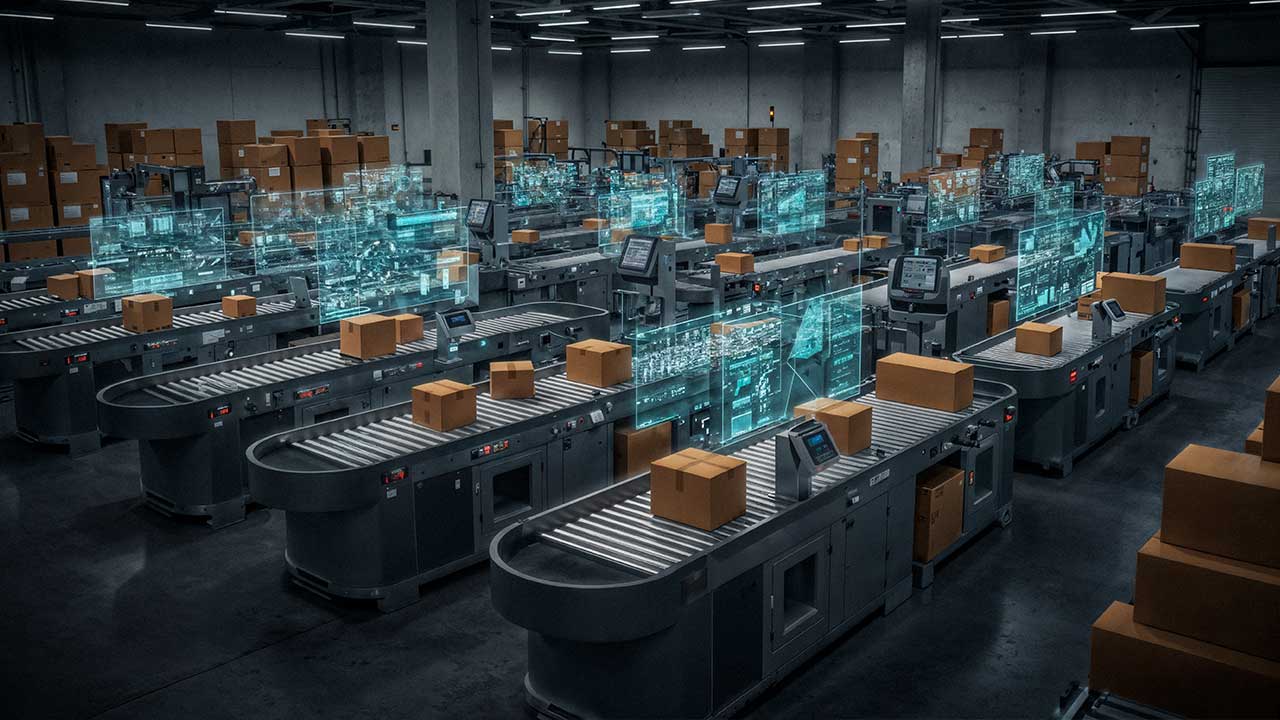
With IoT sensors offering a growing range of data points, companies that make effective use of the insights they provide are able to improve efficiency, visibility, productivity, and safety, enhancing the reliability of their warehouse operations.
Every supply chain leader knows that data drives decision-making. Yet, the most difficult question isn’t how to collect data, it’s which data truly matters? How do you choose the right data in an ocean of information? Today’s operators struggle to balance the short-term value of data they can act on immediately with the long-term potential of data that may prove essential in the future.
Historically, the challenge has been cost. Adding sensors or data collection tools required hardware investments, integration time, and specialist labor. But the economics have changed dramatically. The cost of data collection has dropped and, in many cases, key insights now come from software alone. The result is a new era of visibility where reliability and efficiency are no longer reactive metrics but predictable, measurable outcomes.
Data is the new differentiator
With the acceleration of AI, the importance of data has shifted from optional to existential. You may not know exactly what data will matter tomorrow, but it’s clear your business will be at a competitive disadvantage without it. Modern IoT and automation platforms are enabling a far broader range of performance measurements than ever before – from robotic efficiency and energy usage to quality, human interaction, and inventory dynamics.
Leaders are already applying sensor-driven intelligence to achieve market-leading reliability, and IoT sensors now track variables that extend far beyond simple uptime metrics. For example:
- Travel distance (loaded vs. unloaded): Understanding optimal path efficiency and where motion is wasted facilitates predictive route optimization.
- Battery analytics: Monitoring charge cycles, charge duration, and anticipated battery life informs proactive maintenance and replacement schedules.
- Environmental sensing: Temperature, vibration, and humidity tracking ensure that robots perform reliably in variable conditions.
The result of using IoT sensor data in this way is predictable performance and extended equipment life.
Inventory and storage data provides greater visibility and traceability
IoT-enabled warehouses are no longer blind to what’s inside a bin. Modern systems now capture slot or compartment utilization, including real-time cube efficiency metrics to help drive layout re-engineering and optimization. Dynamic verification of product weight and dimensions prevents mis-slots and supports automated picking logic. Meanwhile, product imaging by cameras integrated into shuttle or lift systems can record every item as it moves through the warehouse, creating a visual baseline for AI-driven picking and quality control. With each of these data points, organizations are moving from static inventory records to a living digital twin of their facility.
Operator and interaction data enhances safety and efficiency
Even in the most automated systems, human interactions remain critical. IoT tracking can now quantify task efficiency via the number of operator touches required to complete a specific task or transaction. In addition error detecting data is available, including how often operators engage the wrong location or bin before completing the correct one.
These insights can help to improve safety and training programs to reduce fatigue, increase accuracy, and protect throughput.
Cycle count and verification data improves accuracy and reduces workload
Traditional cycle counting was a manual process prone to delays. Today’s IoT-enabled systems perform continuous verification, such as comparing expected cube, weight, or image data to what’s physically present in storage. This process automatically identifies anomalies to prompt proactive audits.
Continuous monitoring not only improves accuracy but also reduces the operational drag of periodic physical counts.
The future: Shared data = shared advantages
Right now, most organizations are focused on capturing and storing this data. The next evolution will come from sharing and benchmarking it. Imagine a future where you can compare your robotic system’s reliability, uptime, or utilization directly against an anonymized database of similar users. Visualize knowing exactly whether your facility is performing in the top 10% of operators or lagging behind.
The organizations that embrace open data ecosystems and AI-driven benchmarking will define the next era of supply chain performance. Reliability won’t just be about keeping systems running – it will be about running better than anyone else.
IoT sensors are redefining what’s possible in supply chain automation. From robotic travel paths to operator interactions, each data point is a step toward a smarter, safer, and more reliable warehouse. Companies investing in data today aren’t just solving today’s problems, they’re building a foundation for tomorrow’s competitive advantage.
About the author
 TJ Fanning is Vice President of Sales and Planning at Kardex, the fastest growing AutoStore integrator. With more than 20 years of supply chain automation experience, he is focused on optimizing the value of AutoStore solutions for users.