Employer-educator partnerships are key to overcoming the semiconductor talent shortage, accelerating innovation, and maintaining economic competitiveness.
Fabrication labs, known as “fabs,” are the linchpin of the semiconductor industry. Fabs are where microchips are manufactured — the integrated circuits that power virtually every modern electronic device across every sector of the economy. Investing in fabs for career and technical education purposes is not only the next best move for attracting new students and driving enrollment — it’s turned into a national necessity.
Semiconductor manufacturing is arguably the most lucrative industry for future economic competitiveness in the United States, China, Taiwan, South Korea, Japan, and parts of Europe. Thus, fabrication training labs have a major role to play in closing the semiconductor skills gap, driving the pace of innovation and strengthening economic resilience amid a global “chip war”.
In the U.S., the most immediate and pressing challenge is the workforce shortage. Given current growth rates, the potential talent gap could total between 59,000 and 146,000 workers across the engineer and technician labor pools by 2029. The Semiconductor Industry Association (SIA) projects 115,000 new jobs will be created by 2030 with roughly 58% going unfilled. Of the unfilled jobs, 39% will be technicians, 35% will be engineers or computer scientists with four-year degrees and 26% will be engineers at the masters or PhD level.
Chip nations are invested in innovating and producing microchips to maintain their edge technologically and to avoid reliance on foreign nations. The U.S. CHIPS and Science Act is designed to fuel these efforts by funding relevant workforce development and research. Educational fabs represent the physical embodiment of these ventures. However, the adoption of educational fabs is not a simple or universal process. Many obstacles exist that preclude their implementation, including common financial, logistical and cultural barriers.
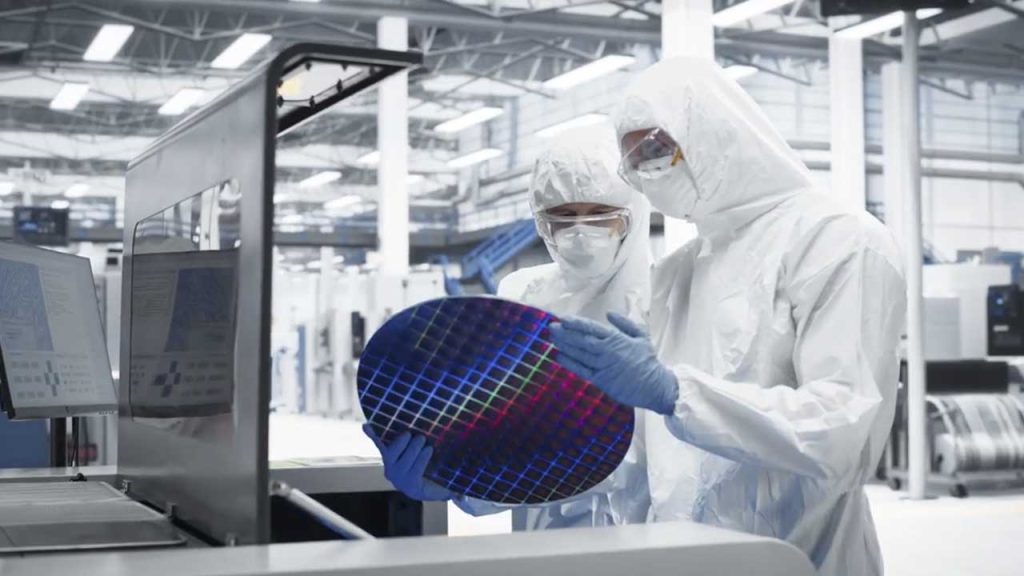
One of the main challenges is that the new chip workforce can’t be trained in a traditional classroom setting. Hands-on, highly-skilled factory training is a job qualification for producing semiconductors. In professional fabrication settings, technicians and engineers work in tightly controlled cleanrooms with automated equipment to perform specialized functions that require a high degree of quality control.
Mock cleanrooms offer the opportunity to develop these skill sets and gain valuable job exposure before entering an actual fab. For example, students will learn how to properly handle delicate silicon wafers, operate sophisticated tools for photolithography and use metrology instruments to ensure precision at the nanoscale. There isn’t much data yet to show how many higher ed institutions and technical schools have implemented an educational fab, but the trend is obvious: educational fabs are on the rise due to strong prioritization and availability of government funding, as well as growing industry partnerships.
Global manufacturers are making substantial investments to build and upgrade fabrication facilities to meet growing production demands and ensure a workforce aligned with their hiring needs. Most of the major research universities that have maintained sophisticated cleanrooms have been used primarily for graduate-level research. However, we’re seeing a shift now among undergraduate institutions and community and technical colleges such as the University of Texas at Austin, Arizona State University, and Purdue University, all expanding their cleanroom capabilities to support hands-on training for undergraduates. These initiatives are often made possible by large grants from the CHIPS Act, and strengthened through partnerships with multinational corporations.
While university education and research programs are essential for maintaining leadership in innovation, community colleges remain at the forefront of these training efforts. They play a critical role in the talent pipeline for training qualified technicians, and are frequently building or expanding their programs to equip students with the most up-to-date practical skills. Portland Community College, Florida State College Jacksonville, Austin Community College, and Maricopa Community Colleges serve as prime examples of this innovation and growth.
The CHIPS Act and The National Science Foundation (NSF) also fund the creation of regional tech hubs and alliances throughout the U.S. This hub and spoke model allows smaller institutions to send their students for hands-on training without the steep cost of building their own fab. The Illinois Semiconductor Workforce Network and the Virginia Alliance for Semiconductor Technology (VAST) are examples of this model in action.
Since building and running learning fabs can be pricey and logistically challenging, some universities have sought out alternative pathways to access this type of research and training. Purdue University created vFabLab, an app that allows students to practice fabrication processes inside a virtual cleanroom before entering an actual cleanroom. While alternative practices aren’t meant to replace educational fabs, they can make a difference in launching introductory training elements, making it more accessible and scalable.
Educational fabs also serve as a crucial bridge to closing the “lab-to-fab” gap. The “lab-to-fab” gap refers to the challenges involved in transitioning new ideas or technological solutions from research labs into commercial production. Addressing this gap requires emphasizing hands-on training and supporting the rapid growth of educational fabs for manufacturing technicians as a direct response to these challenges.
To date, institutional adoption rates of educational fabs is difficult to quantify, however, research and investments paint a picture of an industry in motion, with colleges, universities and vocational centers moving as fast as they can to close the skills gap. The success of these initiatives will be a critical determinant of whether the United States, and others, can achieve semiconductor self-sufficiency, earning a seat at the table as a global technology leader.
About the author
 Daniel Rodriguez is the former Head of Global Education Projects for Festo Americas and currently serves as a Director for Festo Didactic North America. He holds a bachelor’s degree in Industrial Engineering and a master’s in Engineering Management from the New Jersey Institute of Technology.