

From “Dumb” Assets to Intelligent Nodes: The New Energy Web
For decades, the power grid functioned as a one-way street: generation to consumption. Today, that model is being dismantled by the rise of the “Prosumer”, businesses and municipalities that both consume and generate power. This shift is…

The Digital Twin of Energy: Why Storage Requires an IIoT “Nervous System”
As energy storage systems (ESS) move from niche pilot projects to the backbone of the modern grid, a critical realization has emerged: the hardware is only as good as the software managing it. While a battery’s…

Energy Efficiency Conferences 2026-2027: Guide and On-Demand Sessions
Upcoming Energy Efficiency Conferences (2026-2027)These industry conferences focus on energy efficiency, decarbonization, and sustainable energy management. IIoT World tracks these events as part of its ongoing coverage of energy efficiency across industry and infrastructure.eceee Summer Study…

The First Step for AI in Energy Isn’t Digital
Before an energy company can use artificial intelligence to predict a pipeline fault or optimize a drilling schedule, it must solve a physical problem. The industry’s most valuable data isn’t in the cloud; it’s in filing…
Top 10 Energy Efficiency Solutions for Manufacturing 2026
As manufacturers face volatile energy costs and aggressive decarbonization targets, the focus for 2026 is shifting from passive monitoring to active grid interaction. The following 10 platforms and technologies were highlighted by industry leaders during IIoT World…

Feedstocks, Funding, and the Future: What’s Holding Back Industrial Decarbonization
Industrial decarbonization in refineries, chemical plants, and cement kilns stalls primarily because of one missing measurement: product-level carbon intensity. Without a consistent, auditable way to calculate CO2-equivalent per unit of output, even advanced facilities cannot verify…

How Internet of Things Modernizes Outdated Utility Infrastructure
Connected devices and sensors support automated energy management and delivery, seamless integrations and predictive maintenance.It’s no secret that much of the US electric grid urgently needs an upgrade. The 1960s and 70s saw the construction of…

AI in Energy: Why Progress Depends on People and Structure
AI adoption in energy operations has moved past debate. The real challenge, as Natalia Klafke, Executive Vice President of Energy and Sustainability at Radix, observed at Impact 2025, is execution: many companies have pilots and dashboards,…

AI in Energy Is Growing Up: From Analytics to Real Operations
AI in energy has moved past dashboards and reports. According to Simon Williams, Chief AI Officer at ATELIC, industrial AI now detects equipment fatigue hours before failure, adjusts production flows automatically, and predicts energy demand shifts…
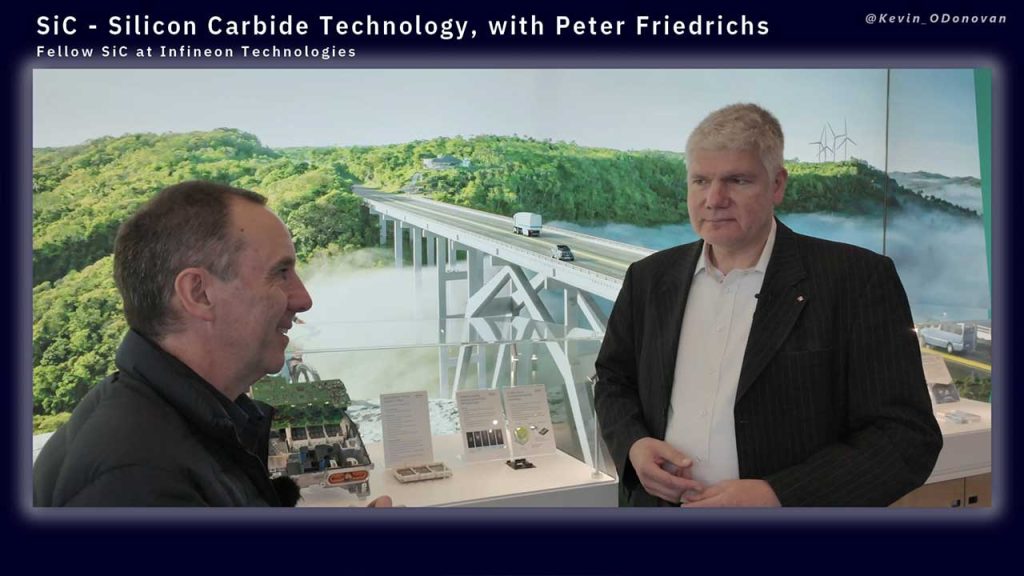
Power Electronics and the Role of Silicon Carbide in the Energy Transition
Silicon Carbide (SiC) is a wide-bandgap semiconductor that operates at higher voltages and temperatures than conventional silicon, with far lower energy losses. According to Infineon’s Peter, SiC is now actively deployed in electric vehicles, renewable energy…

Building Resilience Step by Step: Practical Adoption of Digital Twins
For many industrial and energy companies, the idea of deploying a full-scale digital twin across every asset can feel overwhelming. The reality, as highlighted during IIoT World Energy Day 2024, is that successful adoption doesn’t happen all…

How Digital Twins Deliver Clarity in Industrial Operations
In complex industrial and energy environments, clarity is often the hardest thing to achieve. Data flows in from thousands of sensors, but without context, it risks turning into a data swamp—volumes of information that overwhelm rather…