Georgia-Pacific saved up to $1 million per machine using machine learning for condition-based predictive monitoring on AWS. At Hannover Messe 2026, Steven Blackwell of AWS described how cloud infrastructure helps manufacturers transform across the whole value chain. In engineering and R&D, that means developing products faster and bringing them to market quicker. Within the factory, it means driving operational efficiency and process improvements. Beyond the factory, AWS helps manufacturers optimize their supply chain, make products smarter through connectivity, and create new business models like product as a service.
The interview covered three topics: predictive monitoring at Georgia-Pacific, Amazon Nova for defect detection, and agentic AI for the skilled labor shortage.
How Did Georgia-Pacific Save $1 Million per Machine?
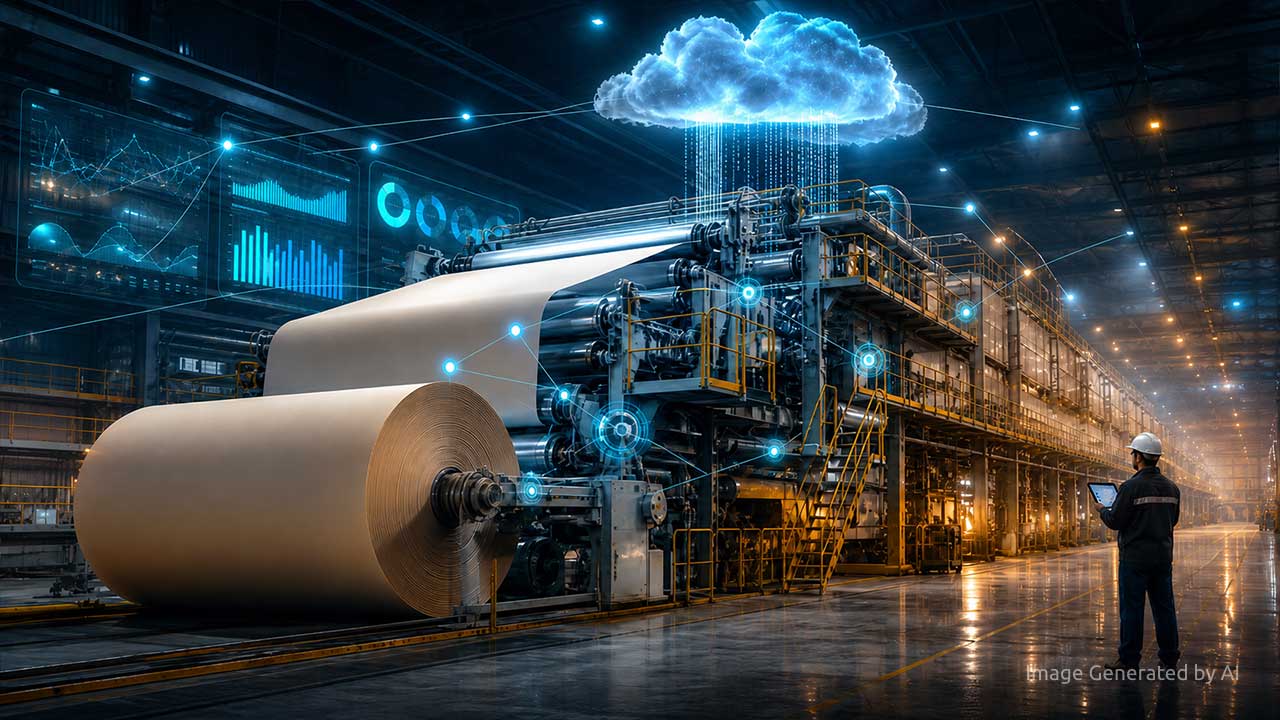
Georgia-Pacific used machine learning for condition-based predictive monitoring of their paper mills on AWS, saving up to $1 million per machine. The journey with AWS started a couple of years ago in shop floor environments and has continued to drive efficiency on their mills.
According to an AWS case study, Georgia-Pacific can now predict equipment failure 60 to 90 days in advance for selected assets. On one converting line, the company eliminated 40 percent of parent-roll tears. With at least 150 converting lines that could benefit from the same approach, the savings potential extends across the company’s operations.
The latest development is GP Chat, a maintenance chatbot built on Amazon Bedrock that combines real-time IoT sensor data with operator queries. It gives maintenance engineers all the knowledge available to them for diagnosing and solving problems more efficiently.
How Does Amazon Nova Detect Defects Without Large Training Data?
Amazon Nova can detect manufacturing defects by comparing a reference image with an image from the actual production line, requiring no large training data set. Computer vision for quality detection and defect analysis delivers results quickly, but traditional approaches require a large amount of images to train a model.
AWS describes this as a zero-training approach: manufacturers define defect detection criteria through natural language prompts instead of building, labeling, and training machine learning models. AWS showcased Amazon Nova at the physical AI demo at Hannover Messe.
How Can Agentic AI Address the Skilled Labor Shortage?
When asked what one thing he would change about how manufacturing works, Steven Blackwell pointed to the speed of AI adoption. AI is evolving from traditional machine learning to agentic AI, and manufacturers want to take advantage of these developments faster. Agents offer huge value for addressing the skilled labor shortage across manufacturing operations and supply chain, with engineers becoming citizen developers deploying agents in their ecosystem.
Based on a video interview with Steven Blackwell, Head of Product Engineering & Services Center of Excellence at AWS, recorded by Lucian Fogoros of IIoT World at Hannover Messe 2026.
Frequently Asked Questions
1. How did Georgia-Pacific save $1 million per machine using AWS?
Georgia-Pacific used machine learning for condition-based predictive monitoring of their paper mills. Over a couple of years, this approach generated savings of up to $1 million per machine. They also developed GP Chat, a maintenance chatbot that gives maintenance engineers immediate access to all available knowledge for diagnosing and solving problems.
2. How does Amazon Nova detect manufacturing defects without large training data?
Amazon Nova uses a reference image and an image from the actual production line to identify anomalies and defects. Traditional computer vision requires a large amount of images to train a model, but Amazon Nova detects defects without a huge training data set.
3. How does agentic AI help with the manufacturing skilled labor shortage?
Agentic AI helps address the skilled labor shortage by turning engineers into citizen developers who deploy agents across manufacturing operations and supply chain. This allows manufacturers to take advantage of rapidly evolving AI technology faster.
4. What AI use cases deliver results in manufacturing?
Georgia-Pacific used machine learning for condition-based predictive monitoring on AWS, saving up to $1 million per machine. Amazon Nova can detect defects by comparing a reference image with a production line image, without a large training data set. Agentic AI offers value for addressing the skilled labor shortage by turning engineers into citizen developers.
About the author