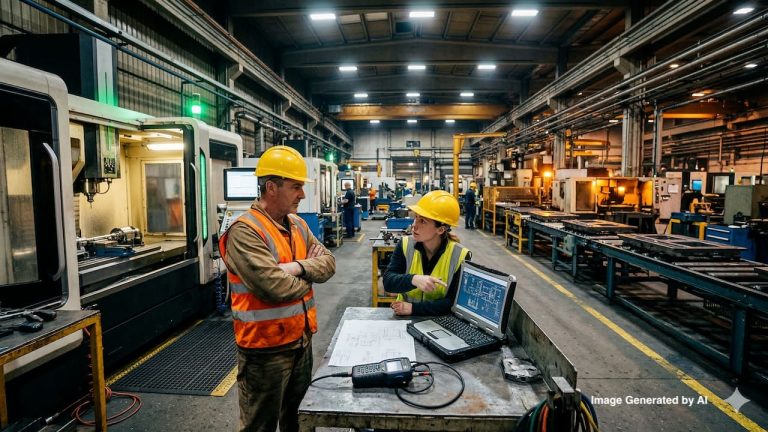
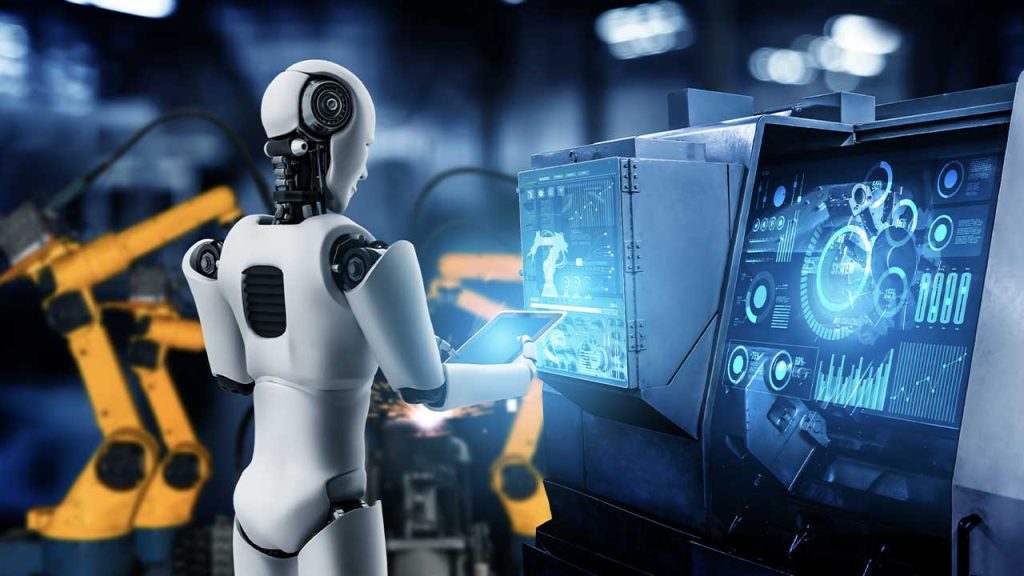
The manufacturing skills gap continues to grow. Rather than viewing AI as a wholesale replacement for human labor, forward-thinking manufacturers are deploying it as a skill multiplier , amplifying the expertise of existing workers so that a single operator can perform at the level of a seasoned specialist.
As AI tools and automation platforms race ahead, manufacturers face a critical question: is technology helping the workforce, or quietly pushing it aside? In the world of smart manufacturing, the answer is increasingly clear—AI works best not as a substitute for people, but as a multiplier of human skill.
This shift marks a departure from the traditional “automate everything” mindset. Manufacturers aren’t just looking for machines that move faster; they’re seeking systems that make the people on the floor more capable, confident, and informed. Whether it’s through intuitive dashboards, real-time data feedback, or predictive maintenance alerts, AI is becoming less about replacing humans—and more about enhancing their decision-making.
The New Role of the Operator
In this evolving landscape, operators aren’t just button-pushers. They’re becoming empowered participants in a data-rich environment. With AI systems delivering targeted prompts—“Did you see the training for this update?” or “This sensor is trending out of spec”—technicians are increasingly able to take proactive action without navigating dense manuals or complex interfaces.
This kind of interaction matters. It shortens onboarding for new workers. It increases safety. It keeps employees engaged. Most importantly, it captures the hard-won institutional knowledge that often lives in the heads of experienced staff—and makes it available across shifts, sites, and generations.
Closing the Knowledge Gap
The aging industrial workforce creates a new urgency around knowledge retention. AI platforms that allow for real-time feedback, embedded training, and multilingual support can help bridge the gap as seasoned professionals retire and new talent enters the field.
Yet that knowledge transfer won’t happen through software alone. It depends on thoughtful design—systems that are not only powerful, but approachable. Interfaces that feel more like mobile apps than industrial control panels. Experiences that reduce cognitive load, not add to it.
The User Experience Imperative
Manufacturing technology has long lagged behind consumer UX standards. But that’s changing. As younger generations enter the workforce, expectations are shifting. No one wants to step from an intuitive smartphone into a confusing SCADA screen. They expect digital tools to work for them, not the other way around.
Human-centered design in industrial tech isn’t just a nice-to-have—it’s a competitive advantage. It accelerates adoption. It boosts morale. And in a labor-constrained industry, it may be the key to retaining the next generation of manufacturing talent.
A More Inclusive Future
When design starts with the user, technology becomes more accessible. That opens the door to greater diversity—not just across gender, but across age, background, and skill level. Well-designed AI systems can help democratize access to advanced manufacturing roles, empowering people who might not come from traditional industrial backgrounds.
This isn’t about lowering standards—it’s about raising support. It’s about creating environments where people are trained faster, onboarded smarter, and supported every step of the way by digital systems that anticipate their needs.
From Tools to Teammates
The future of smart manufacturing isn’t just digital—it’s deeply human. The most impactful technologies are those that understand context, learn from frontline feedback, and adapt over time. In this model, AI doesn’t replace human intelligence—it complements it. It listens, learns, and responds in real time.
Manufacturers who embrace this vision aren’t just investing in technology. They’re investing in their people. And in doing so, they’re laying the groundwork for a smarter, more resilient, and more inclusive industrial future.
This article was written based on the session “The Startup Edge: Breakthrough Innovations Powering Smart Manufacturing,” which took place during IIoT World Manufacturing Day in May 2025
Related articles:
FAQ
1. What does AI as a skill multiplier mean in manufacturing?
The concept refers to using AI tools to extend and amplify the capabilities of human workers rather than automating their roles entirely. For example, an AI-powered diagnostic system can guide a junior technician through a complex troubleshooting sequence that would normally require years of experience. The approach preserves the human judgment and contextual awareness that remain critical in industrial environments.
2. How does AI help manufacturers address the skilled labor shortage?
AI addresses the labor shortage by accelerating onboarding, capturing institutional knowledge, and enabling remote expert support. Machine learning models trained on historical maintenance records and process data can encode decades of tribal knowledge into accessible, searchable systems. Augmented reality interfaces combined with AI recommendation engines allow less experienced workers to perform advanced tasks with real-time guidance.
3. What are the best use cases for AI skill augmentation on the factory floor?
The highest-impact use cases include AI-guided quality inspection, where computer vision assists operators in detecting defects; predictive maintenance triage, where AI prioritizes repair tasks and provides step-by-step instructions; and process optimization, where AI recommends parameter adjustments based on real-time sensor data.
Related from IIoT World: