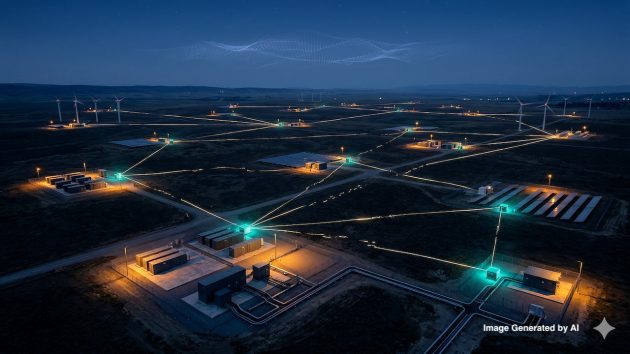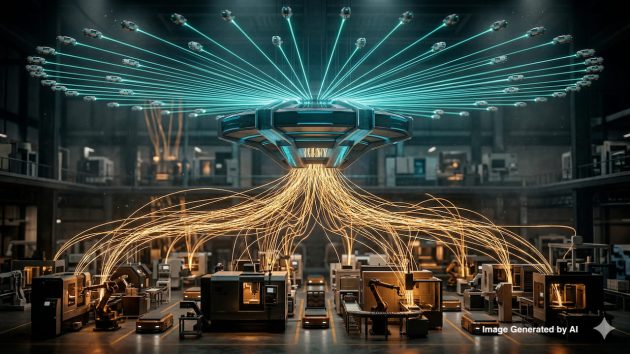
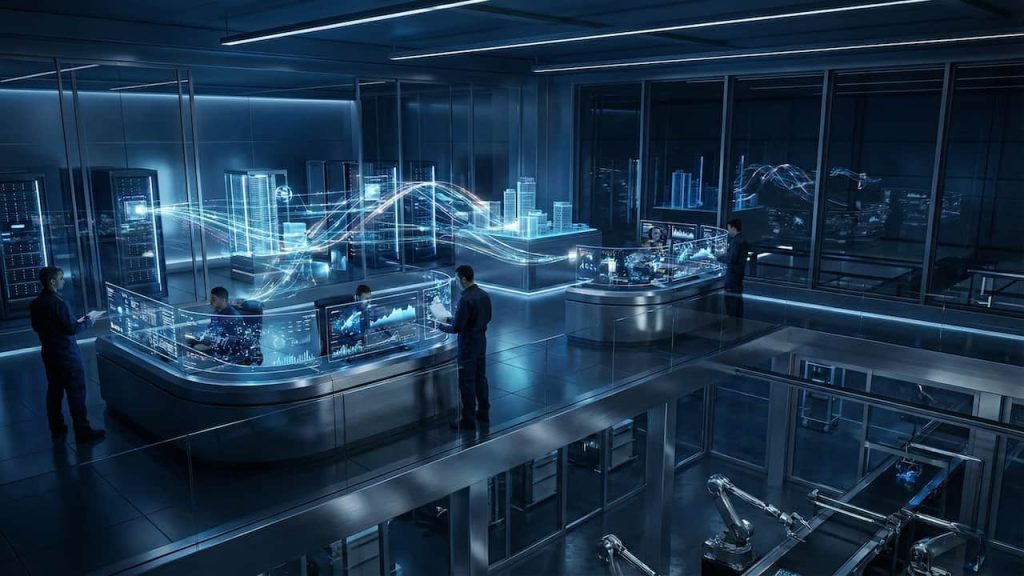
Agentic AI in 2026 refers to systems designed to understand complex goals, create multi-step plans, and execute actions across multiple applications, with human oversight but without constant human intervention. Unlike traditional machine learning models that predict or classify, Agentic AI impacts operational workflows by acting as a digital co-worker that reasons through problems and coordinates across systems end-to-end, 24 hours a day, at scale.
For manufacturing and industrial leaders, this shift is measurable. Early adopters report a 95% reduction in query time for materials data (Suzano), 80% automation of transactional order processing decisions (Danfoss), and up to $1.3 million in avoided productivity impact per site through automated document management (Elanco). According to the Google Cloud AI Agent Trends 2026 Report, the manufacturers seeing the strongest ROI are those treating Agentic AI not as an add-on tool but as the foundation of a new digital assembly line.
1. Industrial AI Trends
The core of the 2026 industrial workflow is the orchestration of multiple specialized agents. This is facilitated by two key technical breakthroughs:
Terminology Breakdown: 2026 AI Protocols
- Agent2Agent (A2A) Protocol: An open standard that allows AI agents from different developers or frameworks to work together seamlessly.
- Model Context Protocol (MCP): These agents overcome the “frozen knowledge” limitation of standard AI models by connecting directly to real-time data sources like BigQuery and managed databases.
Integrated Workflow Example: In heavy industries, agentic systems can autonomously detect network anomalies, open service tickets, and alert customers regarding technician dispatches in a single, integrated sequence.
2. Personalized Floor Management and Operational Insights
In 2026, personalization extends to the factory floor. Agents provide tailored advice to plant managers by inspecting machine criteria and performance data to:
- Identify why specific shifts are underperforming compared to others.
- Recommend optimal machine set points to maximize output.
- Suggest targeted solutions, such as specific staff training needs.
3. Proven ROI: Industrial Case Studies
Early adopters are seeing significant returns on investment from agentic AI:
| Organization | Industry | Agentic AI Use Case | Impact / Result |
| Suzano | Pulp and Paper | Natural language SAP materials data query | 95% reduction in query time for 50,000 employees |
| Danfoss | Manufacturing | Automated email-based order processing | 80% automation of transactional decisions; near real-time response |
| Elanco | Animal Health | Automated sorting and extraction of 2,500+ unstructured documents via Gemini | Up to $1.3 million avoided productivity impact per site |
4. Shifting Roles: From Labor to Strategic Orchestration
The industrial worker in 2026 is a strategic orchestrator rather than a manual task-performer. Every employee becomes a supervisor of agents, shifting their core responsibilities to:
- Delegating repetitive tasks to appropriate agents.
- Setting clear goals and outcomes.
- Providing strategic guidance for nuanced decisions that AI cannot make.
- Verifying quality as the final checkpoint for accuracy.
5. Industrial AI Implementation Strategies: The 5 Pillars
To successfully scale these trends, the sources outline a holistic 5-pillar strategy for building an AI-ready industrial workforce:
- Establish Measurable Goals: Align AI tool adoption with specific, measurable business outcomes, such as 100% adoption of agentic assistants to enhance reasoning and data processing.
- Secure Multi-Level Sponsorship: Form a core team consisting of an Executive Sponsor (for funding), a Groundswell Lead (to manage grassroots excitement), and an AI Accelerator (to transform ideas into technical solutions).
- Sustain Momentum and Reward Innovation: Create a “digital hub” with gamified idea exchanges and leaderboards to reward employees for discovering new AI use cases.
- Integrate AI into Daily Workflows: Use internal hackathons and “Field Days” — structured, challenge-based events — to let teams practice using new custom AI tools in collaborative settings.
- Prepare for Risks with Trusted Frameworks: Ensure every employee understands their role in security, including recognizing AI-driven social engineering and knowing which data is safe to use in AI tools.
6. Agentic Security for Industrial Infrastructure
As the attack surface expands, Industrial Security Operations Centers (SOCs) are using agents as force multipliers. Agents are now used for vulnerability discovery (finding zero-day flaws) and automated alert triage. This shifts human security analysts to strategic defenders focused on long-term architecture.
The Human-Centric Opportunity
The 2026 opportunity for industrial growth is fundamentally human. By investing in upskilling and moving away from mundane tasks, organizations are freeing teams for the creative, strategic, and empathetic work that only humans can perform.
Industrial AI Trends 2026 FAQ: Common Questions Answered
Q1: What defines “Agentic AI” in an industrial context?
A: Unlike traditional automation that follows fixed “if-then” scripts, Agentic AI is goal-oriented. It understands a complex objective (e.g., “optimize production for a material delay”), creates a multi-step plan, and executes actions across different software environments while keeping a human in the loop for oversight.
Q2: How do the A2A and MCP protocols work together?
A: The Agent2Agent (A2A) protocol acts as a universal language so agents from different vendors can collaborate. The Model Context Protocol (MCP) provides the “real-time vision,” connecting these agents to live industrial data sources (like BigQuery or sensor databases) so their decisions are based on current reality rather than outdated training data.
Q3: Does this mean fewer jobs on the factory floor?
A: The 2026 trend suggests a shift in roles rather than a replacement. Workers move from performing manual data entry or repetitive monitoring to becoming Strategic Orchestrators. They manage the “digital assembly line,” defining intent and verifying the quality of the agents’ outputs.
Q4: What is the “Digital Assembly Line”?
A: It is the end-to-end orchestration of business and production processes by AI agents. Just as physical assembly lines revolutionized the 20th century by automating hardware, the digital assembly line automates the “intelligence” and “coordination” layers of the enterprise 24/7 at scale.
This article was written by Carolina Rudinschi, Co-founder of IIoT World.
Source: This article was developed based on the findings of the Google Cloud AI Agent Trends 2026 Report.